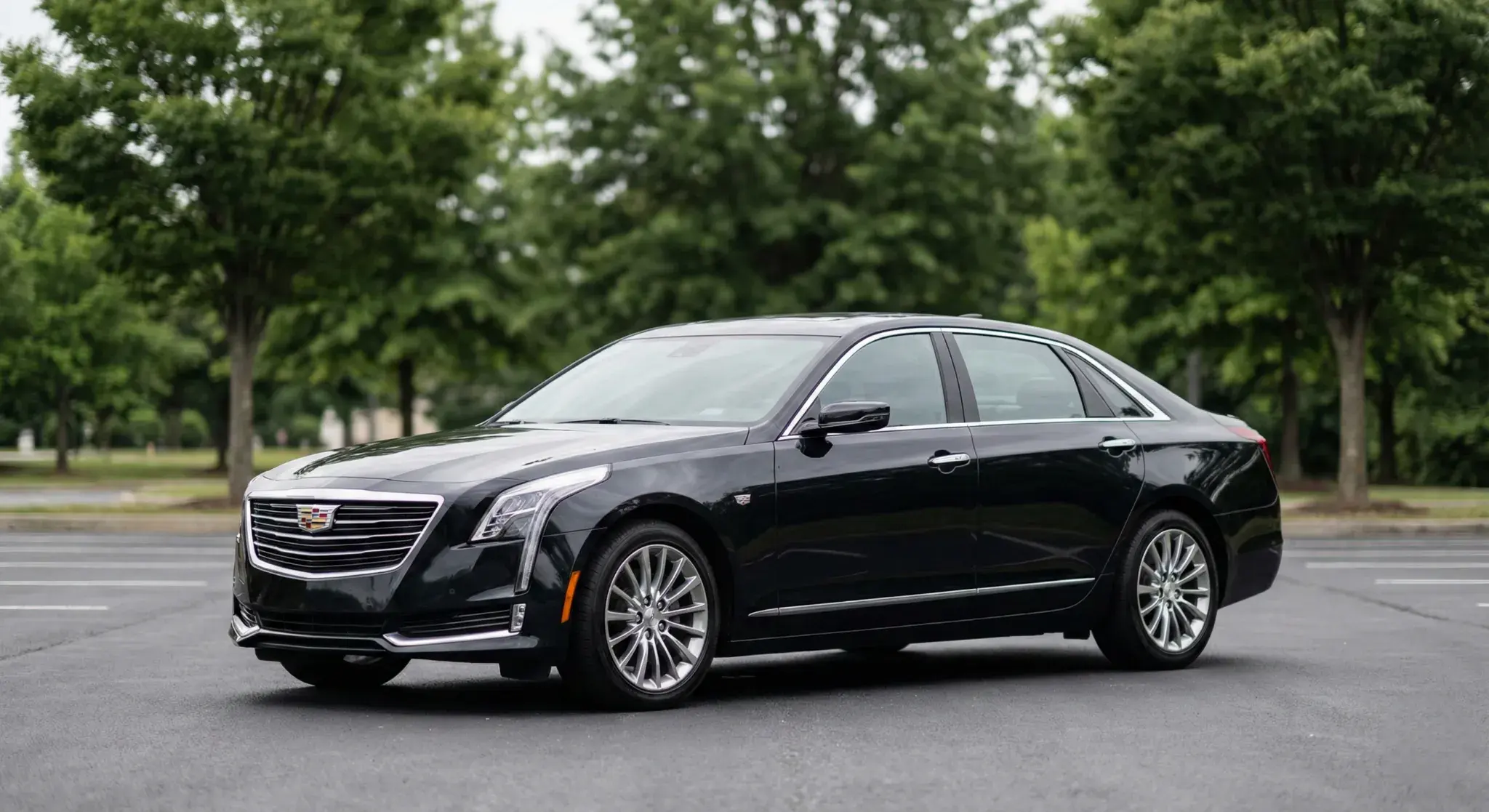
Executive Sedan
3 passengers · 3 bags

SEDANS · SPRINTER VANS · MINI BUSES · COACHES
Six miles to Fort Lee — one bridge, three ways to reach it. Cars, vans and coaches for 1 to 55 passengers.
Chauffeured transportation from every part of the Bronx into New Jersey — Fort Lee and the Palisades towns, Hackensack, Paramus, the Meadowlands, Newark and the Route 287 corridor — in sedans, Escalade ESVs, Sprinter vans, mini buses and 55-seat coaches.
4.7 ★ · 300+ Google reviews · 3,100+ clients
Trusted by teams & travelers across NYC










The Bronx is the closest borough to New Jersey that most people never think of as close: Fort Lee is about six miles from the west Bronx, and the whole trip is one crossing. Nearly every journey uses the George Washington Bridge, so the question is not which bridge but which road you reach it on.
Typical times are 20 to 40 minutes to the towns just over the bridge, 35 to 60 to Paramus or Hackensack, and about an hour to Newark. The variable is the Cross Bronx Expressway: on a clear morning it is quick, and in a bad afternoon it can hold a car for longer than the rest of the trip combined.
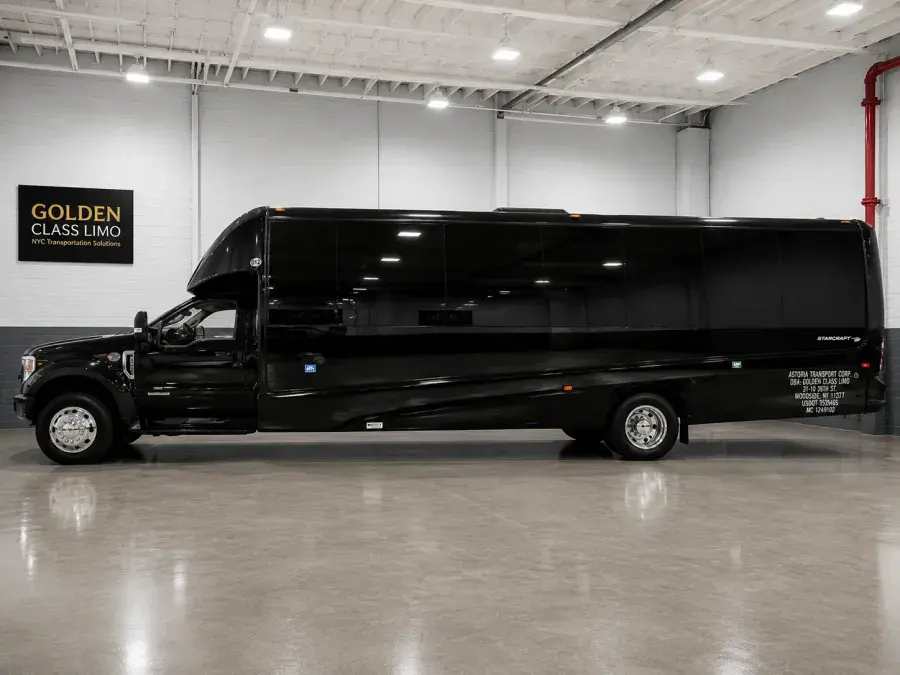
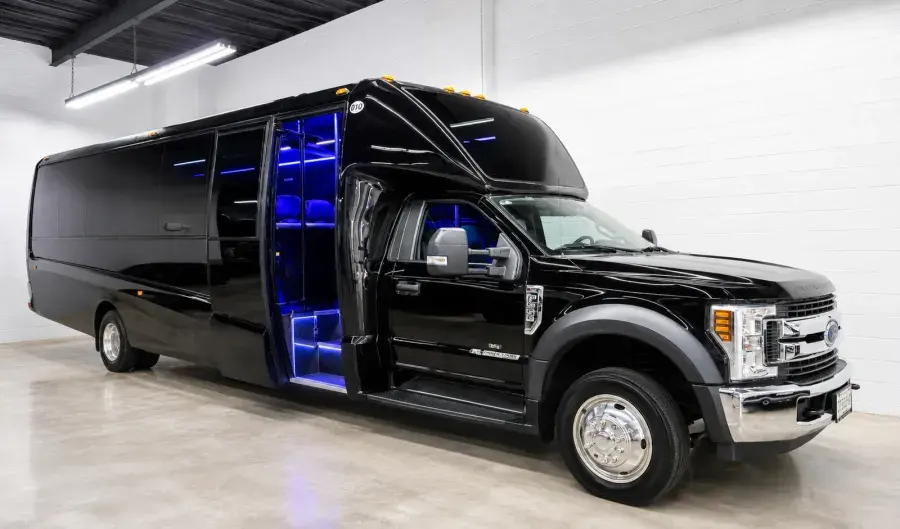
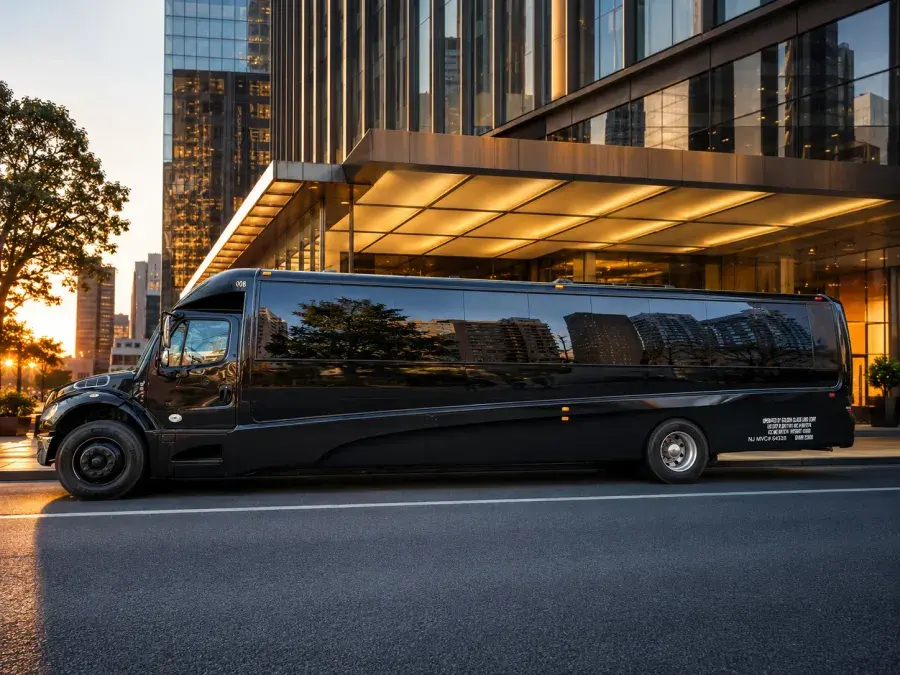
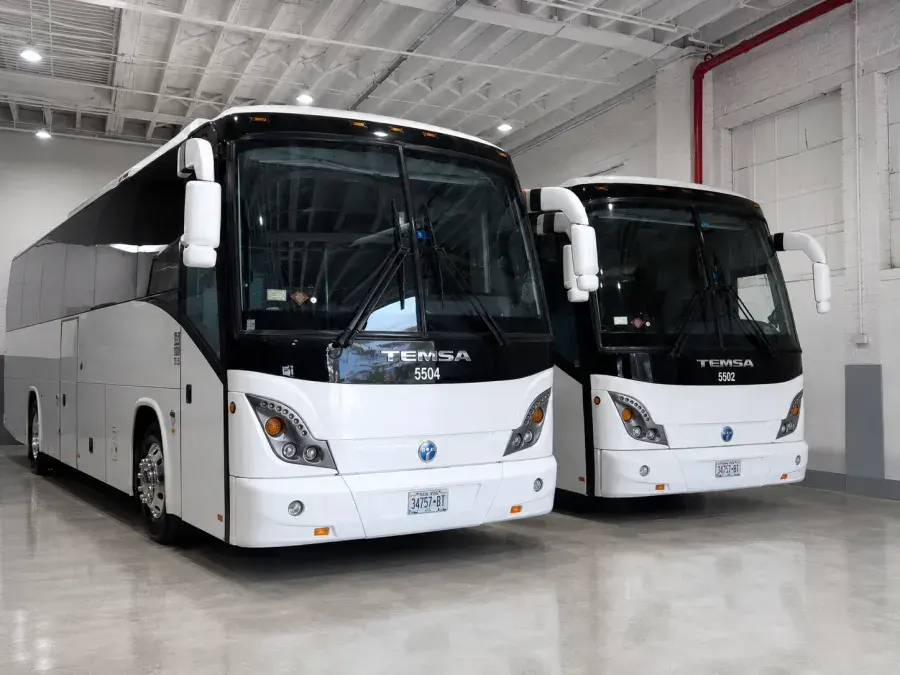
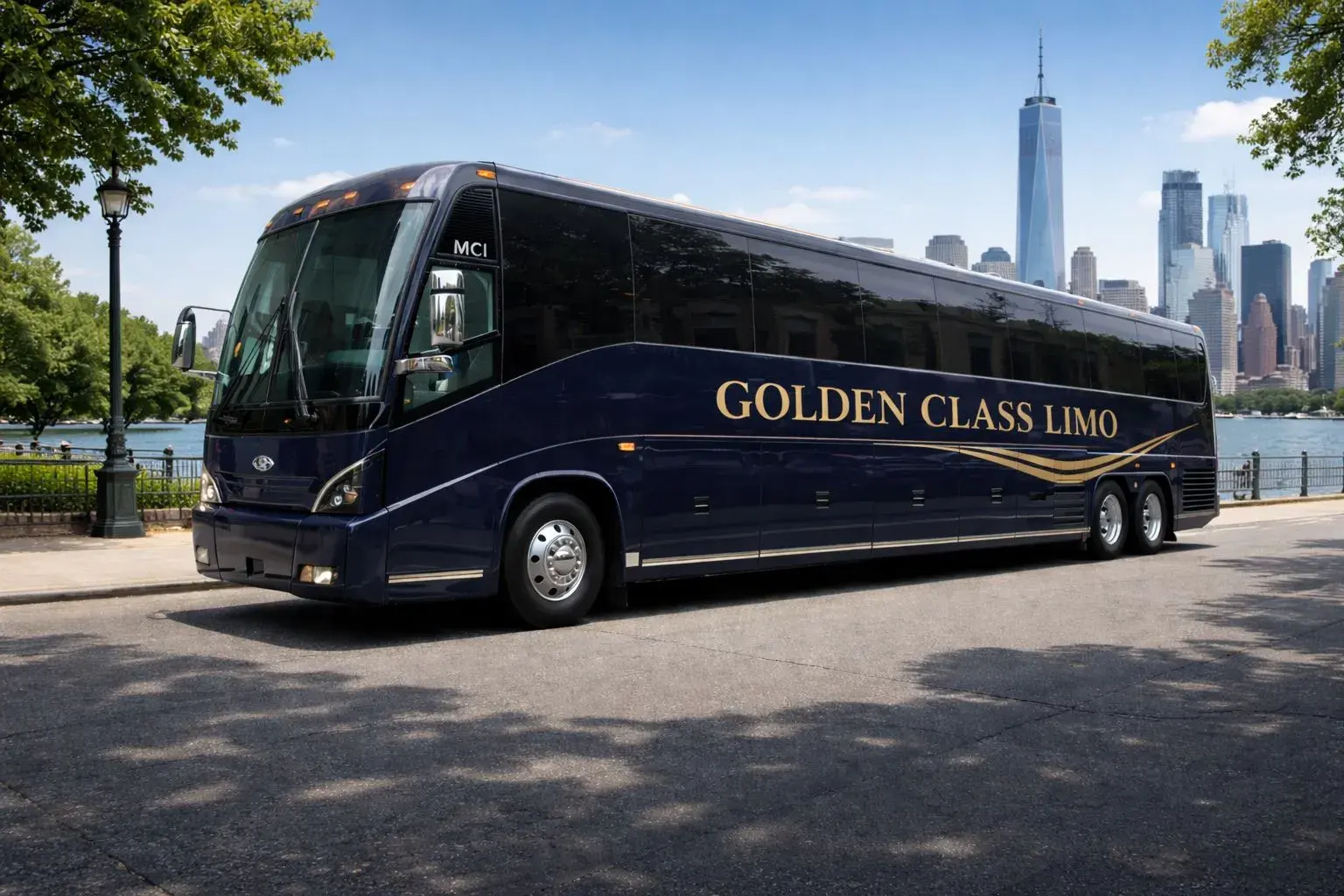
Golden Class Limo covers it in every class — executive sedans and Escalade ESVs, 14-passenger Sprinter vans, mini buses and motor coaches to 55 seats — which is what the group bookings on this corridor almost always need.
The bridge is tolled by the Port Authority on the New York-bound side, so the westbound leg out of the Bronx carries no crossing toll and the return does. Both are inside the quote, and there is no meter running if the Cross Bronx has a bad ten minutes.
Dispatch answers 24/7, 365 days a year on (718) 360-9383, and an online quote takes about a minute.
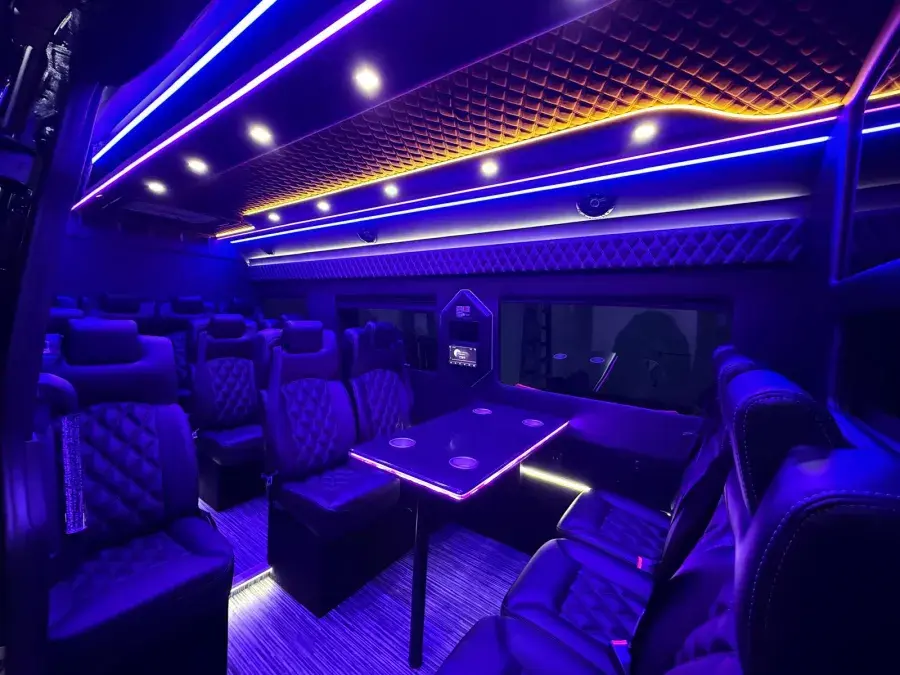
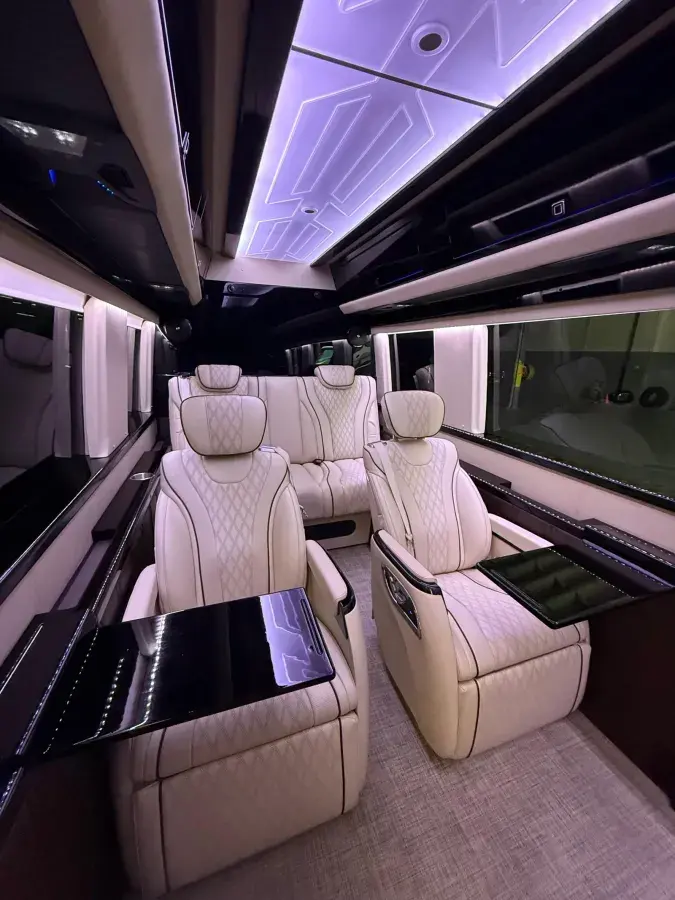
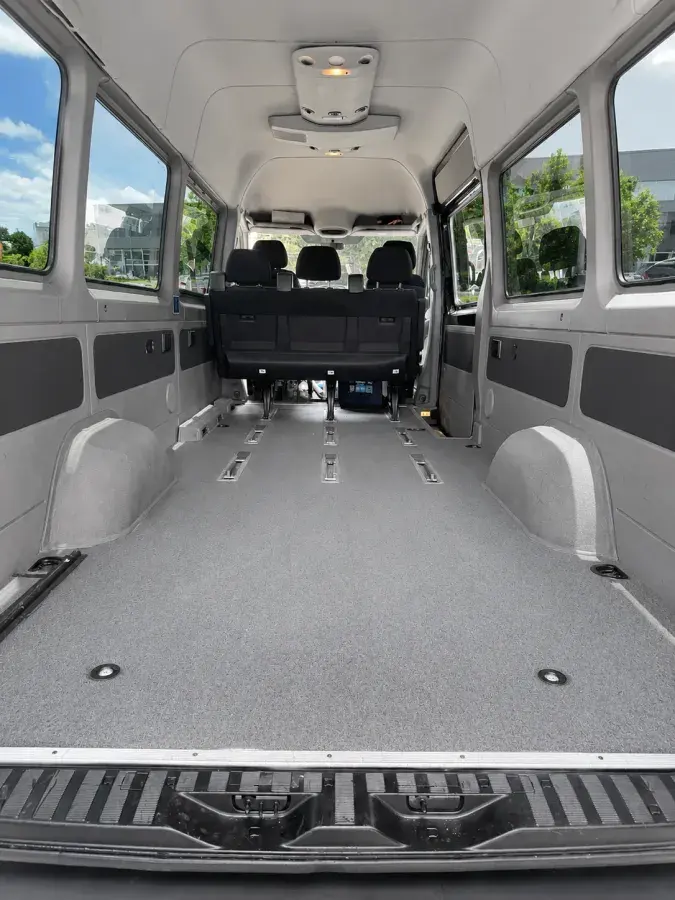
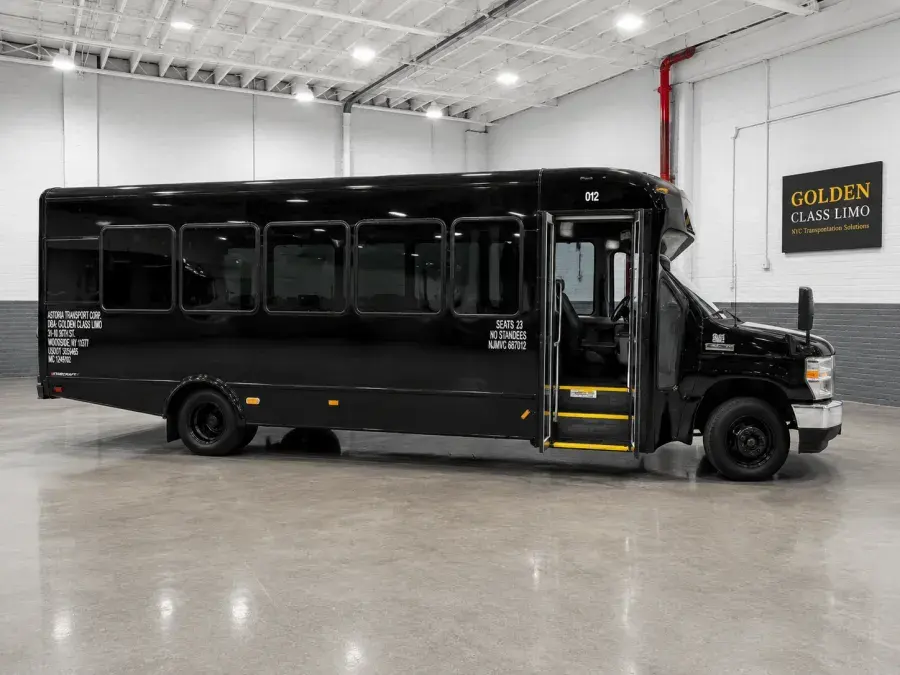
Sedans and SUVs for one to six, Sprinter vans for fourteen, mini buses and motor coaches to fifty-five. Switch tabs to see each class, or quote one straight from its card.
Showing 13 of 13 vehicles.
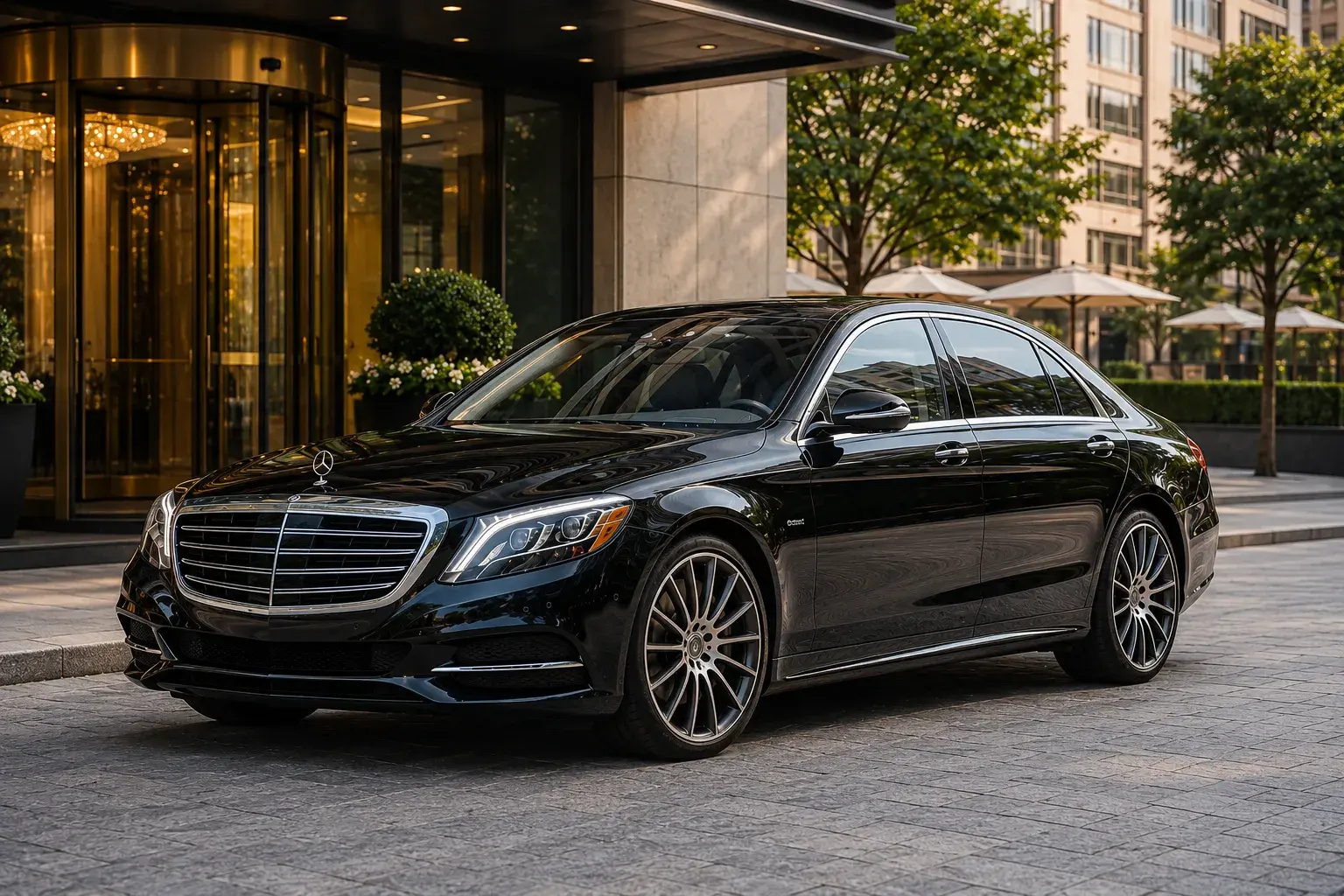
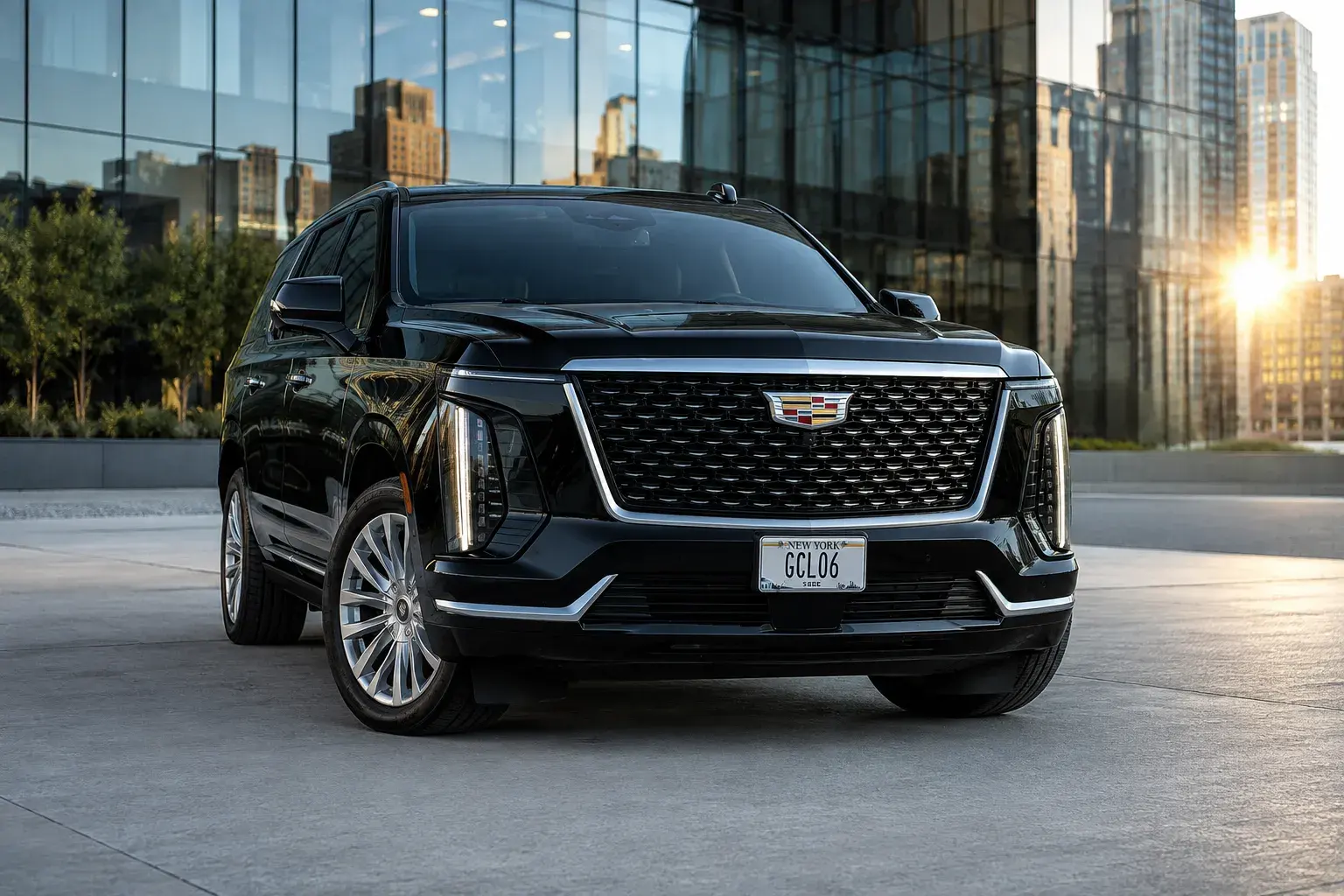
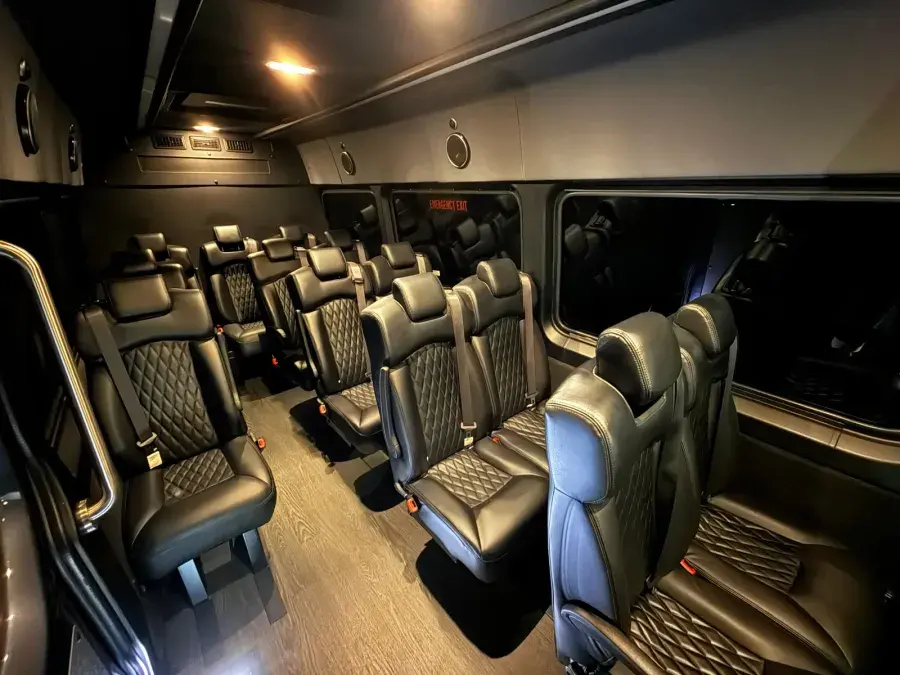
We sell one of these. The other three are real, and on the right day with the right luggage one of them is the better trip.
Best for. Hospital and clinic appointments, family groups, airport departures out of Newark, and any Bergen County address a bus would take two connections to reach.
The catch. For a single person heading to a town on the bus network out of the bridge terminal, this is more than the trip needs to cost. The value shows up with a group, with luggage, with a fixed appointment time, or when the Cross Bronx makes the timing a judgement call rather than a guess.
Best for. A single traveller heading to one of the Bergen County towns the bridge terminal's bus routes already serve, in daylight, with a light bag.
The catch. The 4, A and D trains get you to the terminal, but the bus at the far end runs to a timetable that thins out badly in the evening and at weekends. With a suitcase, a child or a wheelchair, the stairs and the changes turn a short trip into a long one.
Best for. Northern Bronx addresses heading to a town near a station on the New Jersey side of the Hudson line.
The catch. The rail network runs north and south rather than across the river, so almost every version of this involves doubling back through Manhattan or a taxi at the end. It is rarely the shortest path and almost never the simplest.
Best for. A short hop to a mall or a relative's house with a driveway, made by somebody who does not mind the Cross Bronx twice in a day.
The catch. The bridge approaches are the least pleasant driving in the region, the return leg is the tolled one, and a Bronx parking space given up on a weekday evening is rarely there when you get back. It is cheap in cash and expensive in patience.
Give us the address and the time you need to be there; the pickup is set backwards from it.
5 corridors, each right for somewhere different. Your chauffeur has your address before the day and chooses with live conditions rather than at the time you booked.
ServesFort Lee, Palisades Park, Hackensack and the Route 4 corridor
Port Authority toll collected on the New York-bound side only
The direct line and, at the wrong hour, the reason a six-mile trip takes forty minutes. Its eastbound and westbound sides do not fail together, so a chauffeur checking it before pickup is checking the direction you are actually going rather than the one on the news.
ServesSouth Bronx, Yankee Stadium area, Mott Haven and Highbridge
No toll on the Harlem River crossing; the Hudson crossing is charged eastbound
The approach from the south end of the borough, and the one that lets a vehicle join the bridge without running the full width of the Cross Bronx. When the Cross Bronx is stopped mid-span this is the alternative that actually helps, rather than the local streets, which fill the moment it does.
ServesRiverdale, Kingsbridge, Spuyten Duyvil and the northern residential blocks
A tolled parkway bridge at Spuyten Duyvil, then the Hudson crossing on return
A parkway with no trucks on it and by far the calmest ride to the bridge from the north-west Bronx. It carries a height restriction, so a coach cannot use it — group vehicles take the Deegan instead, which is worth knowing when a mini bus is quoted a different route from the sedan that came last week.
ServesMahwah, Ramsey, Montvale and the Route 287 corporate corridor
Tolled by the New York State Thruway Authority, charged southbound into New York
From the north Bronx it is often quicker to go up the Thruway and cross above the city than to fight south to the George Washington Bridge and back up the Garden State Parkway. It is longer in miles and shorter in minutes, which is exactly the sort of call a chauffeur who runs this corridor makes without being asked.
ServesEnglewood Cliffs, Tenafly, Alpine and the Rockland border towns
No additional toll beyond the Hudson crossing
The quiet way north on the New Jersey side, and a far better ride than Route 4 or Route 17 for anything above Englewood. Commercial vehicles are barred from it, so this is another road where the sedan and the coach take different lines to the same address.
Typical door-to-door ranges under ordinary conditions. Weather, incidents and holiday weekends all sit outside this table.
5am – 7am
The best window on this route. The Cross Bronx is moving and the bridge approaches are clear in both directions.
7am – 10am
Heavy against the commute rather than with it — the queue is inbound to the city, so the westbound trip usually holds up better than the map colours suggest.
10am – 2pm
Reliable, and the band we suggest for a medical appointment or anything else with a fixed arrival time and no slack in it.
2pm – 7pm
The Cross Bronx westbound is the single worst stretch of road in the region at this hour. The Deegan and the parkways are the release valves, and they are the difference between a long trip and a stalled one.
7pm – 10pm
Drops away quickly after seven. A dinner or event crossing usually runs at close to the overnight figure.
10pm – 5am
Quick, with overnight lane and level closures on the bridge the only thing that changes the plan. Those are checked before a late pickup rather than discovered on the ramp.
The Deegan and the parkways are the release valves, and your chauffeur checks them before pulling up.
The address decides the crossing, and the crossing decides the time. These are typical figures outside a peak window.
| Destination | Distance | Typical drive | Usual crossing |
|---|---|---|---|
| Fort Lee and Cliffside Park | about 6 miles | 20–45 minutes | Cross Bronx Expressway to the upper level |
| Englewood and Tenafly | about 10 miles | 25–50 minutes | Palisades Interstate Parkway |
| Hackensack and Teaneck | about 12 miles | 30–55 minutes | Cross Bronx Expressway to the upper level |
| Paramus and the Route 17 shopping corridor | about 20 miles | 35–65 minutes | Cross Bronx Expressway to the upper level |
| MetLife Stadium and the Route 3 corridor | about 15 miles | 30–60 minutes | Major Deegan Expressway to the Alexander Hamilton Bridge |
| Newark and Harrison | about 25 miles | 45–80 minutes | Major Deegan Expressway to the Alexander Hamilton Bridge |
| Montclair and the Oranges | about 20 miles | 40–70 minutes | Cross Bronx Expressway to the upper level |
| Mahwah and the Route 287 corridor | about 30 miles | 45–75 minutes | Governor Mario M. Cuomo Bridge |
Coaches and mini buses take the truck-legal roads while cars use the parkways, so the group size changes the plan rather than the price list. The widget above quotes your exact addresses with the toll and gratuity inside.
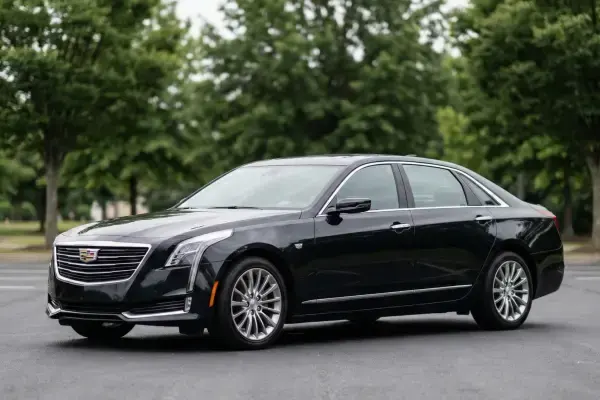
One or two people crossing for an appointment, a hospital visit or a meeting
Quoted on your addresses
Get an instant quoteSpecs and photos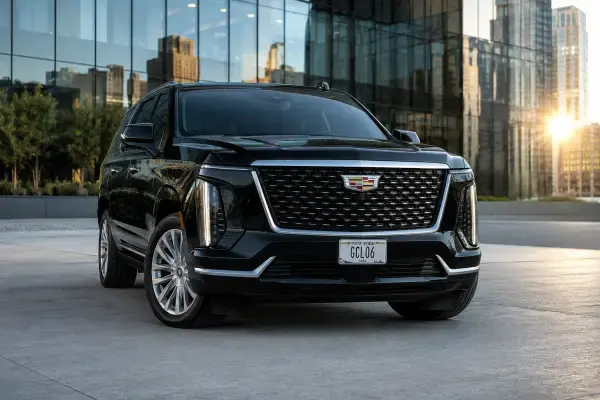
A family travelling together with real luggage and a child seat
Quoted on your addresses
Get an instant quoteSpecs and photos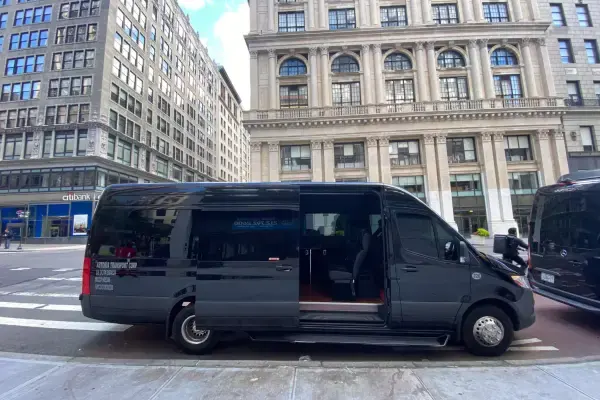
Work crews and family parties heading over the bridge in one vehicle
Quoted on your addresses
Get an instant quoteSpecs and photos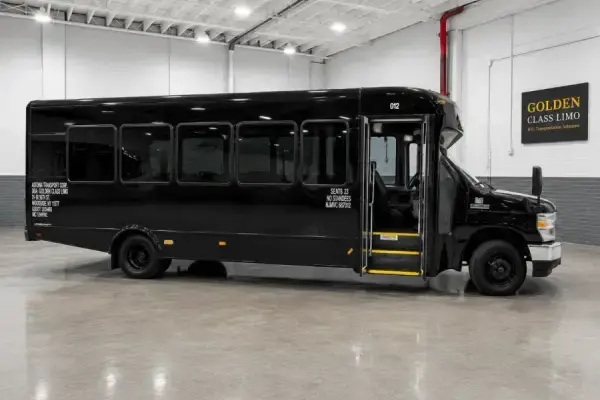
Church, school and community groups crossing to a Bergen County venue
Quoted on your addresses
Get an instant quoteSpecs and photos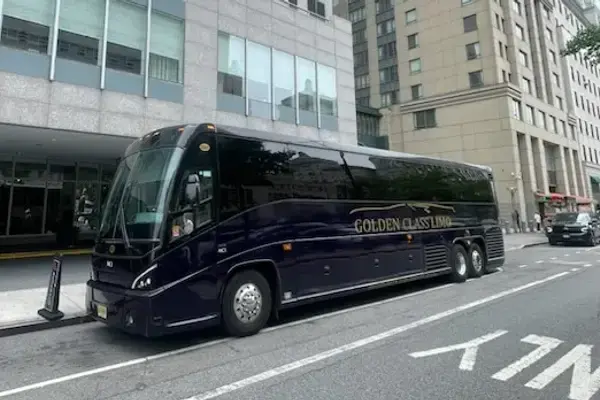
Full-size groups running to the Meadowlands or a New Jersey campus
Quoted on your addresses
Get an instant quoteSpecs and photosFares shown are for the New Jersey zone and are the same figures the booking form returns. A pickup or drop-off outside it prices differently, which is what the form is for.
One vehicle, one loading point, everyone arriving together. Quoted on your date in about a minute.
The borough is a mix of apartment towers, hospital campuses and residential streets with hills, and each of those wants a slightly different plan for where the vehicle stands.
Large buildings along the Grand Concourse and in Riverdale often have a service drive that is easier to load from than the main door. Tell us which one you will use and we confirm it in writing, so nobody is waiting on the wrong side of the block.
Discharges and appointments never finish on schedule. For those trips the chauffeur waits nearby and comes to the door when you call, rather than holding a lane outside an emergency entrance where a vehicle cannot legally stand.
A mini bus or coach cannot take some of the hills in Riverdale or the narrow one-way streets in the older parts of the borough. We pick a loading point on a through road nearby and tell every passenger the same corner and time.
Collecting a party from three Bronx addresses works best in a planned order that keeps the vehicle moving toward the bridge rather than back and forth across the borough. Each stop gets a time, not a window.
The return is the tolled direction and, for most of the day, the busier one. It is also the leg where the level you take across the bridge starts to matter.
Eastbound, the upper level feeds the Cross Bronx and the lower level feeds the Harlem River Drive and the Deegan. A chauffeur picks the one that matches your destination before joining the approach, because changing your mind halfway across is not an option.
Between seven and ten the bridge approaches in New Jersey are far busier than the Bronx ones. For an early appointment in the borough we leave earlier rather than trusting a live traffic layer that has not caught up with the ramp queue.
If the return is to catch a flight rather than to come home, it is planned backwards from wheels-up with the Turnpike built in. The Newark pages cover how the meet works at each terminal.
A round trip keeps one chauffeur and one vehicle on the day, which matters most for an evening return from a Bergen County suburb where hailing anything at ten at night is not realistic.
Booking both directions at once is one reservation on one account, on (718) 360-9383 or through the form above.
We watch your inbound flight and move the pickup with it, so a delay costs you nothing.
Room to clear immigration and collect bags without the clock working against you.
Your chauffeur waits in the arrivals hall with a name sign and helps with luggage.
Quoted as a flat, all-in rate. No surge, no line items added at drop-off.
Professional, uniformed and employed by us — never a broker's contractor.
A fully insured, inspected black fleet, maintained to a premium standard.
This page is about the bridge. Those cover the borough we collect in, the towns at the far end, and what each vehicle actually holds.

Executive partner
A partnership we hold directly with the organization — the same standard of service we bring to every airport transfer.
Book online, or call and a dispatcher will put a chauffeur on it.
Most enquiries for Bronx to New Jersey car service start with someone surprised at how short the trip is. Fort Lee is about six miles from the west Bronx, Englewood about ten, Hackensack twelve. On paper that is a twenty-minute drive, and at seven in the morning that is exactly what it is. What changes it is the Cross Bronx Expressway, which carries interstate freight through a dense residential borough on a road built before any of that volume existed.
That is the whole skill on this route. There are three ways to reach the George Washington Bridge from the Bronx — the Cross Bronx itself, the Major Deegan and the Alexander Hamilton Bridge from the south, and the Henry Hudson Parkway from Riverdale — and they do not fail at the same times. A chauffeur who crosses daily knows which is moving before the pickup rather than discovering it on the ramp.
Unlike most of our routes, this one has a credible public alternative for some trips: the subway to the bus terminal at the bridge, and then a New Jersey bus into Bergen County. For a single passenger travelling light to a town those routes serve, in the middle of the day, it works and it is cheap. We would rather say that than pretend otherwise.
It stops working in the situations that actually fill our enquiry log. Evening and weekend timetables thin out sharply. Hospital appointments do not end when the bus is due. A family with cases cannot manage a change with stairs at both ends. And a group of twenty is not a bus trip at all — it is one vehicle, or it is chaos.
One quirk of this corridor catches people out: several of the nicest roads are closed to commercial vehicles. The Henry Hudson Parkway and the Palisades Interstate Parkway both bar buses and trucks under long-standing height and vehicle restrictions, so a coach or a mini bus takes the Major Deegan and the truck-legal roads on the New Jersey side instead.
The practical effect is that the same journey has two route plans depending on what you book. It is why we ask for the group size before quoting rather than after, and why a coach's timing on this route is quoted a little more generously than a sedan's — not because the vehicle is slower, but because its legal road is busier.
The group work on this corridor splits between family occasions and organised trips — a congregation heading to a hall in Bergen County, a school group to a game at the Meadowlands, a company running staff to a site off Route 3. Those bookings are planned from the arrival time backwards, with a loading point in the Bronx that a full-size vehicle can actually use.
For stadium and arena trips the return matters more than the outbound. We agree where the vehicle will stand afterwards, keep the chauffeur's number with the organiser, and hold that spot rather than circling — which is what turns the end of a long day into a fifteen-minute departure instead of an hour of looking for a coach.
Twenty to forty minutes to Fort Lee and the towns just over the George Washington Bridge, thirty to sixty-five to Hackensack or Paramus, and about an hour to Newark. The variable is almost entirely the Cross Bronx Expressway: the same trip can take twenty minutes at six in the morning and an hour at five in the afternoon.
Closer than most people assume. Fort Lee is about six miles from the west Bronx, Englewood about ten, Hackensack twelve, Paramus twenty and Newark twenty-five. The Bronx is the New York City borough with the shortest drive into New Jersey, because the George Washington Bridge lands directly opposite it.
For one person travelling light in daylight to a town served by the buses from the bridge terminal, the subway and a bus is cheap and workable. For everyone else — groups, luggage, medical appointments, evening trips, anywhere the buses do not reach — a chauffeured car is faster and considerably less effort, because the whole journey is one vehicle over one bridge.
It depends on where in the Bronx you start and what the roads are doing. The Cross Bronx Expressway is the direct approach, the Major Deegan and the Alexander Hamilton Bridge serve the south of the borough, and the Henry Hudson Parkway is the calmest line from Riverdale. Coaches and mini buses take the Deegan, because the parkways bar commercial vehicles.
Yes. The George Washington Bridge is tolled by the Port Authority on the New York-bound side, so the westbound trip out of the Bronx carries no crossing toll and the return does. Either way it is inside the quote you agree, along with the chauffeur's gratuity, and the price does not change if traffic does.
Yes. We run mini buses from 23 to 38 seats and coaches to 55, with luggage in the hold on the larger vehicles. The pickup point is chosen for a vehicle that size — a through road rather than a narrow or steep residential block — and every passenger is given the same corner and the same time so the loading takes minutes.
Yes, and they are a regular part of this route. Discharge times and appointments rarely run to schedule, so the chauffeur waits nearby and comes to the door when you are ready rather than holding a lane outside the entrance. If a wheelchair or a walker is travelling, tell us at booking and we will size the vehicle for it.
Yes. Multi-stop pickups are sequenced so the vehicle keeps moving toward the bridge instead of crossing the borough twice, and each address is given its own time rather than a window. For a family occasion or a group outing it is almost always cheaper and easier than booking separate cars.
Yes, and it is priced as an airport transfer because the flight changes how the trip is run. Departures are timed backwards from wheels-up with the Turnpike built into the plan, and arrivals are tracked against the live flight so a delay moves the car. Cars, vans and coaches all run it.
A sedan or SUV can usually be arranged the same day, often within the hour outside a peak. Sprinter vans are best booked a day or two ahead, and mini buses or coaches a week or more, since group vehicles are a finite fleet and weekend dates fill first. Dispatch is staffed 24 hours a day, 365 days a year, so late bookings still reach a person.
4.7 stars across 300+ Google reviews — and 3,100+ riders served.
Available 24/7, 365 days a year
Get an instant quote online, or call and a dispatcher will have a chauffeur on the way.