The person booking is rarely the person travelling
Most corporate ground transportation in New York is arranged by someone who will not be in the car. An executive assistant books a partner's 6 a.m. departure. A travel manager sets up the standing Thursday run to the airport. An events lead moves ninety people from a Midtown hotel to a venue in New Jersey and back. Each of them is judged on whether it went smoothly, and none of them will be there to see it.
That changes what a good provider has to do. The booking has to be confirmable in writing, the vehicle and chauffeur have to be known in advance rather than assigned by an algorithm at pickup, and someone has to answer the phone at the moment something moves. A consumer ride-hailing app is built for the opposite case — the traveller is the booker, and nobody is accountable afterwards.
Why hourly beats point-to-point for a working day
A day of meetings across Manhattan looks like it should be four separate trips. Booked that way it usually is not: the second meeting runs long, the third moves downtown, and each new pickup is a fresh wait in traffic that nobody planned for. Hourly as-directed service holds one car and one chauffeur for the block, so the schedule can move without the transportation having to be rebooked around it.
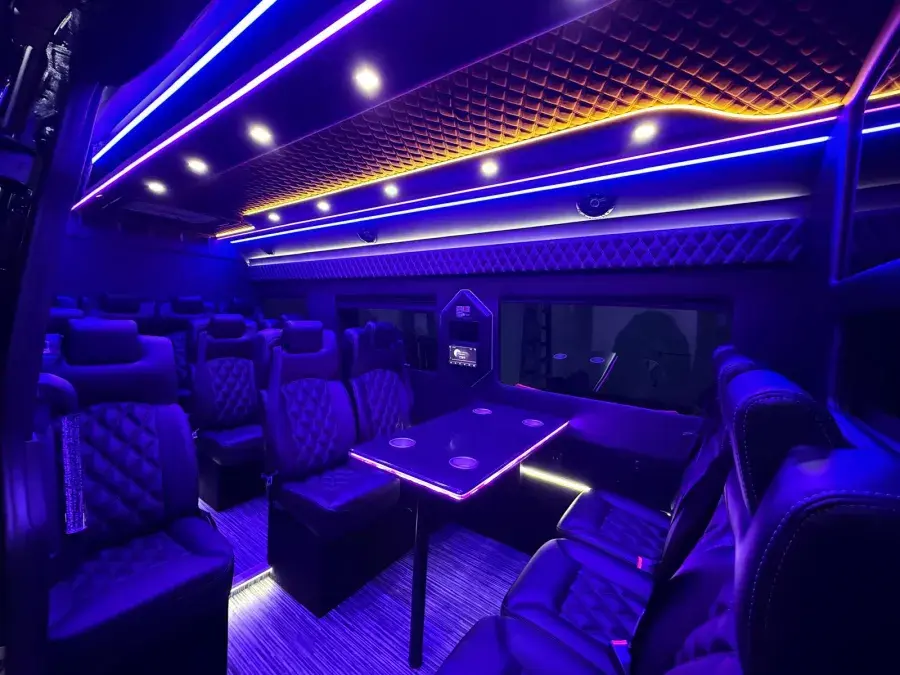
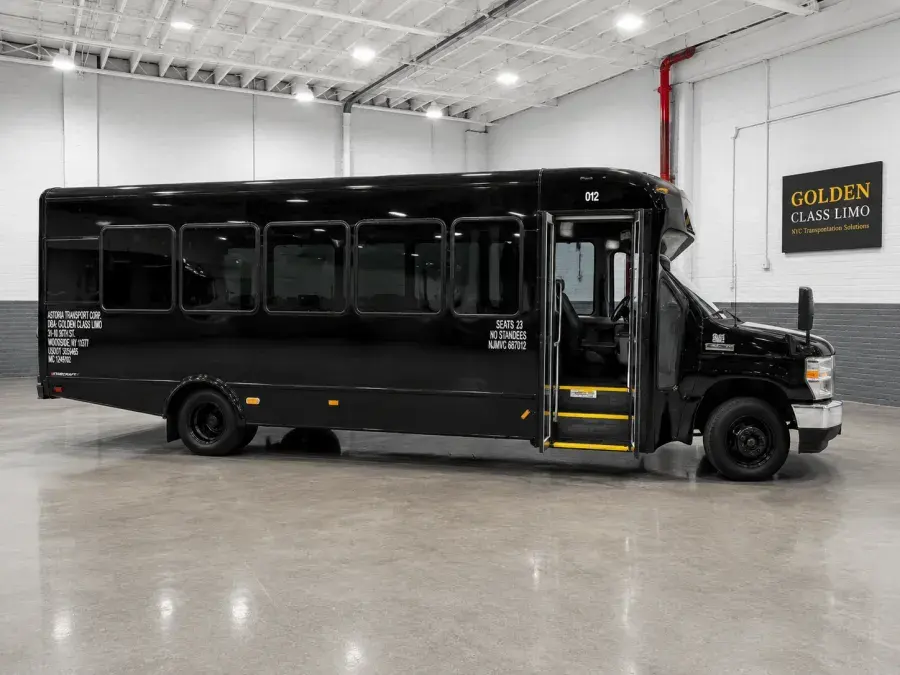
The trade is a minimum — two hours on a sedan or SUV, three on a Sprinter, four on a mini bus, five on a motor coach. Below that, point-to-point is genuinely cheaper and we will say so. Above it, hourly is almost always both cheaper and calmer than stacking transfers, because you stop paying for the same car to drive back across town empty.
What a corporate account changes
Without an account, every ride is its own transaction: a card, a receipt, an expense line, a reconciliation. Across a firm booking forty rides a month that is forty pieces of administration for work that was identical each time.
An account replaces it with one monthly invoice, cost codes where a department needs them, and traveller profiles that hold the preferences a regular passenger should not have to repeat — the pickup door they actually use, the temperature, whether they want conversation. It also puts a named person in dispatch behind the booking, which is the part that matters at 5 a.m. when a flight lands early.
Coverage, and where the tri-state actually reaches
We cover all five boroughs, Westchester, Long Island, northern New Jersey and Connecticut, and we run the airports every day — JFK, LaGuardia, Newark Liberty and Teterboro for private aviation. Longer corporate runs to Philadelphia, Boston, Washington and the Hamptons are booked as directed rather than as a fixed fare, because the return leg and the waiting time are what set the cost.
Being based in Long Island City rather than Manhattan is a practical advantage for this work: it is on the Queens side of the East River, which is the right side for JFK and LaGuardia, and it means a vehicle staged for a 5 a.m. pickup is not crossing a bridge to reach you.