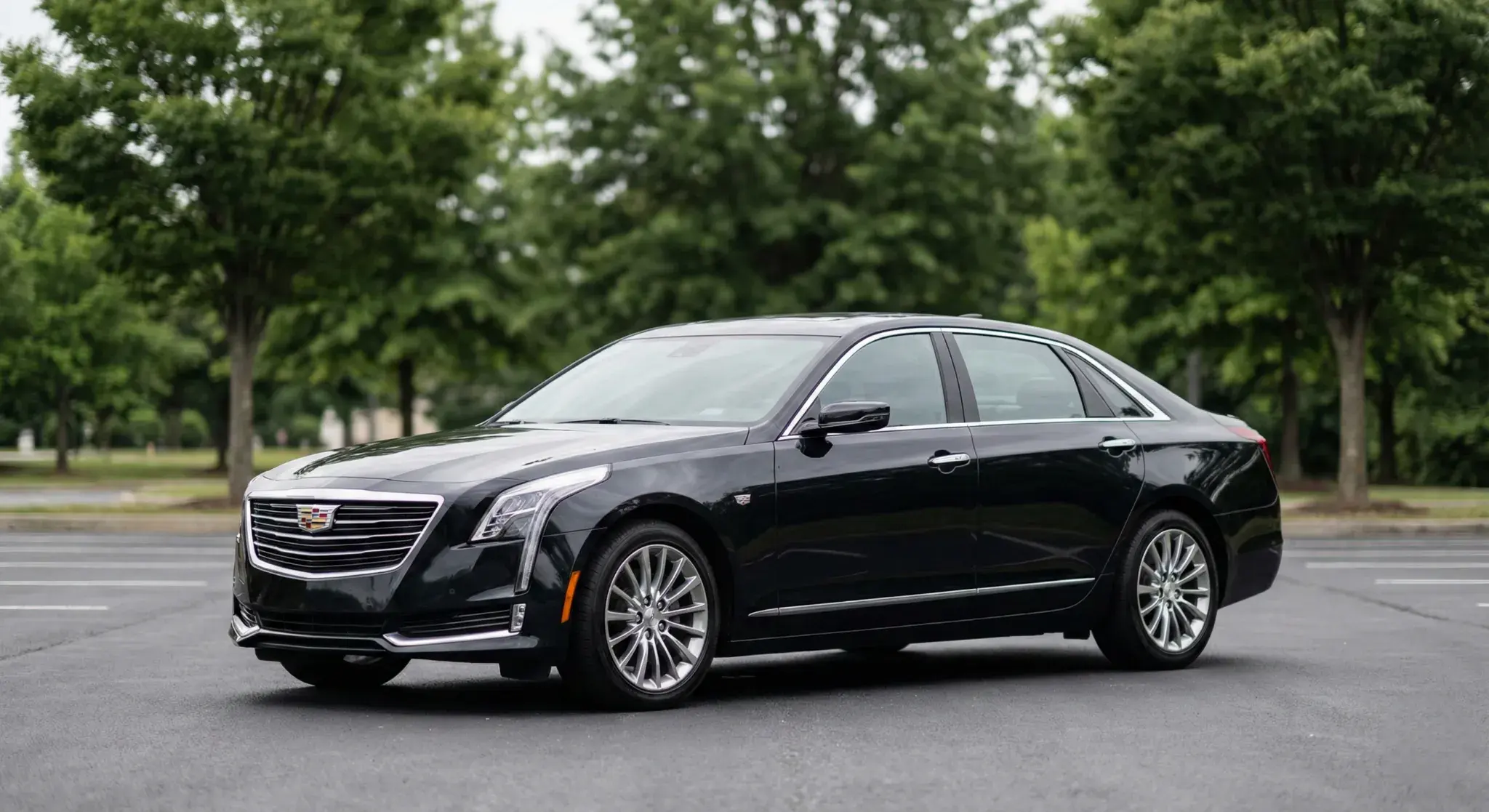
Executive Sedan
3 passengers · 3 bags

SEDANS · SPRINTER VANS · MINI BUSES · COACHES
About 100 miles, door to door — no stations at either end. Teams, equipment and groups of 1 to 55.
Chauffeured city-to-city transportation between Manhattan and Philadelphia — Center City, the convention centre, University City, the stadium district and the surrounding suburbs — in executive sedans, Escalade ESVs, Sprinter vans, mini buses and 55-seat coaches.
4.7 ★ · 300+ Google reviews · 3,100+ clients
Trusted by teams & travelers across NYC










Manhattan to Philadelphia is about 100 miles and takes two to three hours door to door. The road is almost entirely the New Jersey Turnpike, and the variables are the twenty minutes getting out of Manhattan and which bridge you cross into the city at the far end.
Amtrak's Northeast Corridor covers the same distance in a little over an hour, centre to centre, and for a single traveller with a laptop it is the better answer. We would rather say that plainly than argue otherwise.
A private vehicle wins when the group is larger than three or four, when either address is away from the stations, when there is equipment or a stand to carry, when the day has several stops, or when the schedule does not fit the timetable.
Golden Class Limo runs it in executive sedans and Escalade ESVs, 14-passenger Sprinter vans, and mini buses and coaches to 55 seats, quoted on the two addresses with the Turnpike and bridge tolls and the gratuity inside the figure.
Bookings and changes are handled 24/7, 365 days a year on (718) 360-9383, which matters when a meeting overruns and the return has to move.
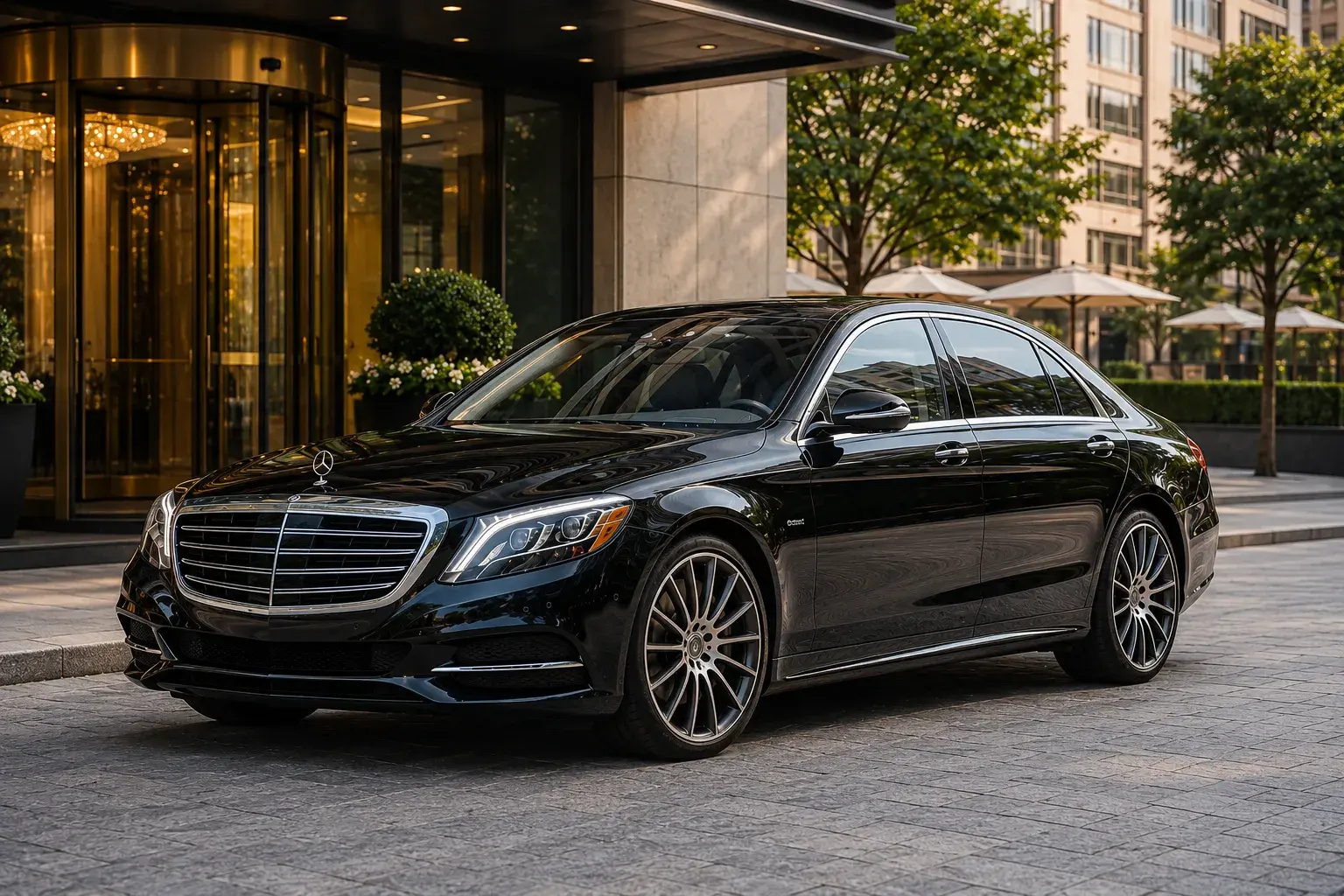
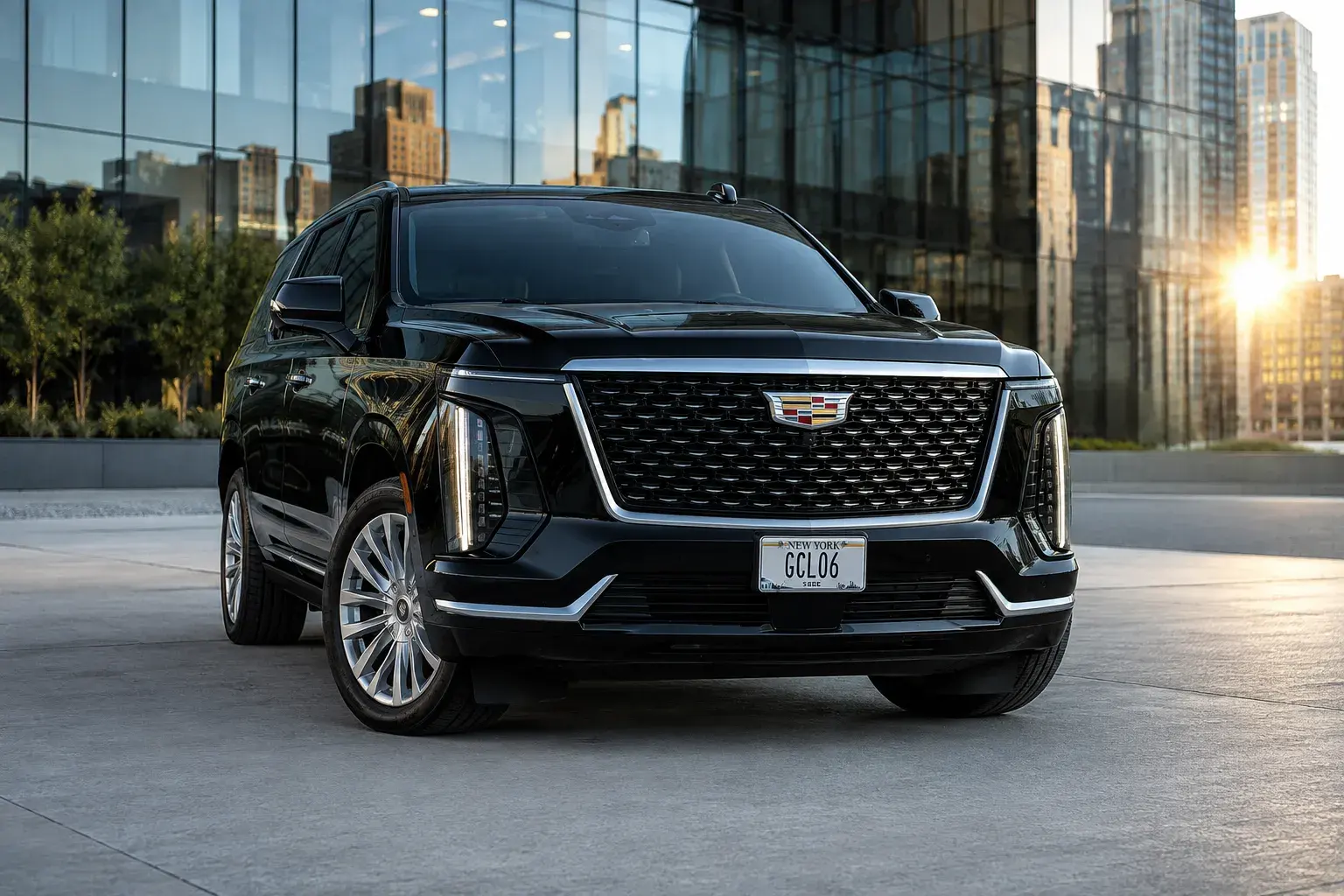
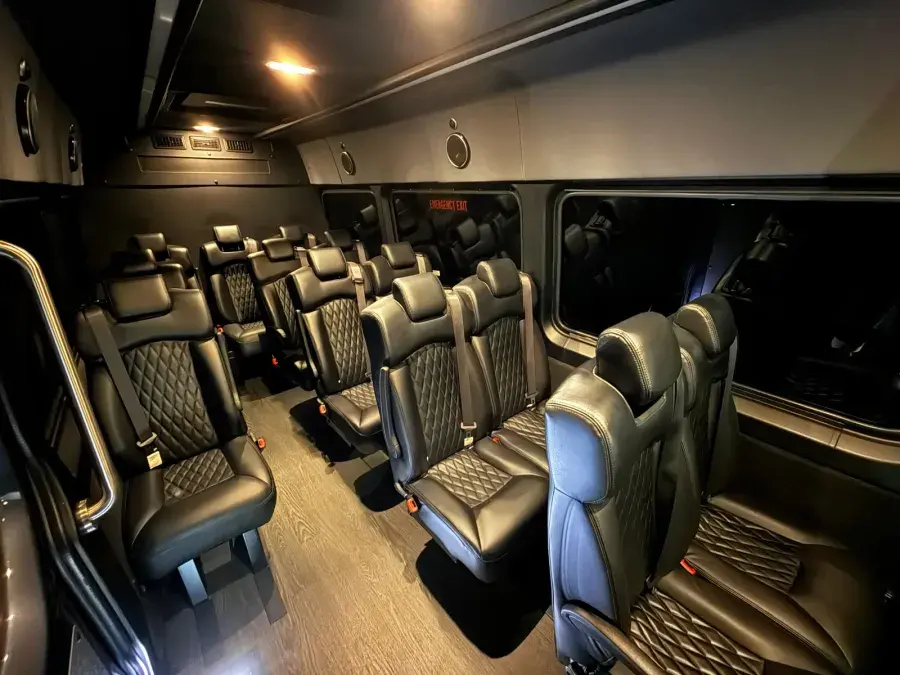
Sedans and SUVs for one to six, Sprinter vans for fourteen, mini buses and motor coaches to fifty-five. Switch tabs to see each class, or quote one straight from its card.
Showing 13 of 13 vehicles.
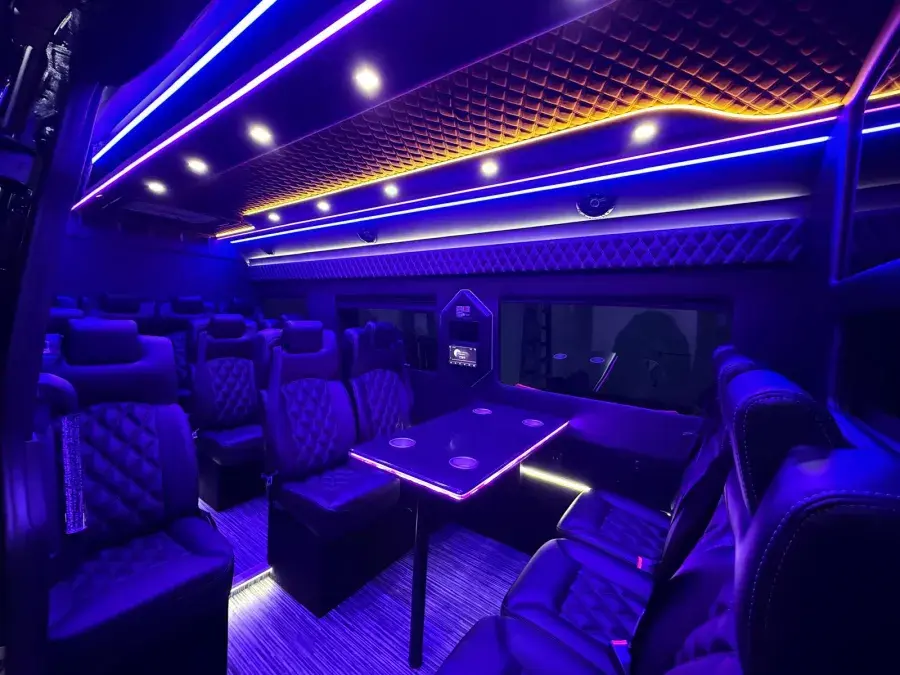
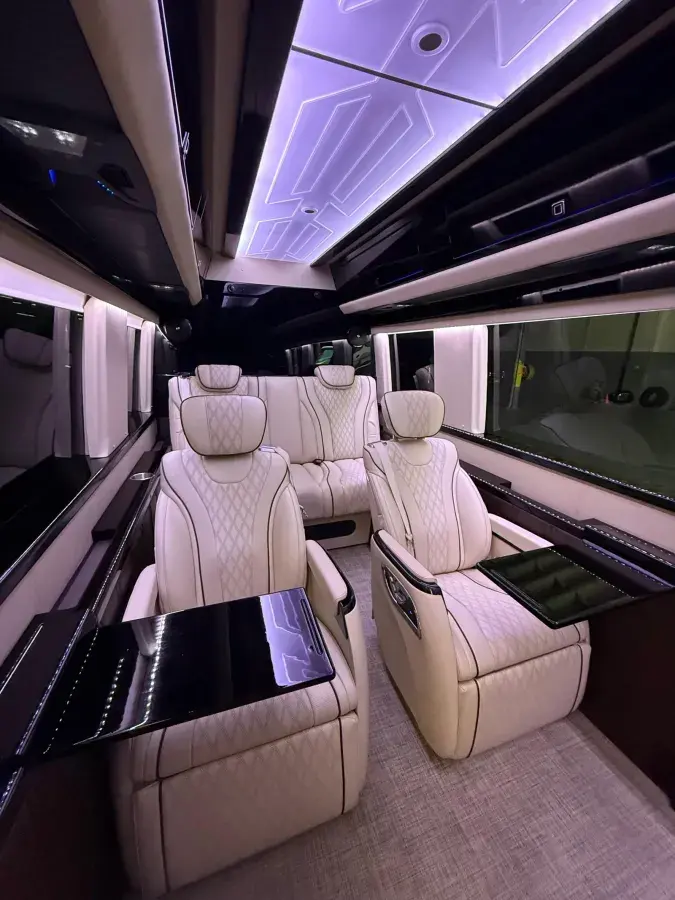
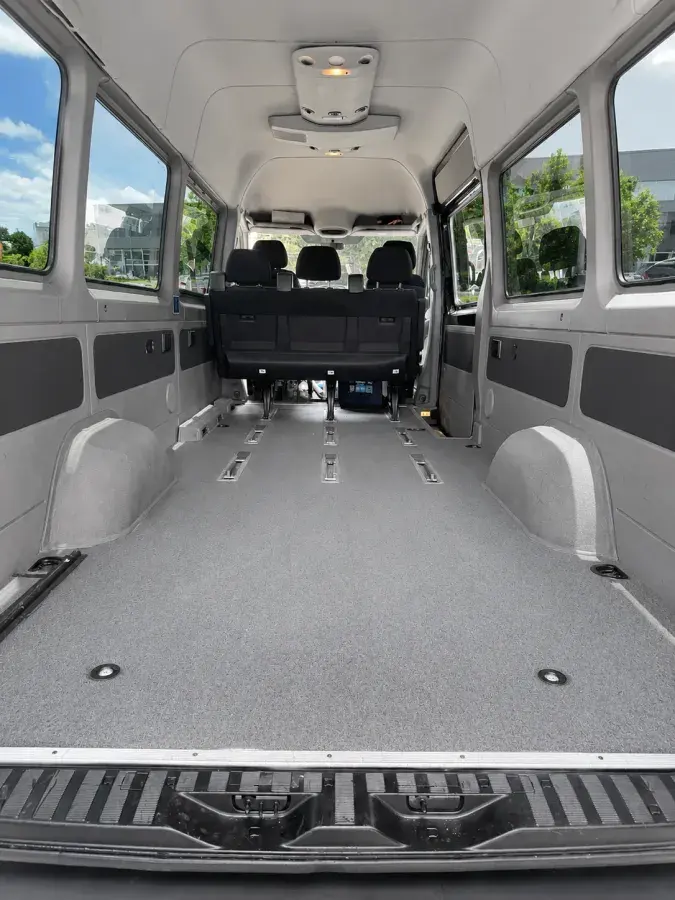
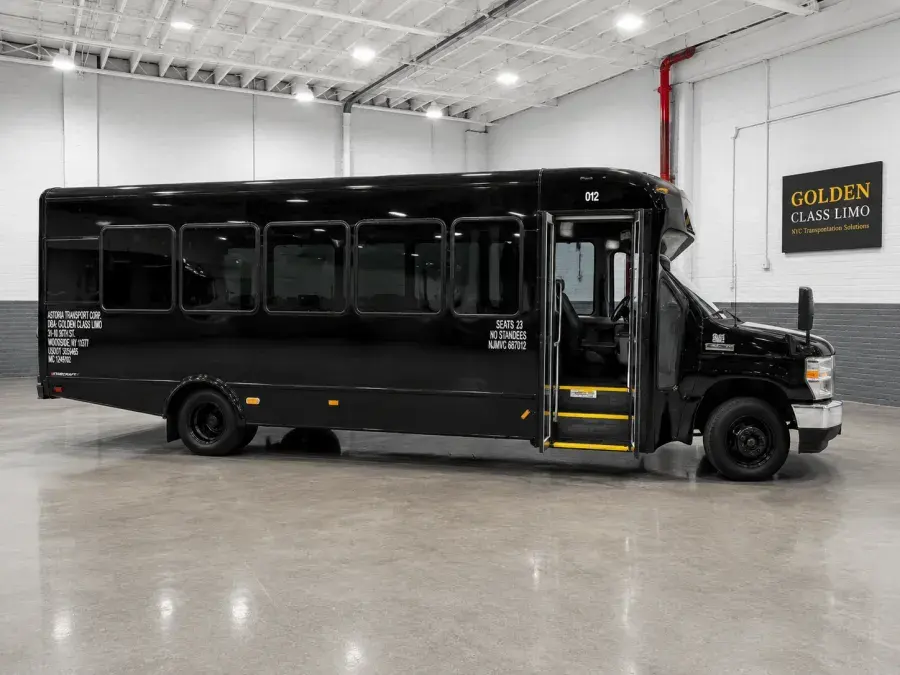
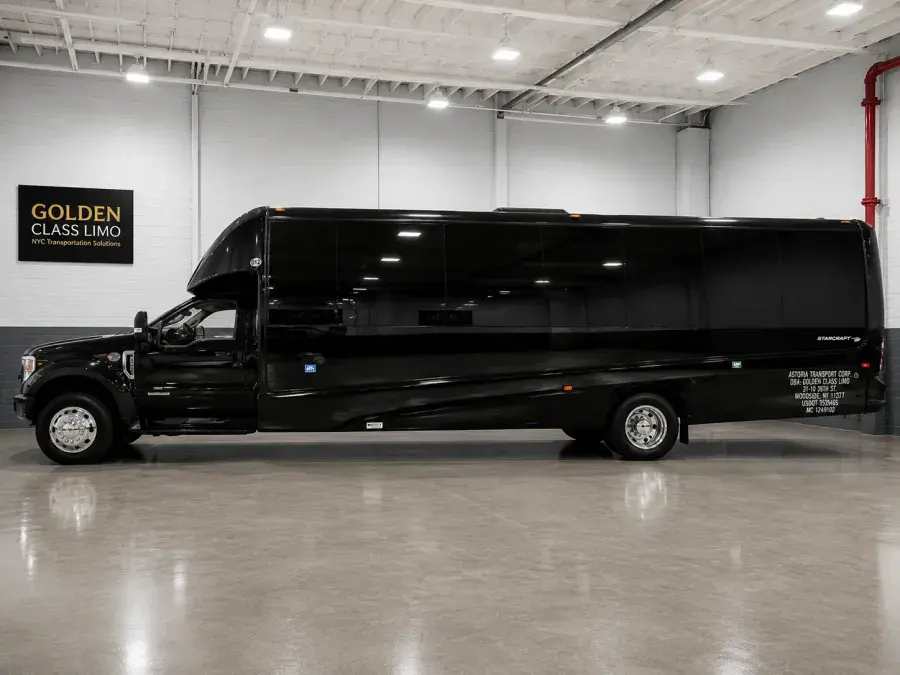
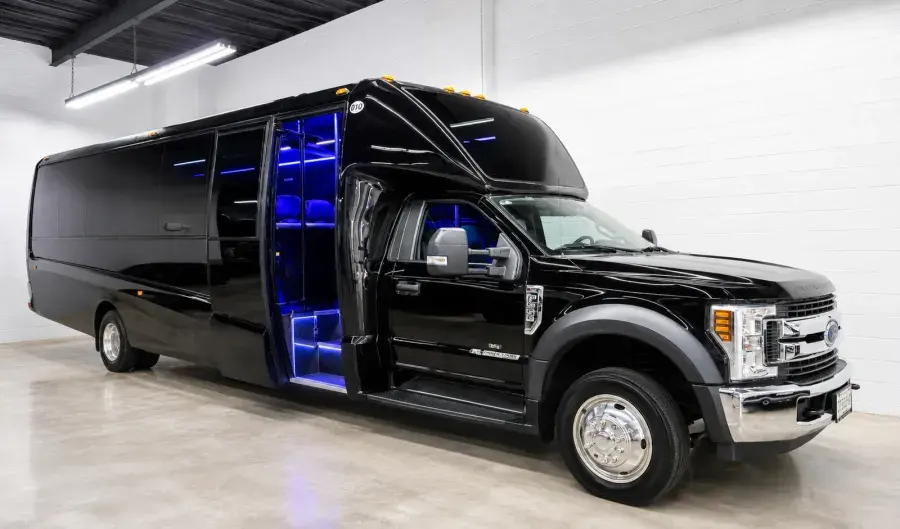
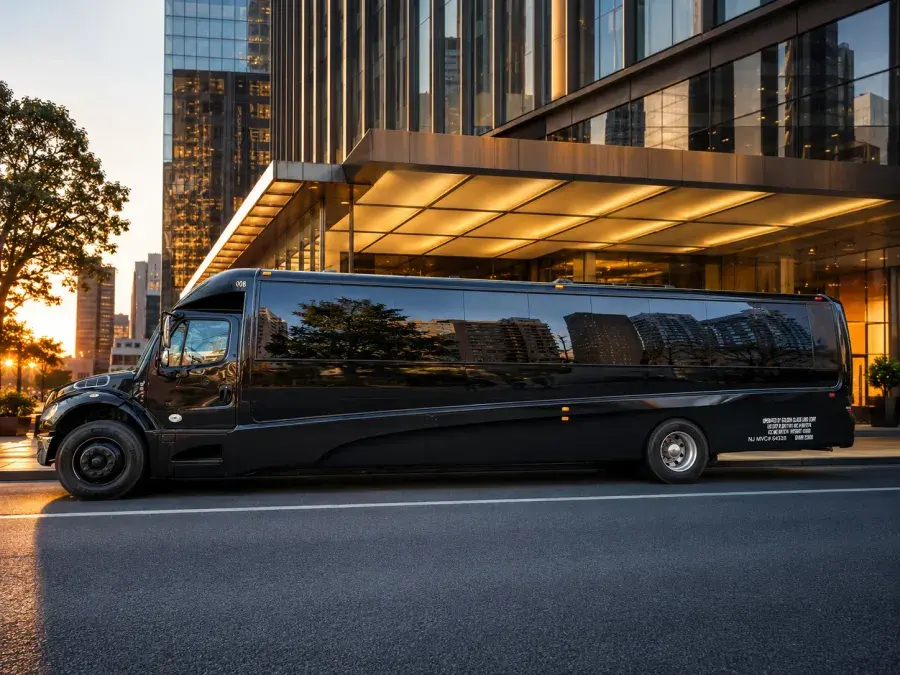
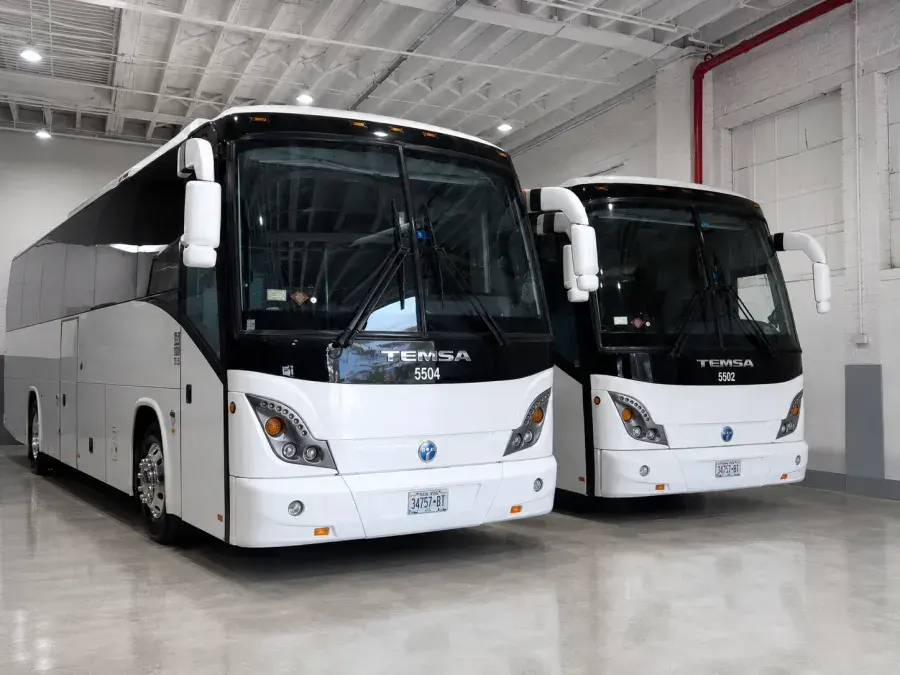
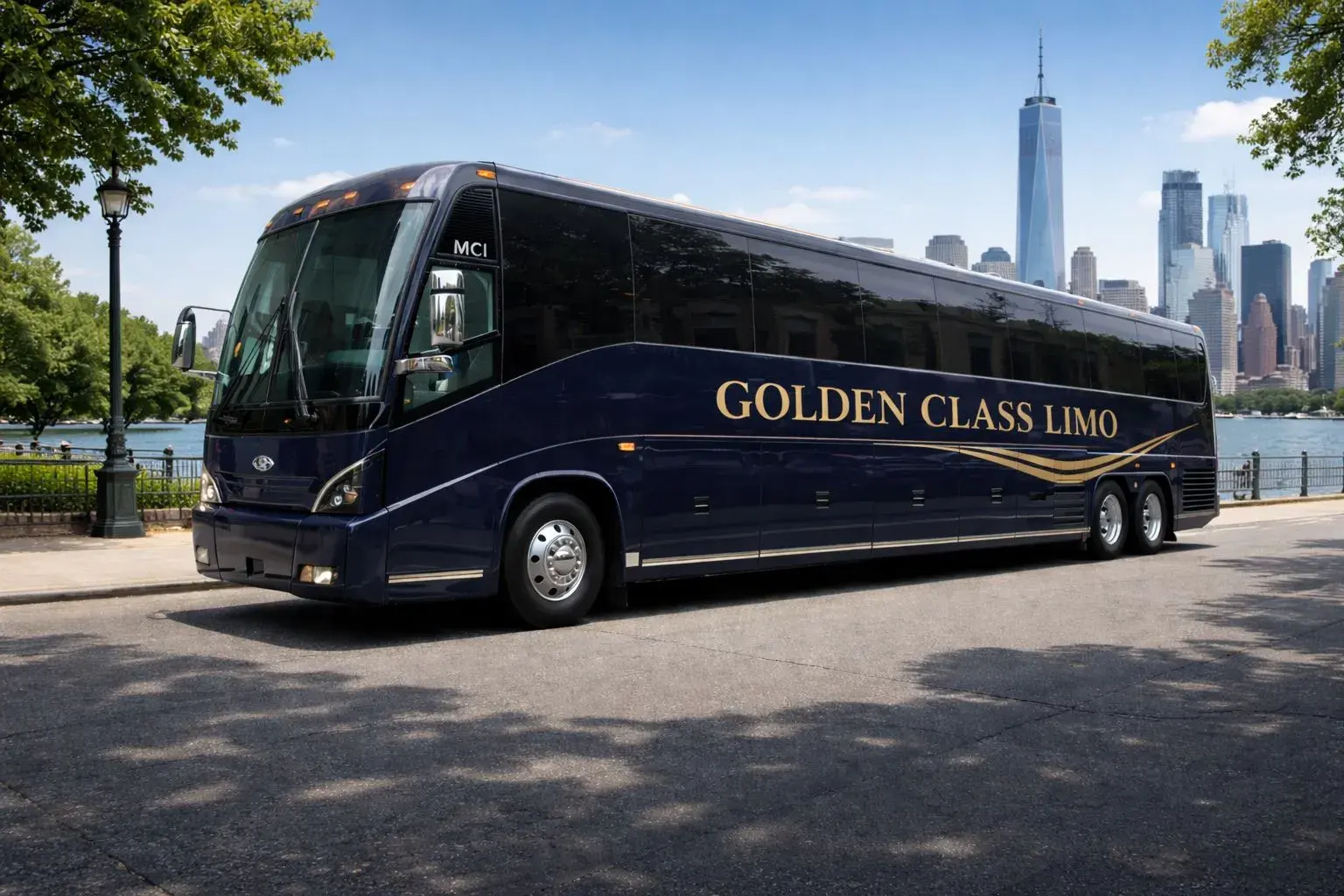
We sell one of these. The other three are real, and on the right day with the right luggage one of them is the better trip.
Best for. Teams of four or more, any trip with equipment or display materials, multi-stop days, and addresses on either end that sit well away from the rail stations.
The catch. For one or two people travelling between the two city centres, the train is faster and much cheaper, and no amount of good driving changes that. The vehicle earns its price on party size, on door-to-door convenience and on days the timetable cannot serve.
Best for. Solo business travel between Midtown and Center City, where both ends are a short walk or a quick cab from a station.
The catch. You still have to reach Penn Station and then leave 30th Street at the other end, which for outer addresses can add an hour to a seventy-five-minute journey. Peak fares for a group of six exceed the cost of a van, and there is nowhere to put a stand or a case of samples.
Best for. Budget travel with time to spare, when the change at Trenton fits your day and you are travelling light.
The catch. Two separate systems, a platform change halfway, and commuter services that are crowded at exactly the hours people want to travel. It is a long trip on regional trains rather than a fast one on an express.
Best for. Solo travel on a tight budget when the departure time and the kerbside stop happen to suit you.
The catch. Departures are from a kerb or a terminal rather than your door, luggage is limited per passenger, and the schedule is fixed — a meeting that runs twenty minutes late can cost you two hours waiting for the next service.
Tell us the first meeting time and we will work the departure back from it.
5 corridors, each right for somewhere different. Your chauffeur has your address before the day and chooses with live conditions rather than at the time you booked.
ServesThe first twenty minutes out of Lower Manhattan and Midtown
Port Authority toll on the New York-bound side; the Turnpike is ticketed
The urban part of the trip and the only genuinely unpredictable stretch. A departure before three on a weekday is a different journey from one at five, which is why the time we recommend is part of the quote rather than an afterthought.
ServesCenter City, Old City and the Delaware Avenue hotels
New Jersey Turnpike ticket plus a bridge toll into Pennsylvania
The faster of the two lines for most Center City addresses, and the one that keeps a vehicle on motorway all the way to the river. It is also the route that suits a coach, which handles the sweeping Turnpike interchanges far better than the local roads south of Exit 4.
ServesNorthern Liberties, Fishtown and the Center City northern edge
Turnpike ticket and a Delaware River Port Authority bridge toll
A shorter run on paper and a slower one in practice once Route 73 fills with local traffic. We take it when the Turnpike south of Exit 4 is disrupted, or when the destination sits closer to the bridge's Philadelphia landing than to the expressway.
ServesThe stadium district, the Navy Yard and the airport side of the city
Tolled into Pennsylvania by the Delaware River Port Authority
The right crossing for anything in the south of the city, and the one that avoids Center City traffic entirely. On event days at the stadium complex the approaches fill early, so a group booking to that side of town is quoted with a buffer rather than a hopeful estimate.
ServesThe convention centre, Market East and the Parkway museums
Untolled
The last mile for most business trips, and a short, sunken road that backs up quickly when a convention is loading. Where the destination is on the convention block we set down on a side street rather than joining that queue.
Typical door-to-door ranges under ordinary conditions. Weather, incidents and holiday weekends all sit outside this table.
4am – 7am
The best window by a distance, and the one most same-day business trips use. Out of Manhattan before the commute and onto an empty Turnpike.
7am – 10am
The Hudson crossings are busy against you rather than with you, so the delay is mostly in Manhattan rather than on the motorway.
10am – 3pm
The most predictable band and the easiest in which to promise an arrival for a meeting or a conference session.
3pm – 7pm
Leaving Manhattan is slow, and the Philadelphia end adds its own commute on the expressway. A departure moved an hour earlier usually arrives an hour earlier.
7pm – 11pm
Clear motorway all the way. A return after an evening event is one of the easiest drives on this corridor.
11pm – 4am
The quickest version of the trip, with overnight roadworks on the Turnpike the only thing that changes it.
Tell us what is travelling and the vehicle is sized for the load, not the headcount.
The address decides the crossing, and the crossing decides the time. These are typical figures outside a peak window.
| Destination | Distance | Typical drive | Usual crossing |
|---|---|---|---|
| Center City and Rittenhouse | about 100 miles | 2 to 3 hours | New Jersey Turnpike to Exit 6 and the Pennsylvania extension |
| The convention centre and Market East | about 100 miles | 2 to 3 hours | Vine Street Expressway into Center City |
| Old City and Society Hill | about 98 miles | 2 to 3 hours | Turnpike Exit 4 and Route 73 to the Ben Franklin Bridge |
| University City and the hospital campuses | about 102 miles | 2.25 to 3.25 hours | New Jersey Turnpike to Exit 6 and the Pennsylvania extension |
| The stadium district and the Navy Yard | about 103 miles | 2.25 to 3.25 hours | Walt Whitman Bridge to South Philadelphia |
| Northern Liberties and Fishtown | about 97 miles | 2 to 3 hours | Turnpike Exit 4 and Route 73 to the Ben Franklin Bridge |
| Cherry Hill and the New Jersey suburbs | about 90 miles | About 2 hours | Turnpike Exit 4 and Route 73 to the Ben Franklin Bridge |
| King of Prussia and the western suburbs | about 115 miles | 2.5 to 3.5 hours | New Jersey Turnpike to Exit 6 and the Pennsylvania extension |
Above about eight passengers a single vehicle is cheaper than peak rail fares before the taxis at either end. The widget above prices your two addresses with every toll and gratuity inside.
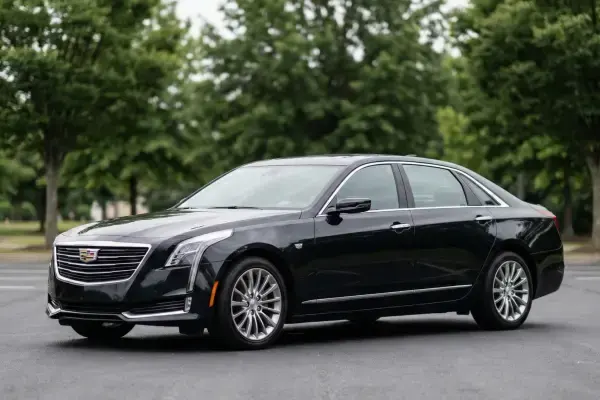
An executive with meetings at both ends of a single day
Quoted on your addresses
Get an instant quoteSpecs and photos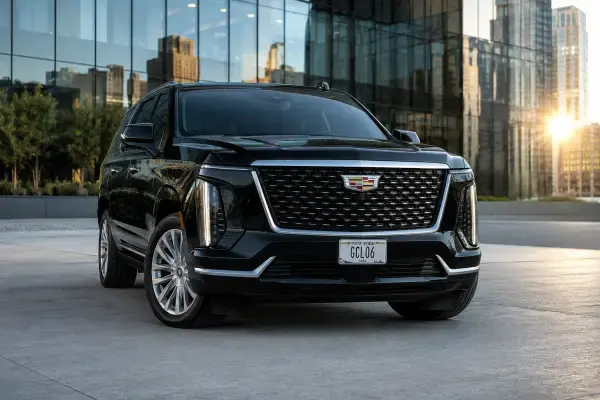
A small team with cases, samples or equipment
Quoted on your addresses
Get an instant quoteSpecs and photos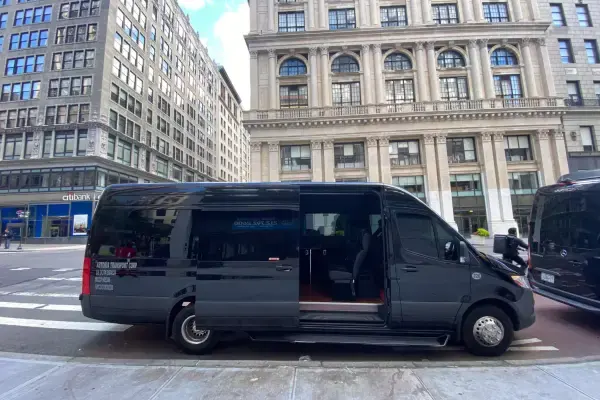
A department travelling together and working on the way down
Quoted on your addresses
Get an instant quoteSpecs and photosA deal team using the corridor as billable time
Quoted on your addresses
Get an instant quoteSpecs and photos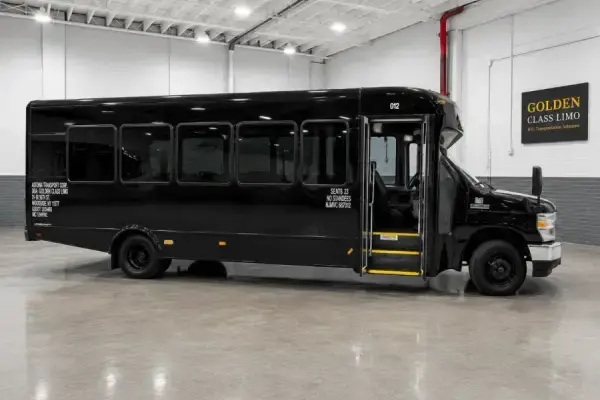
Conference delegations and university groups moving city to city
Quoted on your addresses
Get an instant quoteSpecs and photos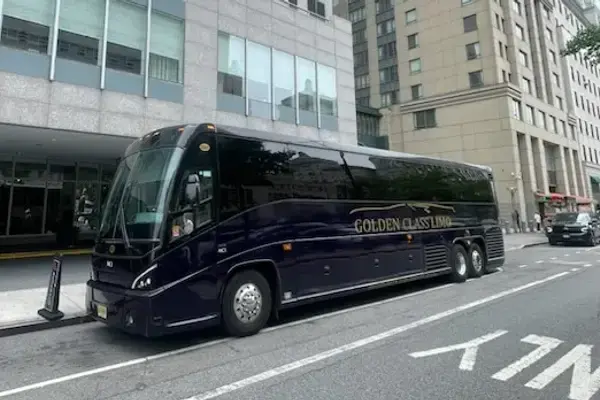
Full charters for offsites, tours and organised group travel
Quoted on your addresses
Get an instant quoteSpecs and photosFares shown are for the Philadelphia zone and are the same figures the booking form returns. A pickup or drop-off outside it prices differently, which is what the form is for.
One mini bus or coach, materials in the hold, everyone at the door together. Quoted in a minute.
Most trips on this corridor are business days with a fixed first appointment, so the pickup is built backwards from that meeting rather than forwards from the office.
Tell us when you need to be in the room and we work back through the expressway, the Turnpike and the exit from Manhattan. That usually means an earlier start than people expect and an arrival with time to spare rather than a sprint from the kerb.
Stands, samples and production kit are a common reason this route is driven rather than taken by train. Tell us what is travelling at booking and we size the vehicle for the load instead of discovering it will not fit at the kerb.
A department travelling together boards at a single Manhattan point — an office entrance on a side street, or a hotel bay for a larger vehicle — rather than being collected across four addresses. It keeps the departure to a few minutes.
Regular city-to-city work is usually booked on an account with named travellers, cost codes where a department needs them, and a single monthly invoice. The corporate page sets out how that works.
Most of this route is return traffic, and the return leg is the one that decides whether the day was worth driving.
For a day of meetings we hold the same vehicle and chauffeur on an as-directed basis. It costs less than two separate long-distance transfers and means nobody is arranging a ride home at six in the evening a hundred miles away.
After seven the Turnpike is clear the whole way and the Hudson crossings are quick. An evening departure from Philadelphia usually reaches Midtown in close to two hours.
Around the convention centre the kerb space disappears when a session lets out, so we agree a collection point on a side street in advance and the chauffeur waits there rather than circling the block.
Meetings overrun. A dispatcher is on duty at any hour to move the return, and because nothing is metered a later departure does not change the agreed price.
Booking both directions at once is one reservation on one account, on (718) 360-9383 or through the form above.
We watch your inbound flight and move the pickup with it, so a delay costs you nothing.
Room to clear immigration and collect bags without the clock working against you.
Your chauffeur waits in the arrivals hall with a name sign and helps with luggage.
Quoted as a flat, all-in rate. No surge, no line items added at drop-off.
Professional, uniformed and employed by us — never a broker's contractor.
A fully insured, inspected black fleet, maintained to a premium standard.
This page is about the drive down the Turnpike. Those cover account travel, the state in between and what each vehicle actually holds.
Executive partner
A partnership we hold directly with the organization — the same standard of service we bring to every airport transfer.
Book online, or call and a dispatcher will put a chauffeur on it.
Any honest page about Manhattan to Philadelphia car service has to start with Amtrak. The Northeast Corridor covers this route in a little over an hour centre to centre, which no vehicle on the Turnpike will ever match. For a single traveller going from Midtown to Center City with a laptop bag, the train is the right answer and we will tell you so on the phone.
The enquiries that reach us are the ones the train serves badly. Four or more people travelling together, where peak rail fares quickly exceed the cost of a van. Addresses in King of Prussia, Cherry Hill or the Navy Yard rather than beside 30th Street. Days with three stops in different parts of the city. Equipment, displays or sample cases that will not go through a station. And schedules that simply do not match a timetable.
The driving is straightforward: out of Manhattan through a Hudson crossing, then the New Jersey Turnpike for roughly eighty miles. The decision comes at the end. Exit 6 and the Pennsylvania extension carry a vehicle on motorway to the river and suit most Center City and University City addresses. Exit 4 and Route 73 lead to the Ben Franklin Bridge and land closer to Old City and the northern edge of downtown.
For anything in the south of the city — the stadium complex, the Navy Yard, the airport side — the Walt Whitman Bridge avoids Center City altogether. These are genuinely different arrivals, so we ask for the destination address before quoting rather than treating Philadelphia as one point on a map.
The pattern in the enquiry log is consistent: teams rather than tourists. A department heading to a client presentation, a university group visiting a campus, a conference delegation moving with materials, a production crew with kit. For those a Sprinter van is not competing with a rail ticket — it is competing with four people arriving separately, tired, and reassembling in a lobby.
Travelling together also makes the two hours useful. A van with a table lets a team prepare on the way down and debrief on the way back, which is time the train fragments across a taxi, a platform and a walk. For larger groups a mini bus or a 55-seat coach does the same with the cases and the stands in the hold.
Charters are quoted on the two real addresses before travel, with the Hudson crossing, the Turnpike ticket, the Delaware River bridge toll, the congestion relief charge where the Manhattan end applies and the chauffeur's gratuity inside the figure. Nothing is metered, so a slow afternoon changes the journey and not the price.
Where a day is more than two transfers we keep the vehicle and chauffeur with you on an hourly or as-directed basis. It is the usual arrangement for a full day of meetings, and it removes the part of a city-to-city day that most often goes wrong — finding a vehicle at the end of it.
Two to three hours door to door. Early morning and evening departures sit close to two hours; a weekday afternoon leaving Midtown between three and seven is the slowest, and most of that delay happens before you reach the Turnpike rather than on it.
About 100 miles by road, almost all of it on the New Jersey Turnpike. Cherry Hill and the New Jersey suburbs are a little nearer at around 90, and King of Prussia and the western suburbs about 115 miles.
For one person going centre to centre, the train — Amtrak does it in a little over an hour and nothing on the road competes. A private vehicle is the better choice for four or more travelling together, for addresses away from the stations, for equipment or displays, and for days with several stops where a timetable would waste more time than it saves.
Often, yes. Peak rail fares for six people already approach the cost of a Sprinter van, and above about eight passengers a single vehicle is clearly cheaper — before counting the taxis at both ends. The saving grows further if the day needs the vehicle to wait rather than releasing it.
The New Jersey Turnpike for most of the trip, then one of three crossings depending on your address: Exit 6 and the Pennsylvania extension for Center City and University City, Exit 4 and Route 73 to the Ben Franklin Bridge for Old City and the northern edge, or the Walt Whitman Bridge for the stadium district and the south of the city.
Yes, and for a day trip it is usually the sensible booking. An hourly or as-directed charter keeps the vehicle and chauffeur with you between stops and for the return, which costs less than two separate long-distance transfers and removes any uncertainty about getting home.
Yes. The Hudson crossing, the New Jersey Turnpike ticket and the Delaware River bridge toll are all inside the quote, along with the congestion relief charge when the Manhattan end sits below 60th Street and the chauffeur's gratuity. There is nothing to settle in the vehicle.
Yes, and it is one of the main reasons this route is driven rather than taken by rail. Tell us what is travelling when you book — stands, cases, production kit — and we size the vehicle for the load. A Sprinter van takes a team and its equipment together, and a coach carries it in the under-floor holds.
Yes. An account gives named travellers, cost codes where a department needs them, priority booking and one monthly invoice instead of a receipt per trip. It suits companies running this corridor several times a month, and our corporate page explains how an account is opened.
A week or more is comfortable for a mini bus or a 55-seat coach, and longer for a busy conference date, because group vehicles are a finite fleet. Sedans and SUVs are frequently available same-day. Dispatch is staffed 24 hours a day, 365 days a year, so late requests still reach a person.
4.7 stars across 300+ Google reviews — and 3,100+ riders served.
Available 24/7, 365 days a year
Get an instant quote online, or call and a dispatcher will have a chauffeur on the way.