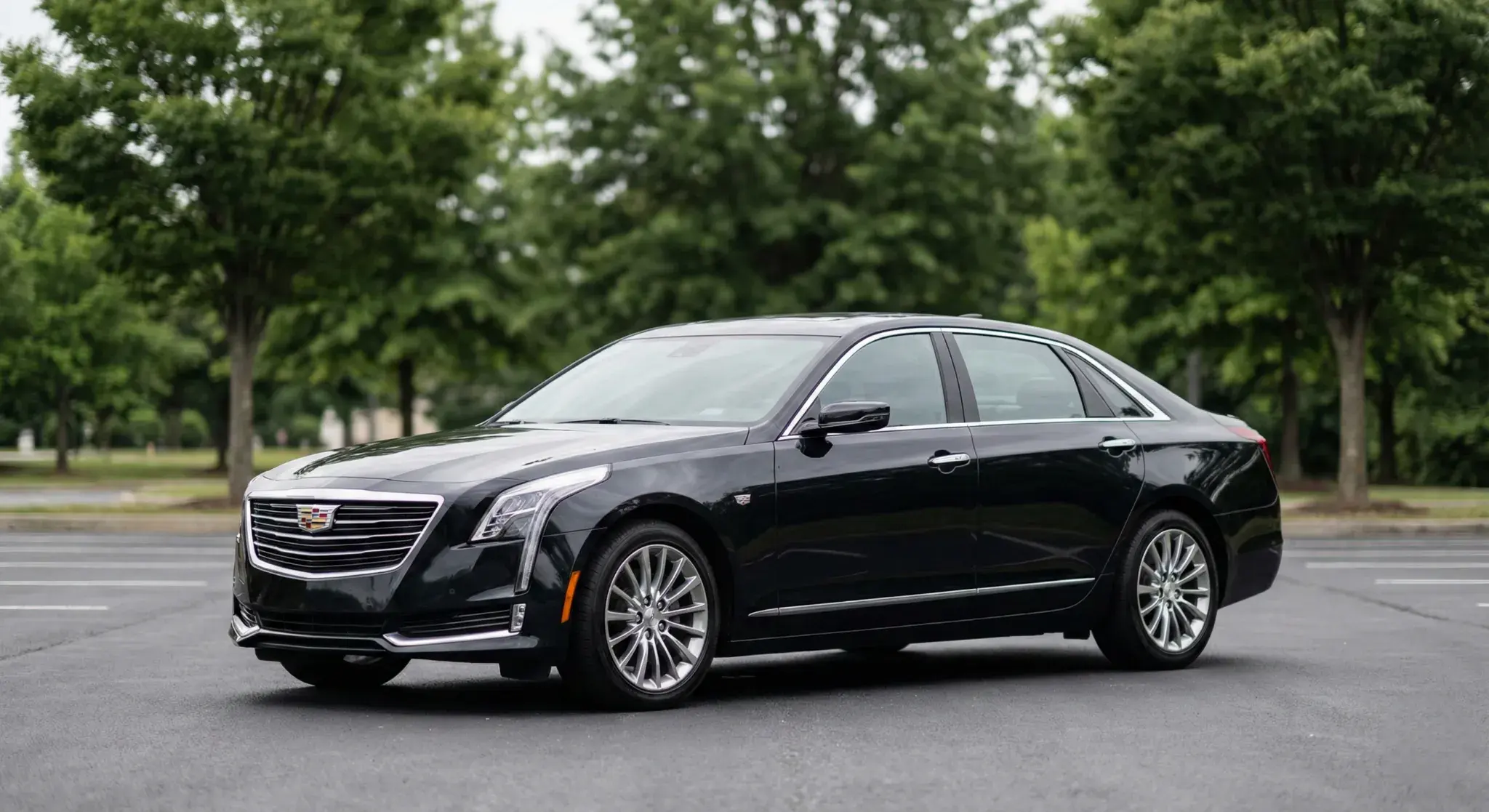
Executive Sedan
3 passengers · 3 bags

CORPORATE SHUTTLE SERVICE NYC
Set the schedule once. It runs until you change it.
Employee and campus shuttles, multi-day conference programs and scheduled corporate group runs across New York City and the tri-state — sized per run, on one corporate account.
4.7 ★ · 300+ Google reviews · 3,100+ clients
Trusted by teams & travelers across NYC










Golden Class Limo runs scheduled corporate shuttle programs across New York City and the tri-state area: employee shuttles between offices, campuses and transit hubs; conference and convention shuttles looping between hotels and a venue; and recurring group runs for teams that travel to the same places every week.
A program is different from a booking. The schedule is agreed once, the same vehicles and often the same chauffeurs run it, and it stays in place until you change it — rather than being re-entered as a new job each time.
Vehicle size is set per run rather than for the whole account: a Sprinter van for a team of up to 14, a mini bus of 23 to 38 seats for a department, a 55-seat motor coach for a conference wave. All of it comes from one fleet of 30-plus vehicles that we own.
Everything runs on one corporate account with consolidated monthly billing, cost codes where a department needs them, and one named contact in dispatch who knows the programme rather than whoever answers.
For an individual executive transfer or a car held for one working day, our corporate transportation page covers that instead. Rated 4.7 stars from 300+ Google reviews with more than 3,100 clients carried; the dispatch desk is staffed 24/7 on (718) 360-9383.
This page is about recurring and scheduled shuttles. Individual executive transfers, airport runs and a car held for a single working day are a different service — same fleet, same account, different page.
All three have the same shape: a pattern agreed once that keeps running, rather than a booking raised each time somebody needs to be somewhere.
Office to transit hub, building to building, or a campus loop — the same stops at the same times, sized from the counts that actually turn up rather than the ones on the original spreadsheet.
Hotel-to-venue loops for a multi-day event, planned around the peaks after a session ends rather than a flat timetable, and around what the venue's loading point can physically take at once.
The recurring internal movements: a weekly site visit, a monthly all-hands at another building, a quarterly offsite. Booked once as a standing pattern instead of raised as a new request every time.
Send the stops, the times and rough headcounts and we will size the vehicles and price the pattern.
Most programs are operating within a week or two of the first conversation. There is no minimum contract length and no minimum spend to open the account behind one.
The stops, the times and a rough headcount per run. That is enough to size the vehicles and price the pattern — the addresses can firm up afterwards.
Vehicle per run rather than per account, and a loading point confirmed at every stop. A run that cannot legally stand where people wait is the usual reason a program fails in week one.
Real counts differ from projected ones, always. After the first week we move a run up or down a size where the numbers say so, which costs nothing because every vehicle is ours.
One account, one monthly invoice with every run itemised and cost-coded, and one named contact in dispatch. Changes are made once, centrally, for as long as they last.
Send a schedule and we will come back with the vehicle sizes and a price for the pattern. Call (718) 360-9383 or email the corporate desk.
Programs rarely need one size of vehicle. Fixing an account to a single class means paying for empty seats half the week, so the size is set from each run’s actual counts.
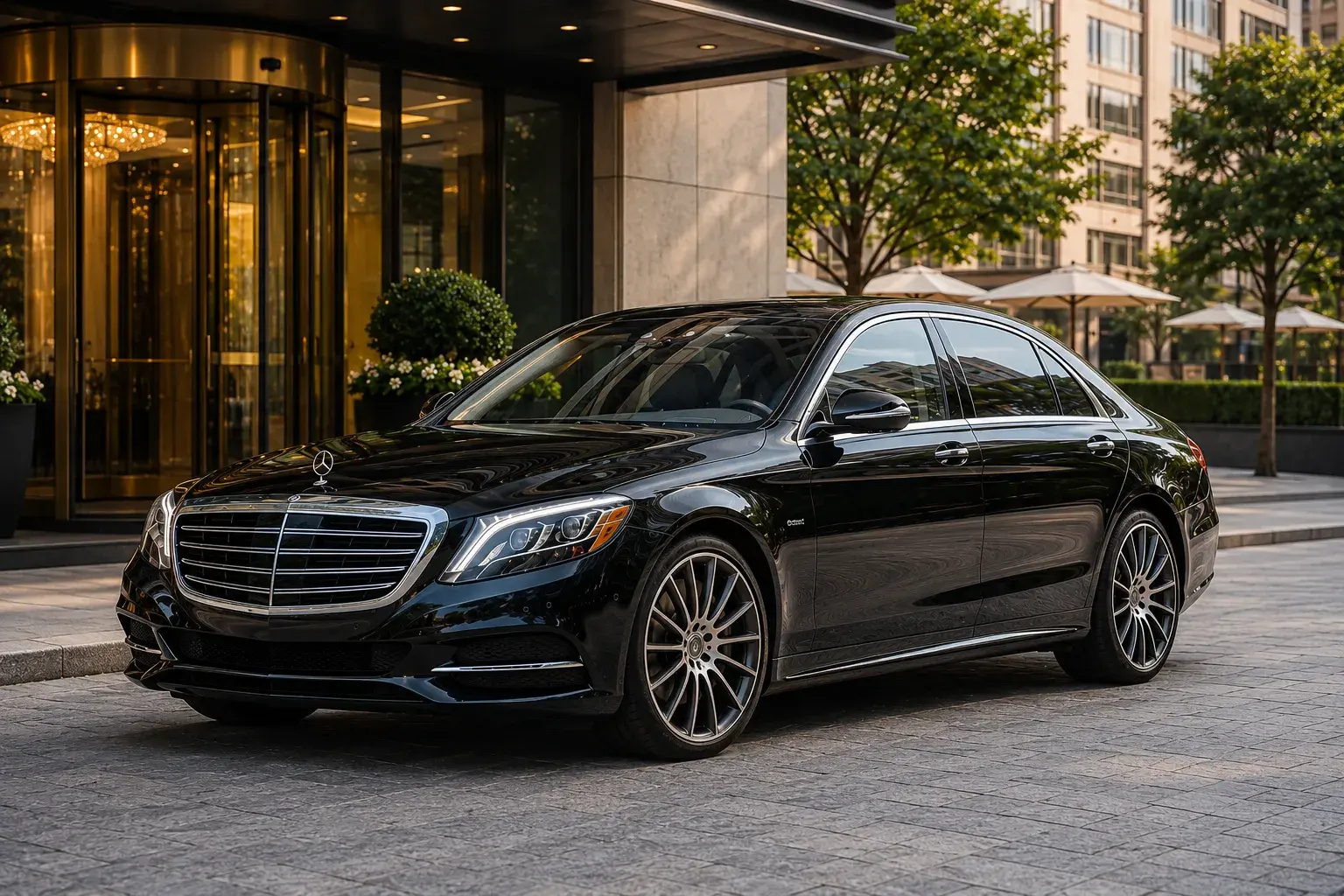
Mercedes Sprinter van
The size most commuter and site-visit runs settle on. Easy to place on a city street, and cheap enough to run twice when people leave at different times.
Sprinter van serviceMini bus
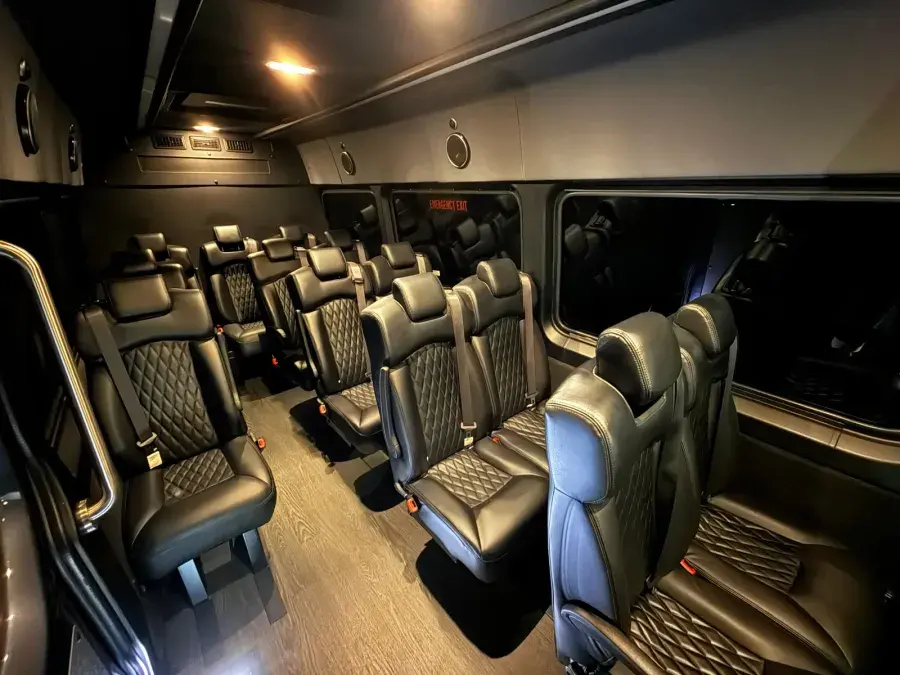
The workhorse of employee shuttles: coach seating and a centre aisle in a body that still reaches campus roads and office loading docks.
Mini bus rentalCharter bus or motor coach
For the forty minutes after a session ends, when a venue has to clear hundreds of people quickly and seat count is the only thing that matters.
Charter bus rentalExecutive sedan or Escalade ESV
Not a shuttle at all, and priced differently. Individual executive travel, airport transfers and as-directed days sit on the corporate transportation page.
Corporate transportationSprinter vans for teams, mini buses for departments, charter buses and coaches for conference waves. All owned by us, so a run can change size without changing supplier.
Showing 13 of 13 vehicles.

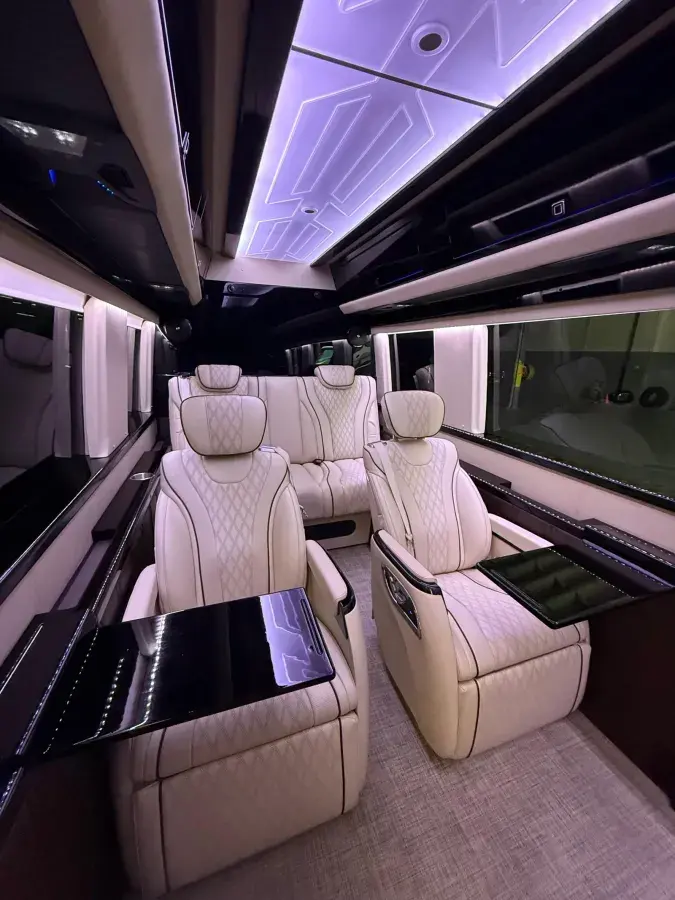
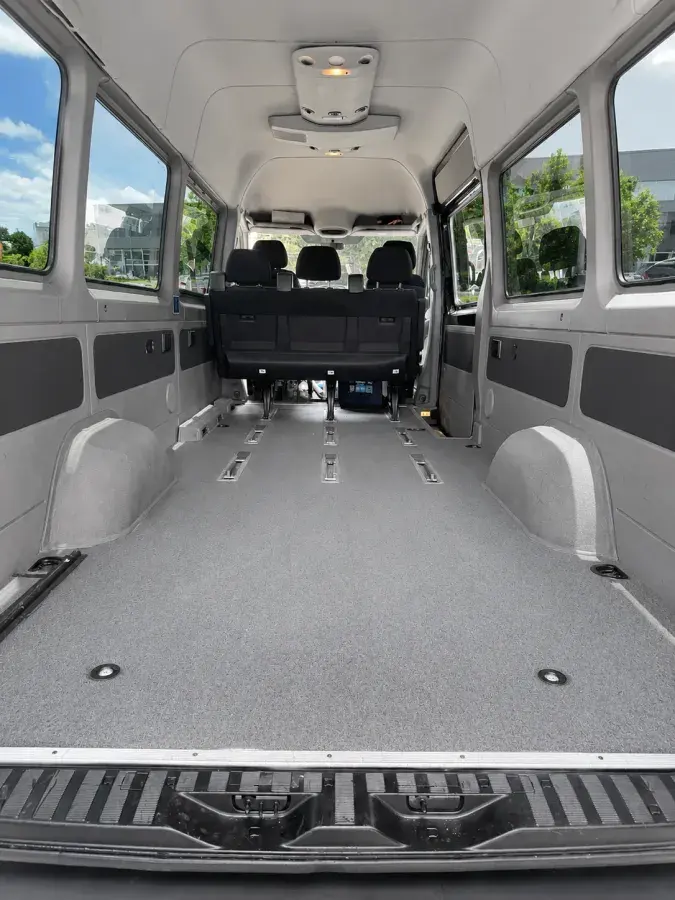
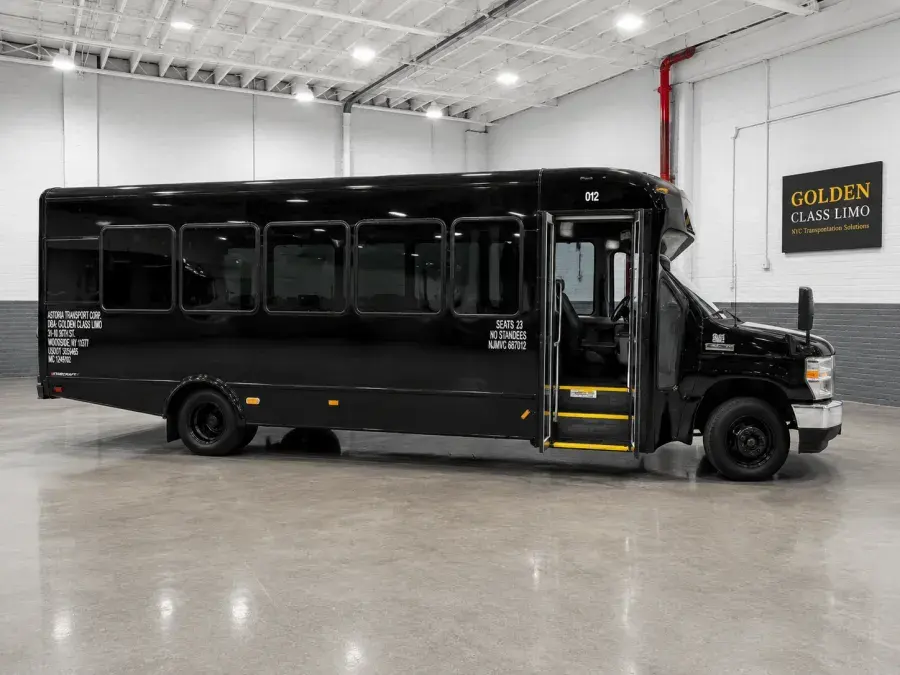
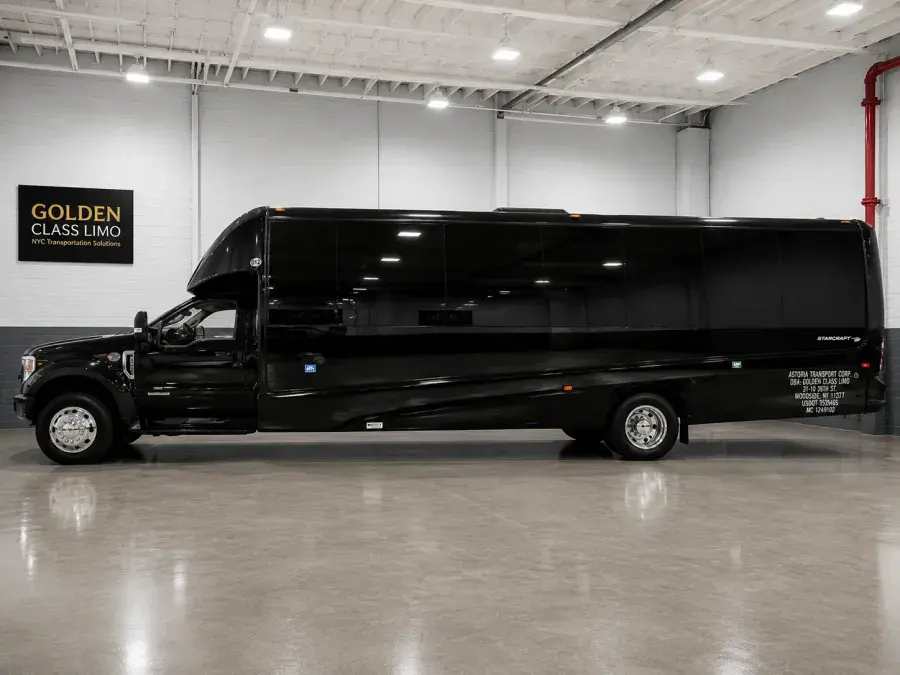
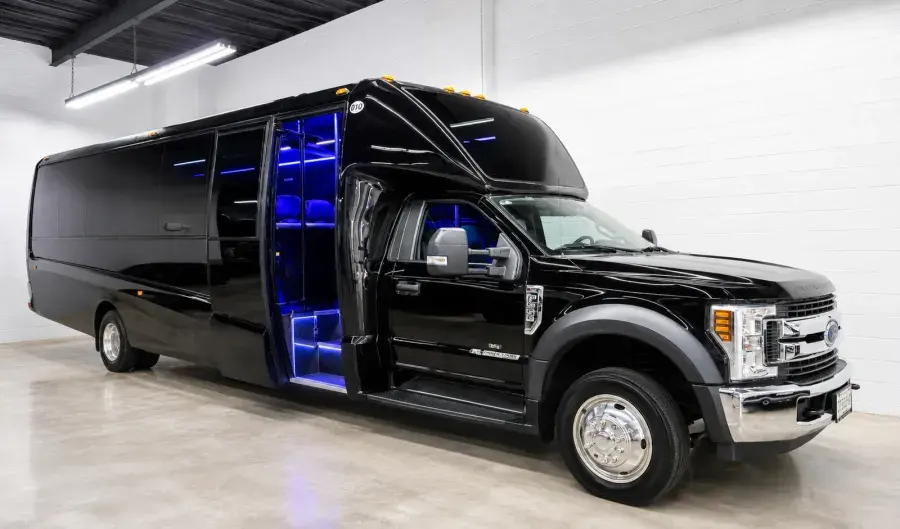
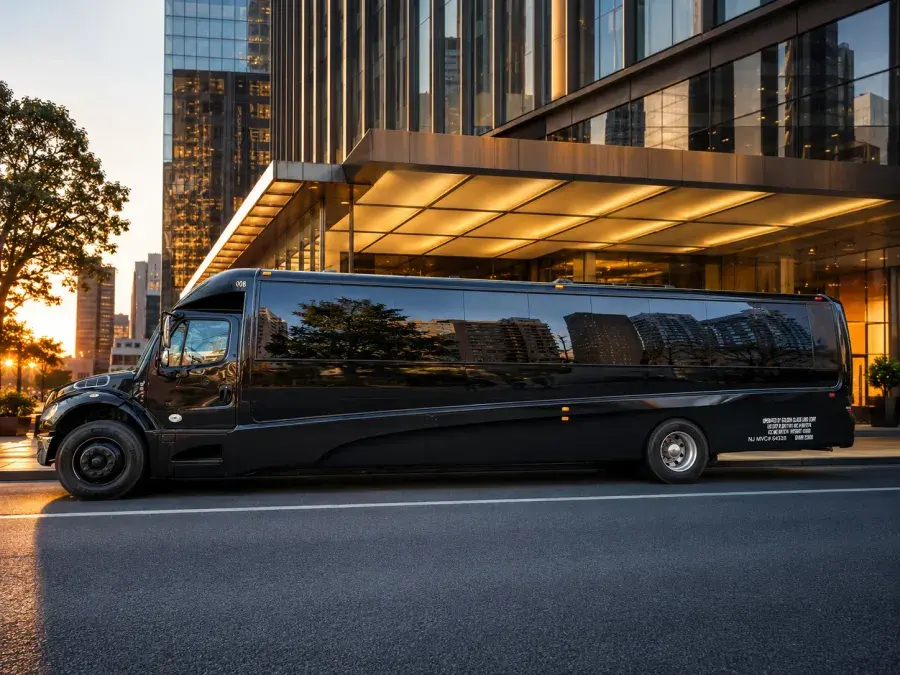
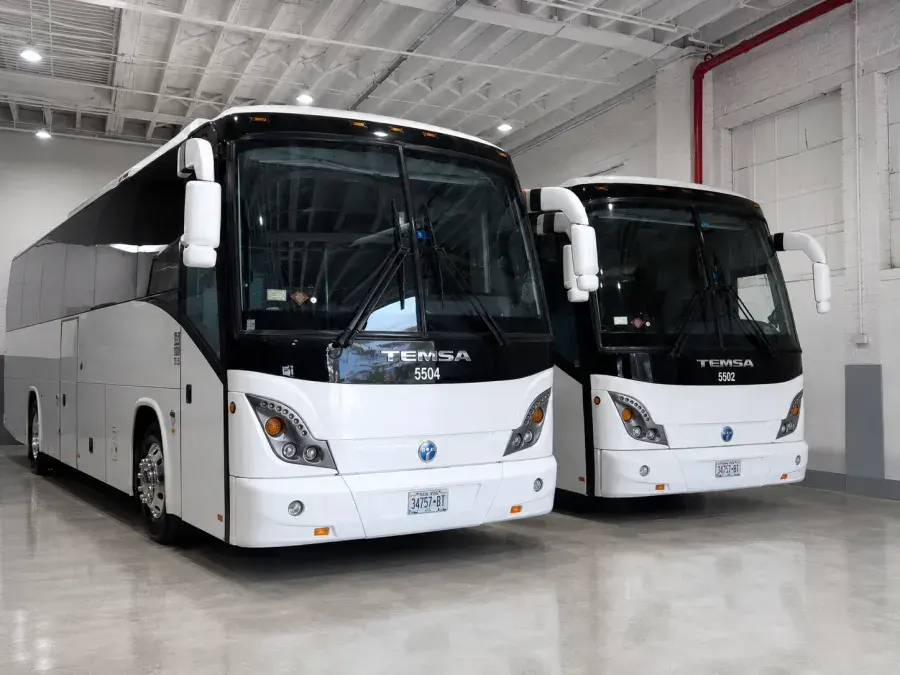
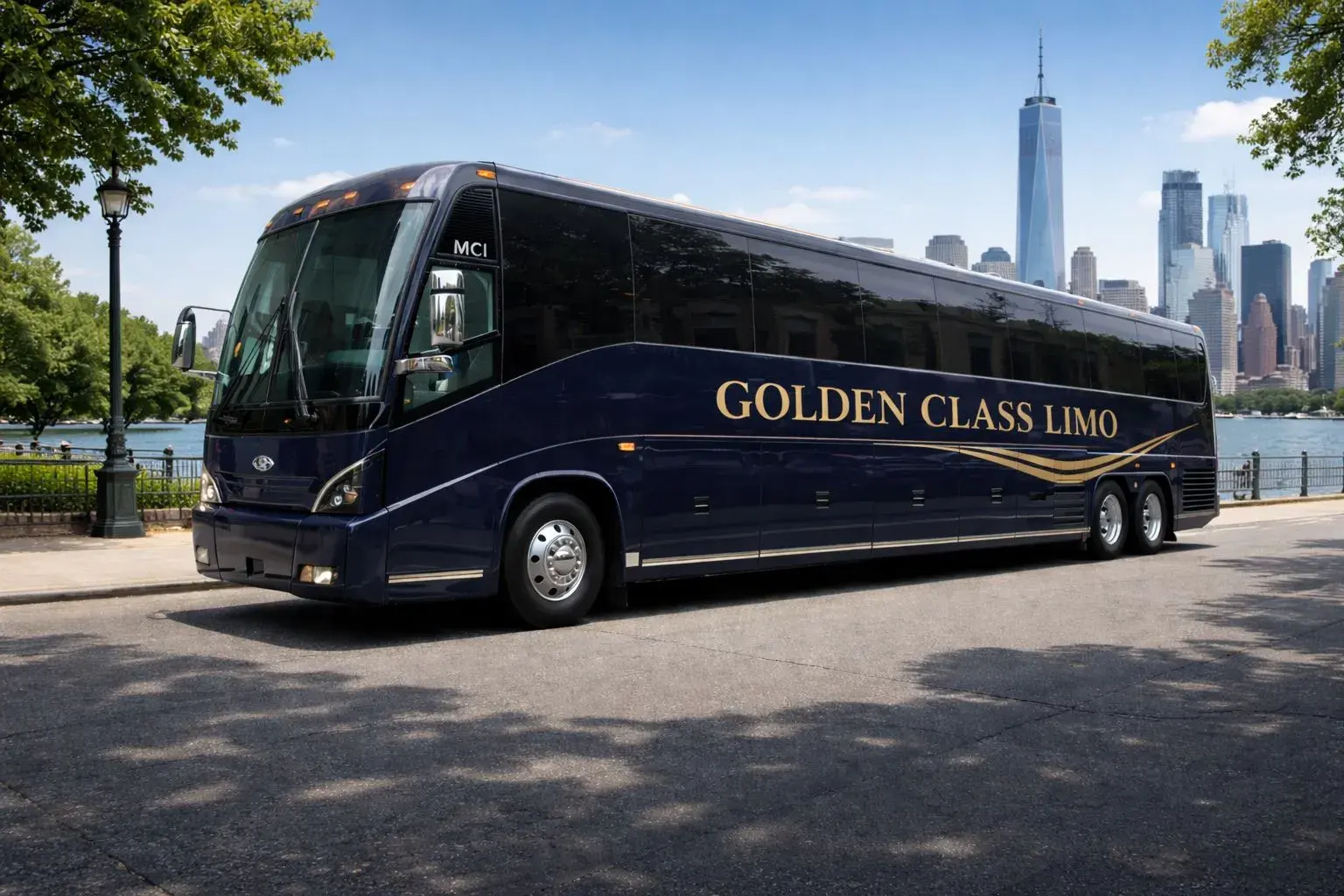
Multi-day programs are planned around the venue's loading point, not a flat timetable — tell us the dates.
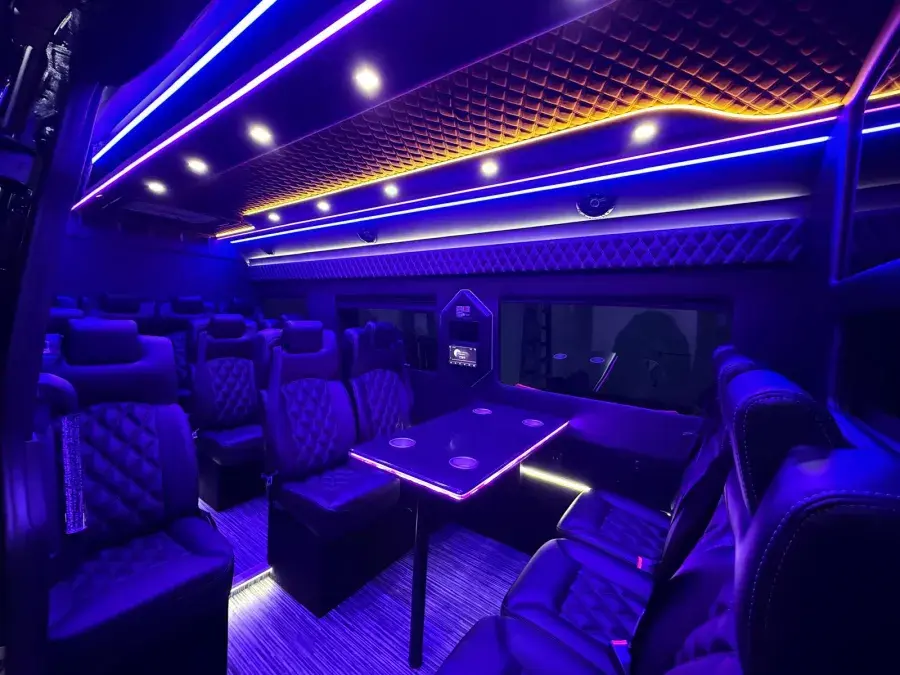
Our own fleet, photographed in the garage and on the street. No stock photography and no other operator’s vehicles.
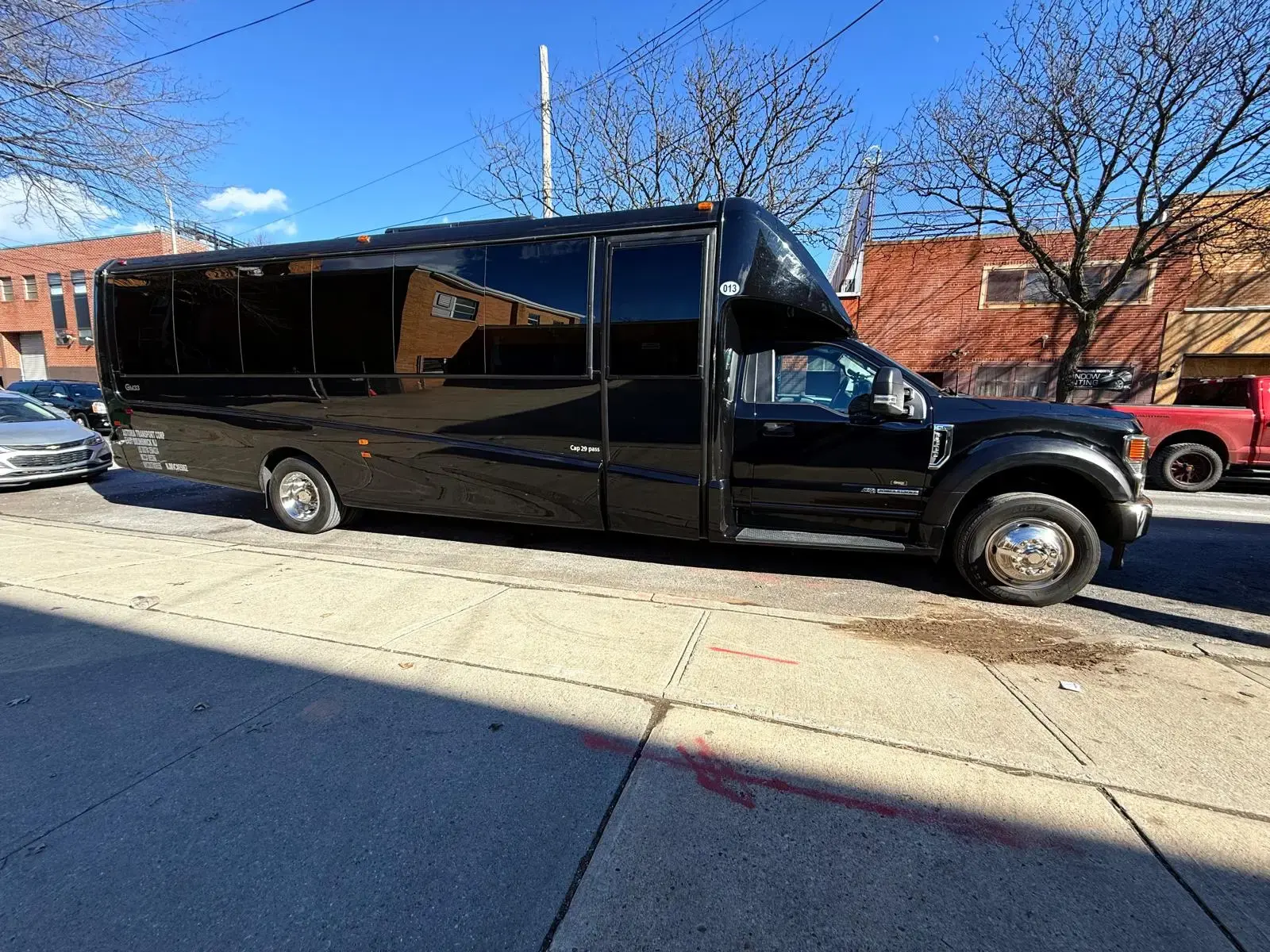
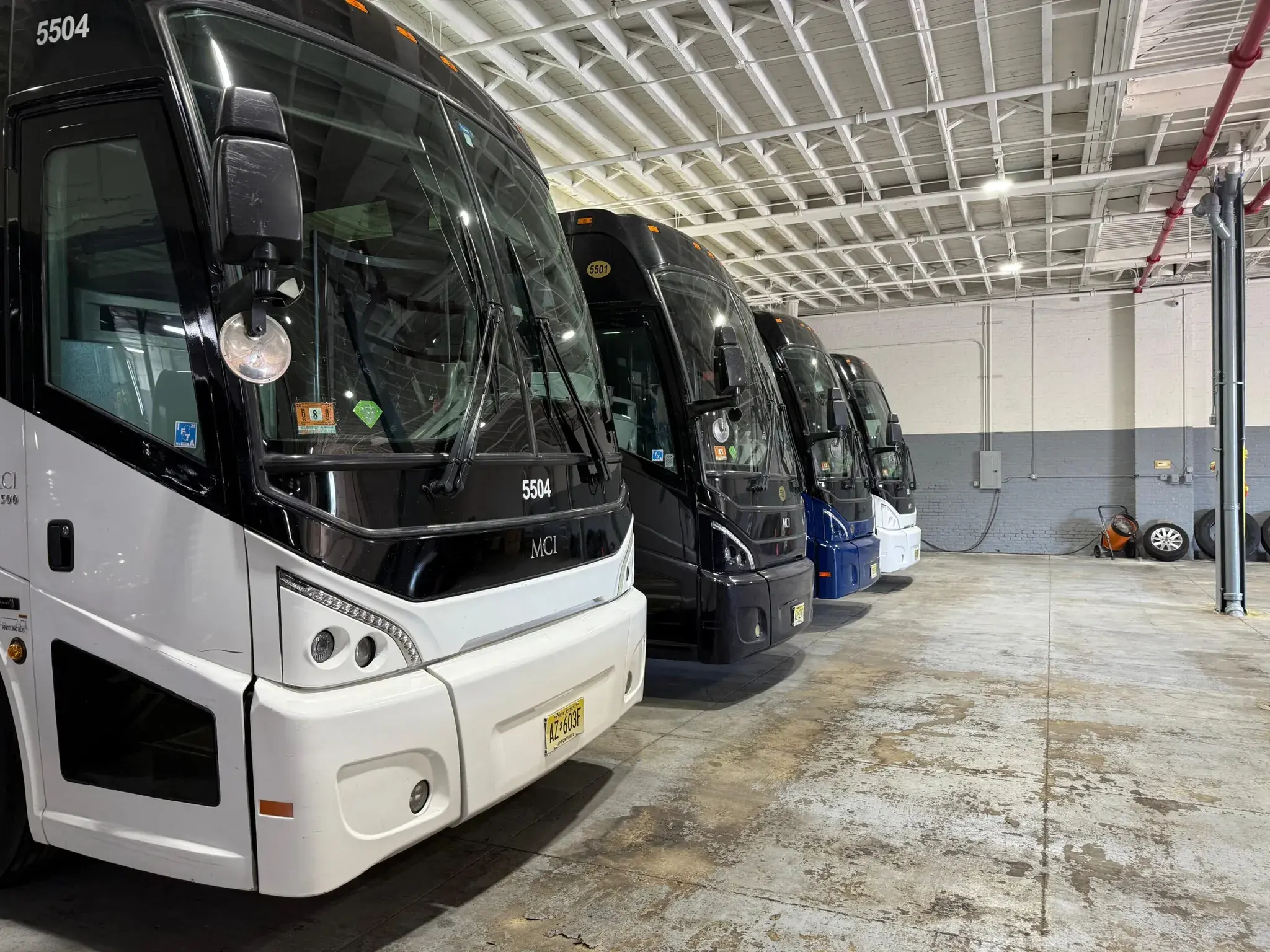
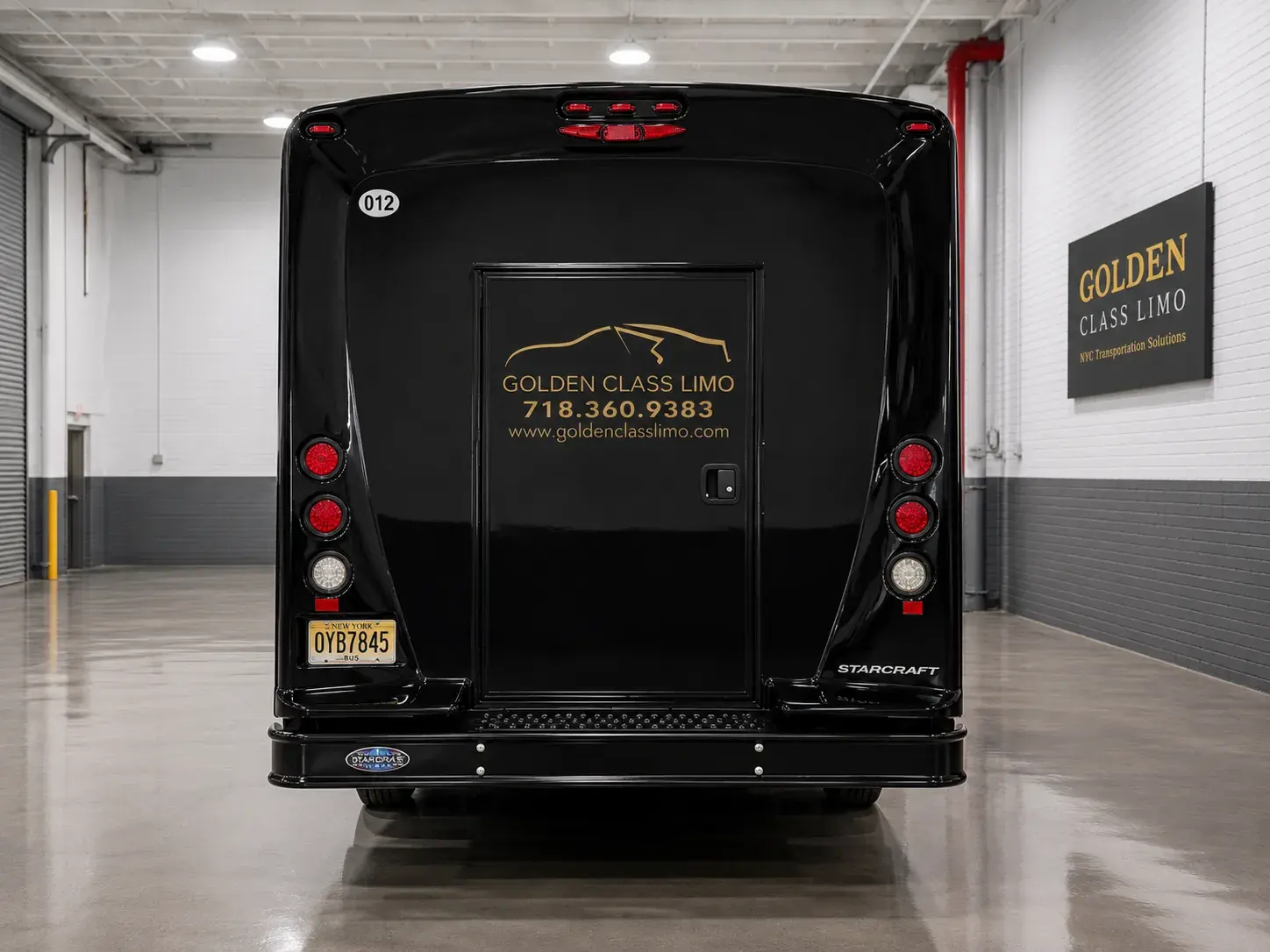
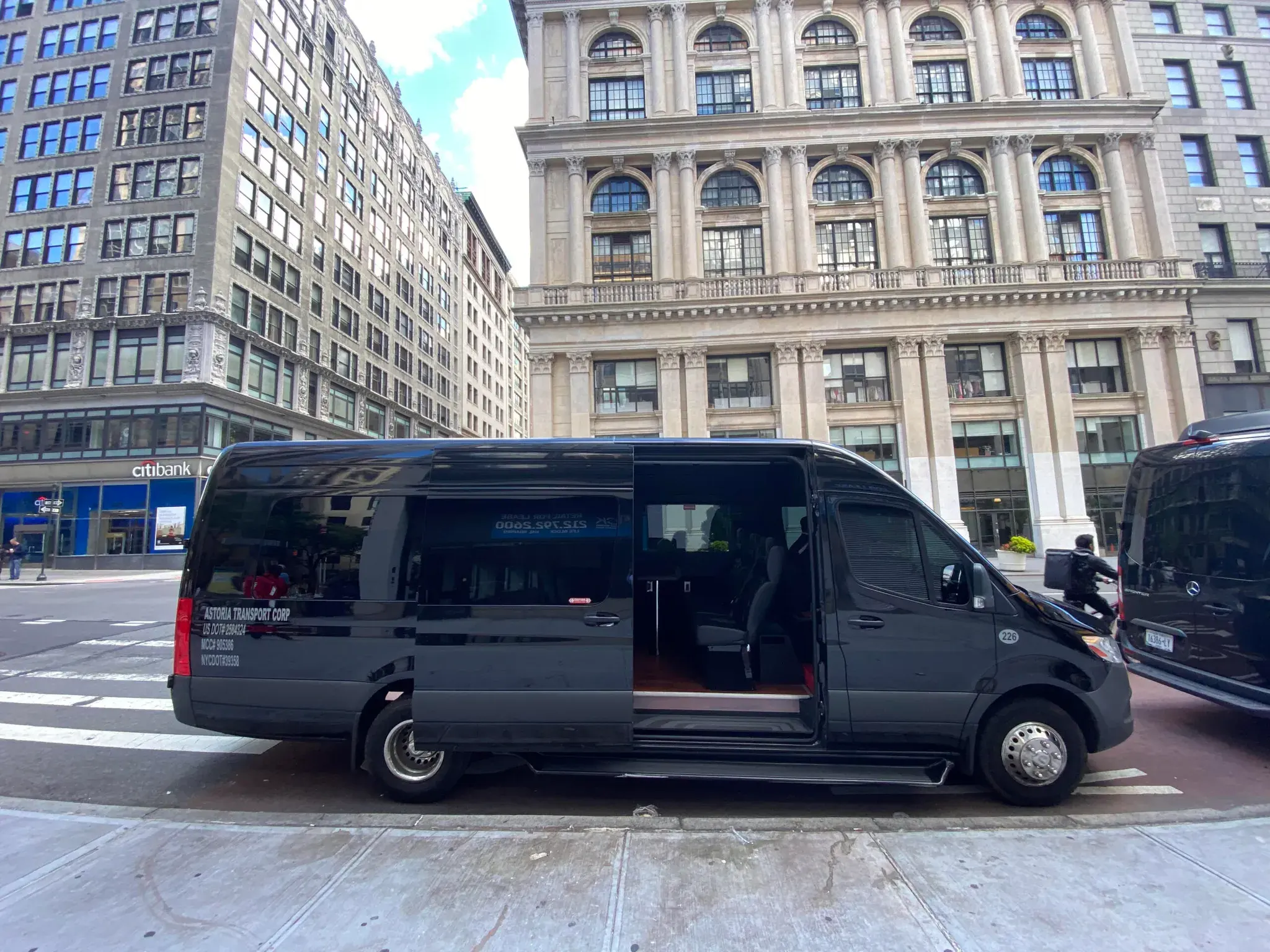
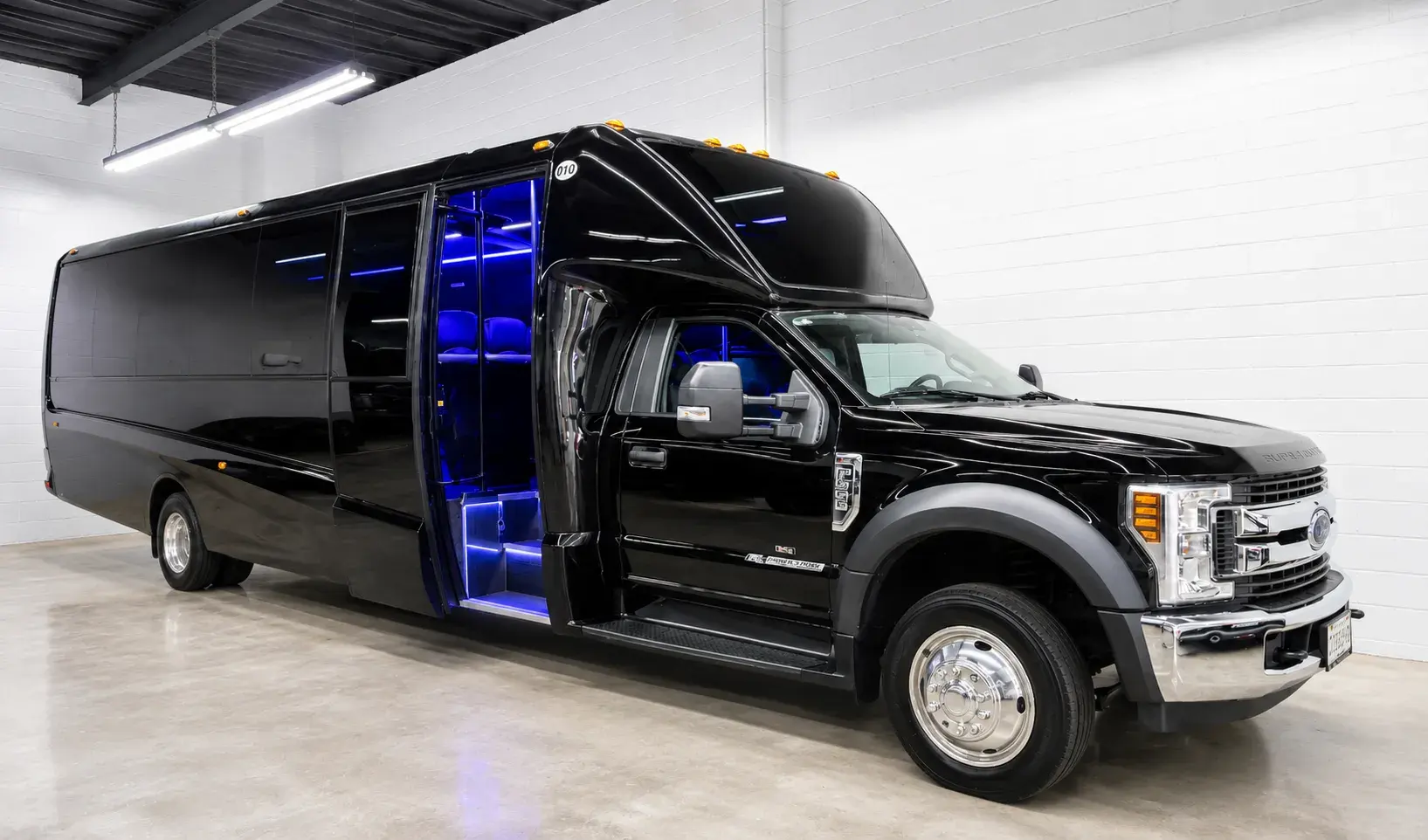
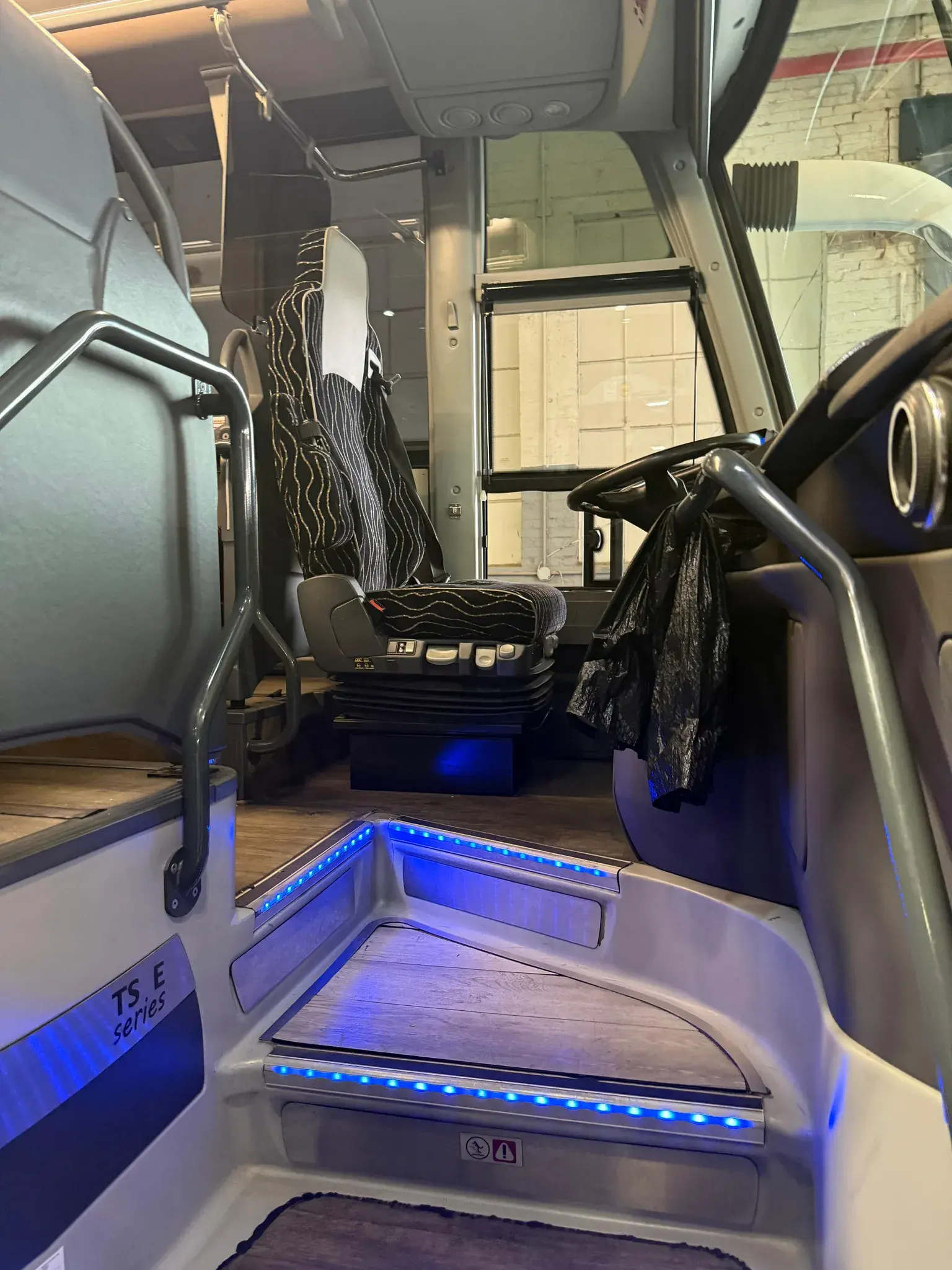
A dispatcher who knows your stops, your counts and who to call when something moves — not a general line and a fresh explanation each time.
Standing runs are held in writing and repeat until you change them. Nothing is re-entered daily, so nothing is forgotten daily.
Every run itemised by date, route and cost, with your cost codes or department references applied for internal reconciliation.
Sedans through to a 55-seat motor coach, all owned by us, so moving a run up or down a size is a scheduling change rather than a new supplier.
Background-checked and trained by us, with the same regulars on a standing program. Shuttle work is never brokered out to another operator.
No contract length and no minimum spend to open the account. A program is quoted against its actual pattern of runs, not a fixed package.
No minimum spend and no contract length. Tell us the schedule and we will build the program around it.
Sprinter vans for teams, mini buses for departments, charter buses and coaches for conference waves. Each has its own page if you want the detail, and the group transportation hub covers the whole range from one passenger to fifty-five.
This page is about recurring programs. Those cover each size of vehicle, the whole group range, and the individual executive work that sits alongside it.

Executive partner
A partnership we hold directly with the organization — the same standard of service we bring to every airport transfer.
Quote it now, or call and we will work through the schedule with you.
An employee shuttle is judged on a single thing: whether it is there. Nobody praises the 7.40 from the station that arrives on time for the ninetieth morning running, but one missed run generates more internal email than a month of good service earns goodwill. So the job is not really transportation — it is removing a recurring decision from somebody's week.
That shapes how we set one up. The schedule is fixed in writing rather than rebooked, the same vehicle size is assigned to the same run so headcounts stay predictable, and the chauffeurs on a standing programme are regulars who know the stops. When something does change — a snow morning, a building closure — one dispatcher notifies the contact rather than thirty passengers discovering it at the kerb.
A convention programme is not a timetable so much as a series of peaks. Four hundred delegates do not arrive evenly across a morning; they arrive in the forty minutes after a keynote ends, and the whole plan stands or falls on whether the loading point can absorb that. Between the peaks the vehicles are nearly empty, which is why a naive per-trip booking costs far more than it should.
We plan those programmes backwards from the venue's own constraints — how many coaches can stand at the door at once, where the overflow waits, whether a 45-foot vehicle can even enter — and stagger departures across the fleet accordingly. For a multi-day event the same vehicles and chauffeurs stay on the programme, so day two runs on what day one taught us rather than starting again.
Programmes rarely need one size of vehicle. A morning commuter run might be a 29-seat mini bus, the afternoon return two Sprinter vans as people leave at different times, and the quarterly all-hands a pair of coaches. Fixing an account to a single vehicle class means paying for empty seats half the week.
So the size is set per run from the actual counts, and adjusted when the counts change. Because every vehicle is ours — sedans through to a 55-seat motor coach — moving a run up or down a size is a scheduling decision rather than a new supplier, a new contract and a new set of insurance certificates.
The administrative half matters as much as the driving. A programme runs on a corporate account: consolidated monthly billing with every run itemised, cost codes applied where a department or a project needs them, and payment terms agreed in writing before the first day rather than negotiated afterwards.
Operationally it means one named person in dispatch who knows your programme — the stops, the counts, the people who need a call if something moves — instead of a general line and a new explanation each time. That is the difference between a supplier and a programme, and it is the part that decides whether the arrangement survives its second quarter.
Yes — standing programs are most of this page's work. A schedule is agreed once and stays in place until you change it, with the same vehicle assigned to the same run and regular chauffeurs on it, rather than each day being re-entered as a fresh booking.
Send the stops, the times and a rough headcount per run. We size each run, propose a schedule and confirm loading points at every stop, then run the first week and adjust from the real counts. Most programs are operating within a week or two of the first conversation.
Yes, including hotel-to-venue loops at the Javits Center and other convention venues. Multi-day programs keep the same vehicles and chauffeurs throughout, so the second day runs on what the first one taught us about loading times and attendee flow rather than starting from scratch.
Hundreds, by staggering waves across several vehicles. A 55-seat motor coach carries the largest single load, mini buses of 23 to 38 fill in around it, and the limit in practice is almost never the fleet — it is how many vehicles the venue's loading point can take at one time, which we plan around.
Whichever the count needs, set per run rather than per account. A team of up to 14 goes in a Sprinter van, a department in a 23 to 38-seat mini bus, and a conference wave in a charter bus or motor coach. Because every vehicle is ours, changing a run's size is a scheduling decision rather than a new supplier.
On one account with consolidated monthly invoicing: every run itemised by date, route and cost, with cost codes or department references applied where you need them for internal reconciliation. Payment terms are agreed in writing when the account opens, before the first run.
There is no minimum contract length or spend to open a corporate account. Individual runs carry the usual vehicle minimums — three hours on a Sprinter van, four on a mini bus, five on a motor coach — and a recurring schedule is quoted against the actual pattern of runs rather than a fixed package.
One named contact in dispatch who knows your schedule, your stops and who to call when something moves, reachable 24 hours a day. Not a general line and a fresh explanation each time — that continuity is most of what separates a program from a series of bookings.
Tell your contact and it is amended once, centrally, for as long as the change lasts — a one-off cancellation, a fortnight of building works, a permanent new stop. Passengers on a standing run are notified through your own contact rather than finding out at the kerb.
Yes, and that is a different service: individual executive transfers, airport runs and as-directed days are covered on our corporate transportation page. The same account, the same dispatch team and the same billing can cover both if you end up running each alongside the other.
4.7 stars across 300+ Google reviews — and 3,100+ riders served.
Available 24/7, 365 days a year
Get an instant quote online, or call and a dispatcher will have a chauffeur on the way.