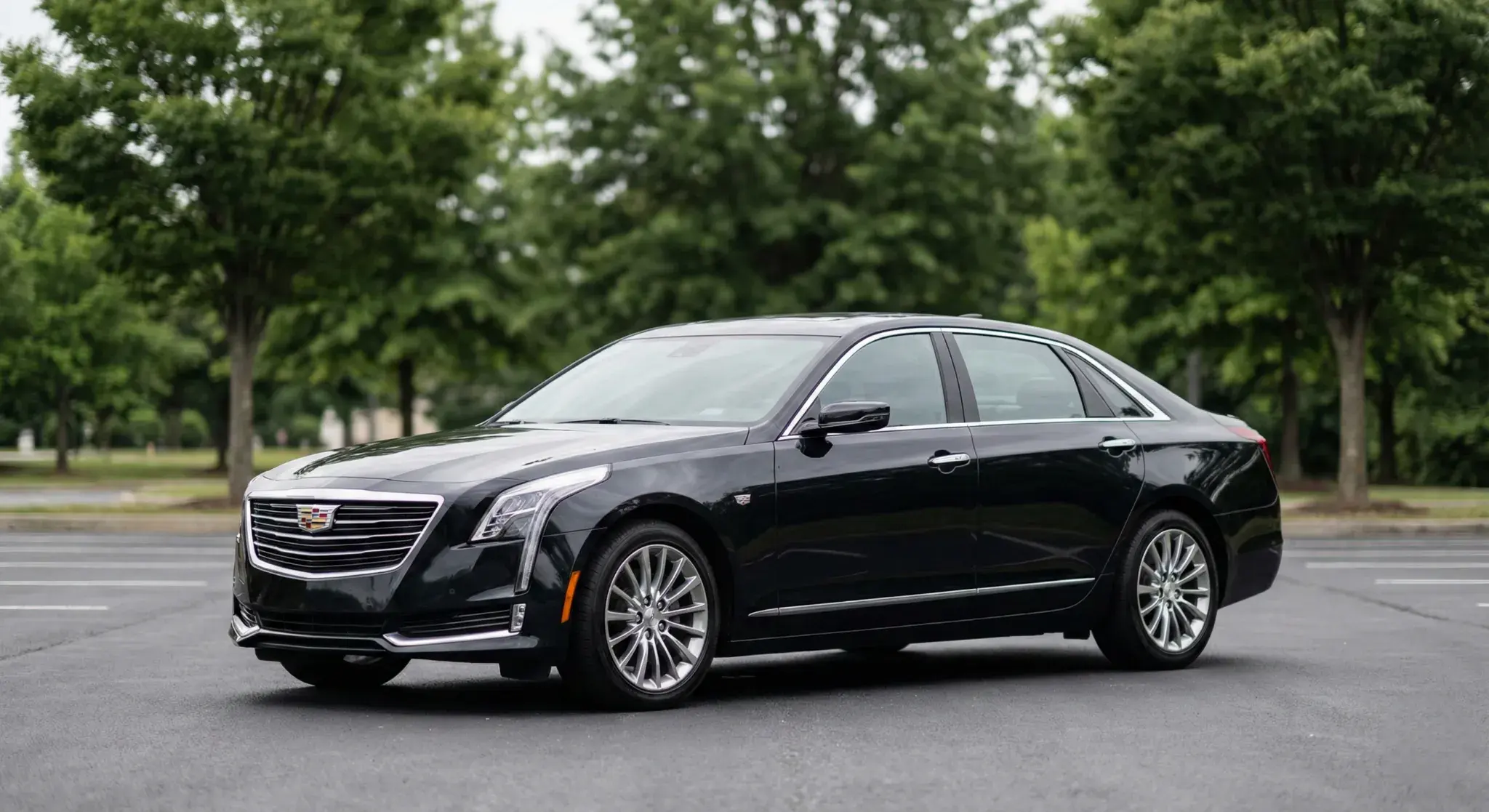
Executive Sedan
3 passengers · 3 bags

SEDANS · SPRINTER VANS · MINI BUSES · COACHES
I-95 or the Merritt — and a coach can only use one of them. Executive cars, team vans and coaches for 1 to 55.
Chauffeured transportation between Fairfield County and Manhattan — Greenwich, Stamford, Darien, New Canaan, Westport, Fairfield and up the line to New Haven — in executive sedans, Escalade ESVs, Sprinter vans, mini buses and 55-seat coaches.
4.7 ★ · 300+ Google reviews · 3,100+ clients
Trusted by teams & travelers across NYC










Greenwich is about 30 miles from Midtown, Stamford 40, Westport 50 and New Haven around 75. A chauffeured car typically takes 50 to 80 minutes from lower Fairfield County outside the peaks, and up to two hours in a weekday morning.
There are two roads and they behave differently. Interstate 95 is the direct line along the shore and the one that stops dead when something happens on it. The Merritt Parkway runs parallel a few miles inland, is closed to commercial vehicles, and is often the quicker choice for a car — so a sedan and a Sprinter van from the same driveway take different routes.
Metro-North's New Haven Line is fast, frequent and beats a vehicle into Grand Central during the morning peak. It is the right answer for a solo commuter with a season ticket, and the wrong one for an early flight, a group, a late evening or an address that is a taxi ride from the station at both ends.
Golden Class Limo covers the whole corridor in executive sedans and Escalade ESVs, 14-passenger Sprinter vans, and mini buses and coaches to 55 seats, with the congestion relief charge, tolls where any apply and the chauffeur's gratuity inside the quoted figure.
Accounts, standing bookings and same-day cars are all handled by dispatch 24/7, 365 days a year on (718) 360-9383.
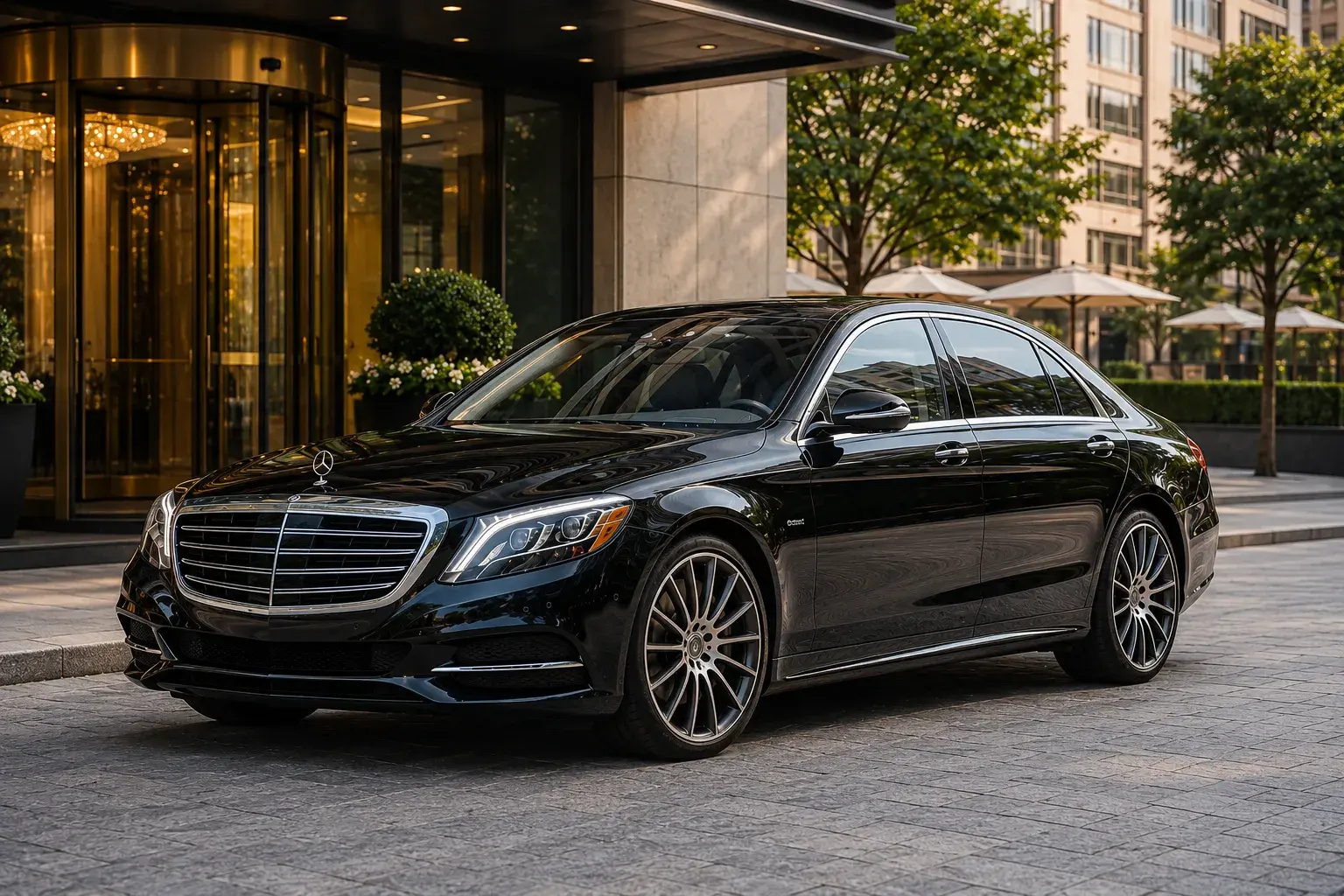
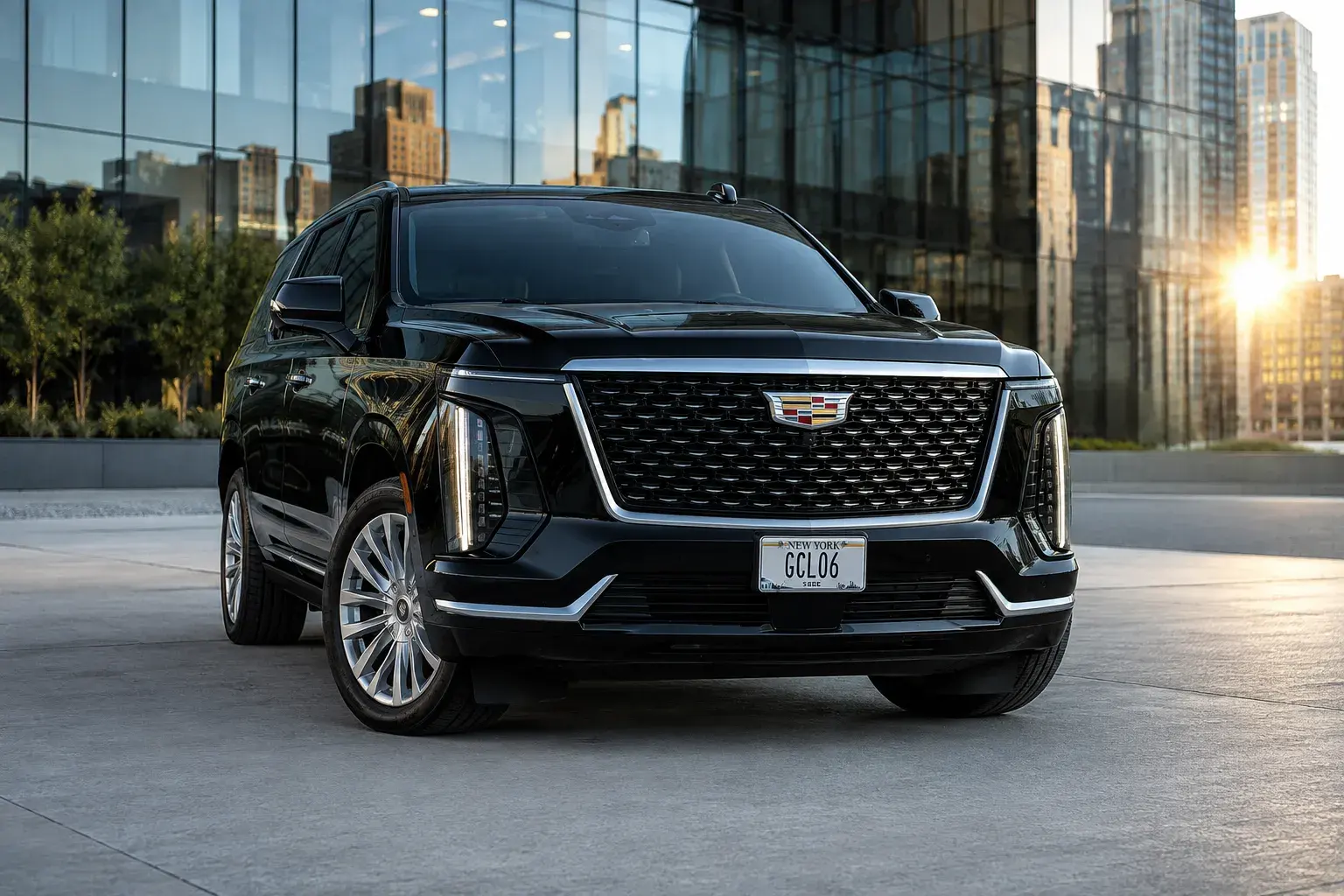
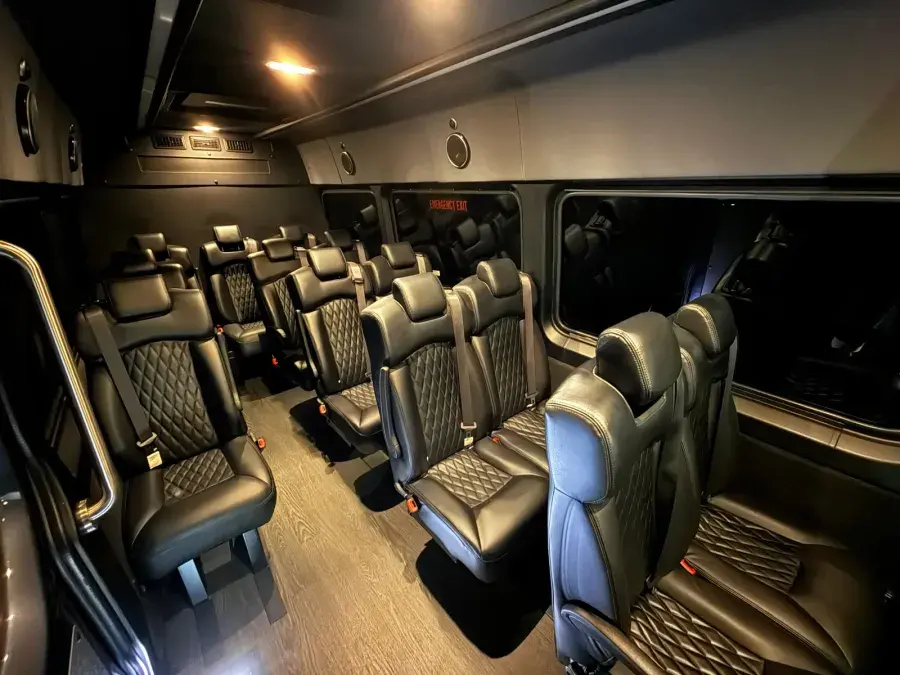
Sedans and SUVs for one to six, Sprinter vans for fourteen, mini buses and motor coaches to fifty-five. Switch tabs to see each class, or quote one straight from its card.
Showing 13 of 13 vehicles.
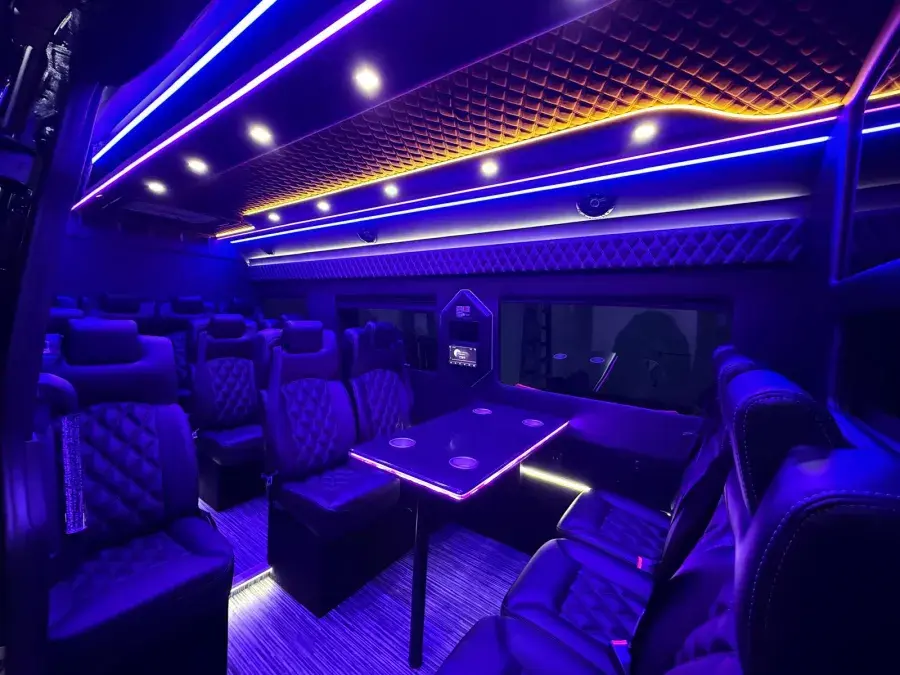

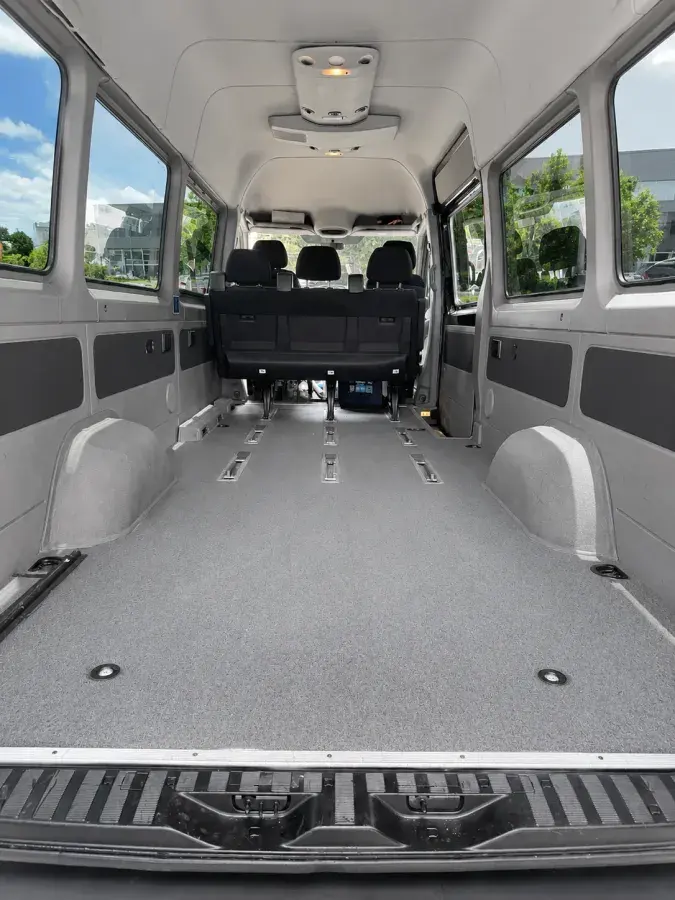
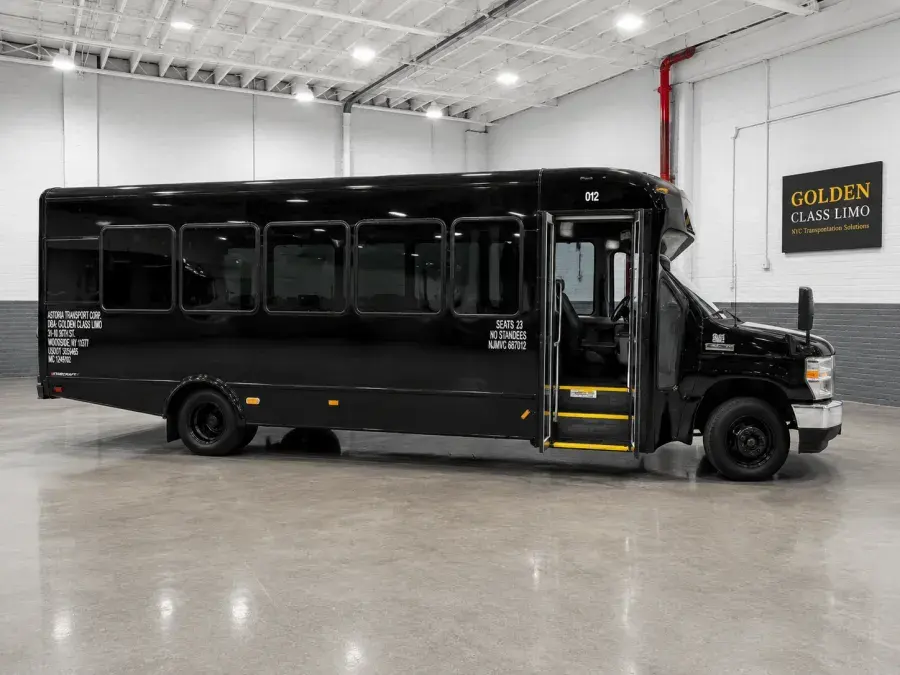
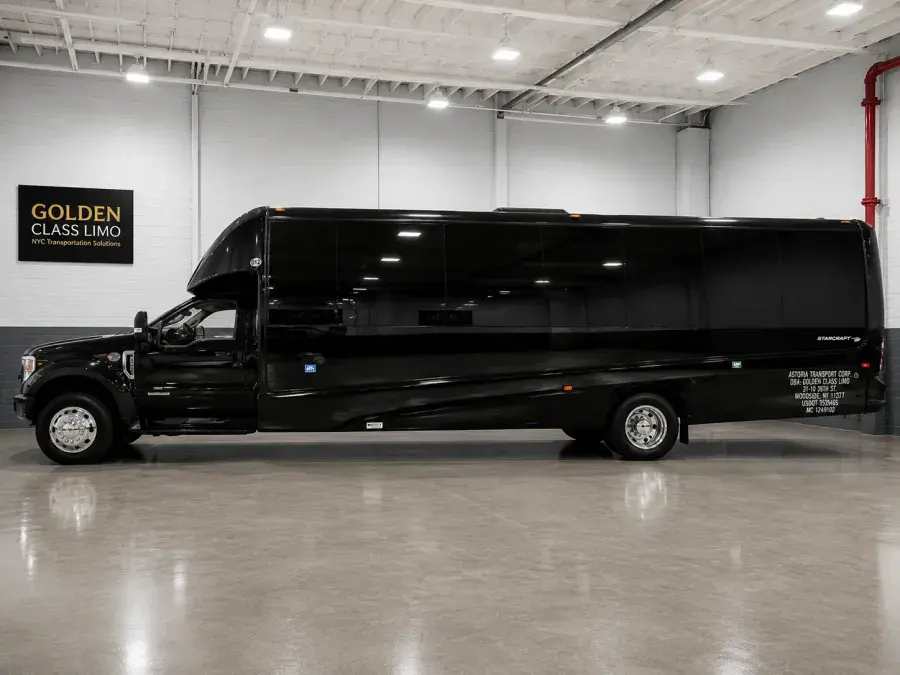
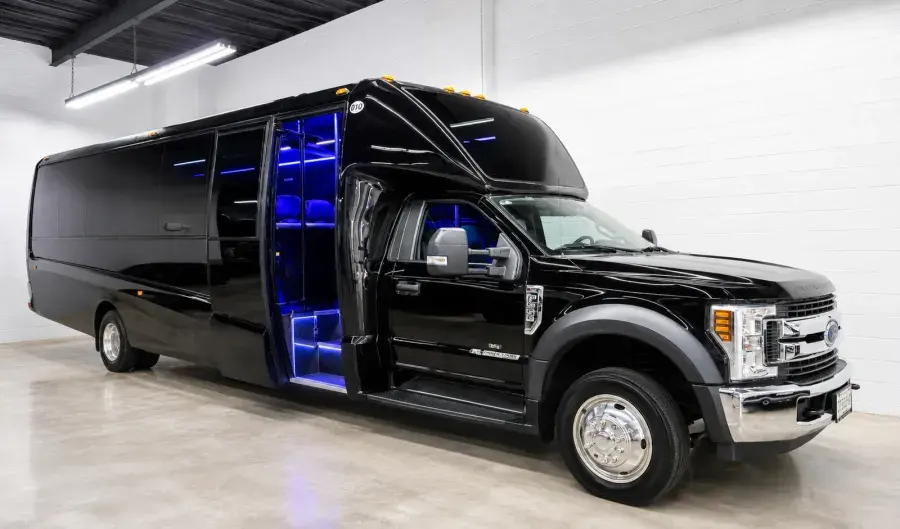
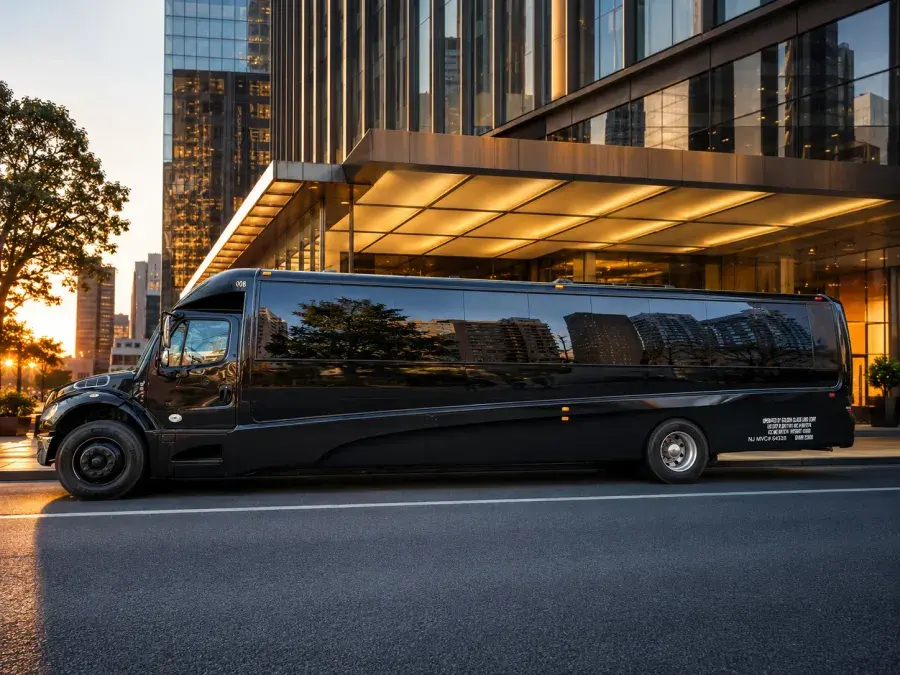
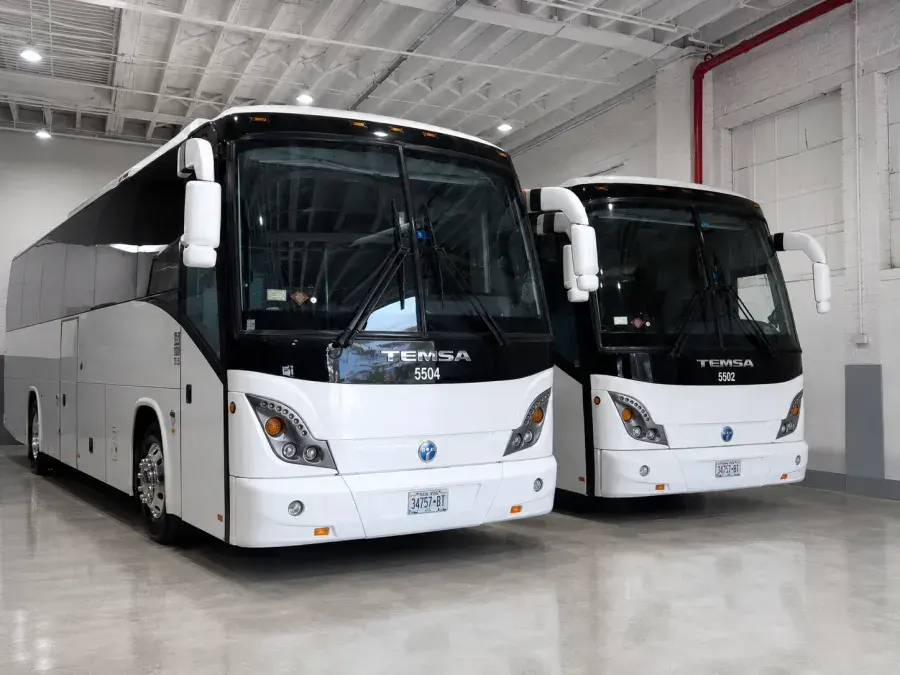
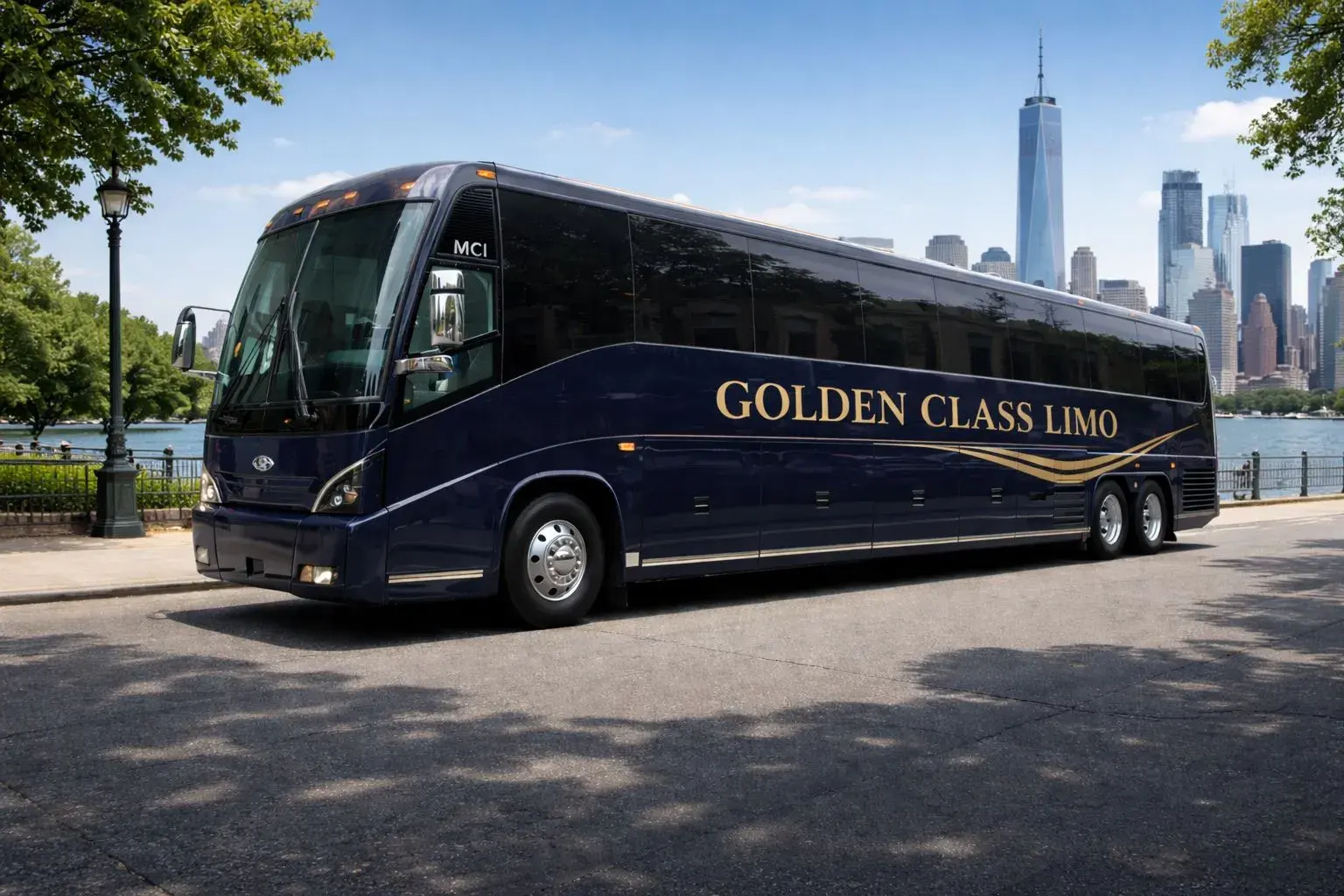
We sell one of these. The other three are real, and on the right day with the right luggage one of them is the better trip.
Best for. Early departures before the first train, client collection from a house, teams travelling to one meeting, evening returns, and any address more than a short drive from a station.
The catch. In the morning peak the train will reach Grand Central sooner and costs far less, and no route choice changes that. A vehicle is worth booking when the journey has to start at your door, carry more than you can lift, or happen at an hour the timetable does not serve well.
Best for. Daily commuters and anyone whose Connecticut end is near a station and whose Manhattan end is near Grand Central.
The catch. You still need to reach the station, park in a lot with a waiting list in the busier towns, and cross Manhattan at the other end. Evening services thin out, weekend track work is common, and luggage on a crowded peak train is nobody's idea of a good start.
Best for. A midday trip with a garage arranged at the far end and no need to work on the way.
The catch. The relief zone charge applies below 60th Street and Manhattan parking is expensive by the hour, so a day in the city can cost more than being driven once both are counted. You also spend the two least productive hours of the day in the driver's seat.
Best for. A one-off trip at a quiet hour when nothing depends on the timing.
The catch. Long out-of-state fares are the ones drivers decline most, supply in the inland towns is thin early in the morning, and a cancellation at five for a flight connection has no easy fallback. Nothing larger than an SUV is available for a team.
Give us the address and the time you need to be there; the pickup works back from it.
5 corridors, each right for somewhere different. Your chauffeur has your address before the day and chooses with live conditions rather than at the time you booked.
ServesThe shoreline towns from New Haven down to the state line
Untolled in Connecticut; the New York crossings below it are not
The direct line and the one with the least resilience: three lanes carrying interstate freight through a dense commuter belt, with the Stamford and Bridgeport stretches the usual failure points. When it stops, the Merritt is the release valve for cars and there is nothing at all for a coach.
ServesNew Canaan, Darien, Wilton, Westport and the inland towns
Untolled
A few miles longer, considerably calmer, and barred to buses and trucks by its low stone bridges. For a sedan or an SUV it is frequently the faster road in a peak hour; for a group vehicle it does not exist, which is why the same journey is quoted with different timings depending on what you book.
ServesThe Westchester middle of the trip for cars continuing from the Merritt
Untolled
The Merritt's continuation south of the state line, and the way a car reaches the Bronx crossings without touching I-95. Same commercial restrictions apply, so it is another road a Sprinter van cannot use.
ServesGroup vehicles and anything routed on the interstate all the way
Tolled in New York State
The road a coach takes when a car would be on the Merritt, and the reason a group departure from Fairfield County is scheduled earlier than a sedan's. It joins the Bruckner and the Bronx crossings, where the last twenty minutes of the trip are decided.
ServesThe final approach into Midtown and the east side
Untolled bridge; the congestion relief charge applies below 60th Street
The usual way in for this corridor, because it lands on the FDR without crossing the Bronx street grid. Between four and seven the FDR southbound is the slowest part of the whole journey, which is why an afternoon meeting time gets a larger buffer than the mileage suggests.
Typical door-to-door ranges under ordinary conditions. Weather, incidents and holiday weekends all sit outside this table.
4am – 6am
Empty roads in both directions, and the window most airport connections and first-meeting trips use. The trains are not running usefully yet, which is why this hour is almost all car work.
6am – 10am
The hardest inbound window. I-95 southbound and the FDR both load, and this is the band where Metro-North genuinely beats us into Grand Central.
10am – 3pm
Steady and predictable, and where we place client collections, medical appointments and anything with a fixed arrival time.
3pm – 7pm
Now the outbound direction is the slow one, and Manhattan's own streets add to it before you reach the bridge. A pickup on an avenue rather than a cross-street is worth several minutes.
7pm – 11pm
Clears quickly after seven, and the hour when a booked car is most obviously better than waiting for a train with a connection at the far end.
11pm – 4am
The quickest hours in either direction. Overnight lane closures on I-95 are the only variable, and dispatch has them before a late pickup is assigned.
Early flight connections are the reason this corridor books cars at four in the morning.
The address decides the crossing, and the crossing decides the time. These are typical figures outside a peak window.
| Destination | Distance | Typical drive | Usual crossing |
|---|---|---|---|
| Greenwich and Old Greenwich | about 30 miles | 50–90 minutes | Interstate 95 through Stamford and Greenwich |
| Stamford and Springdale | about 40 miles | 55–100 minutes | Interstate 95 through Stamford and Greenwich |
| New Canaan and Darien | about 45 miles | 60–105 minutes | Merritt Parkway from the Greenwich end |
| Norwalk and Rowayton | about 48 miles | 60–110 minutes | Interstate 95 through Stamford and Greenwich |
| Westport and Weston | about 52 miles | 65–115 minutes | Merritt Parkway from the Greenwich end |
| Fairfield and Southport | about 58 miles | 70–120 minutes | Interstate 95 through Stamford and Greenwich |
| Ridgefield and the northern towns | about 60 miles | 75–120 minutes | Merritt Parkway from the Greenwich end |
| New Haven and Yale | about 75 miles | 95–150 minutes | New England Thruway to the Bronx |
A sedan may take the Merritt while a coach takes I-95, so the vehicle changes the route as well as the seats. The widget above prices your two addresses with the congestion charge and gratuity inside.
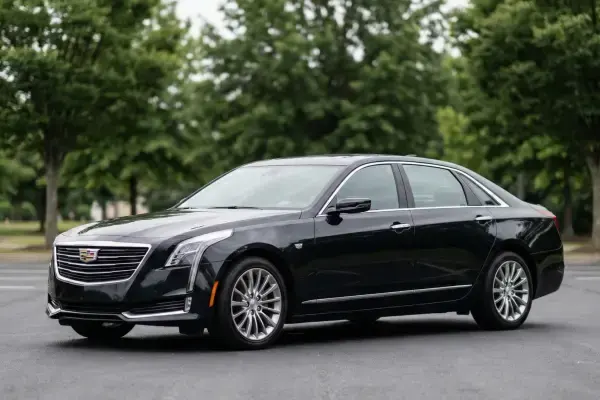
A single executive with an early meeting and an evening return
Quoted on your addresses
Get an instant quoteSpecs and photos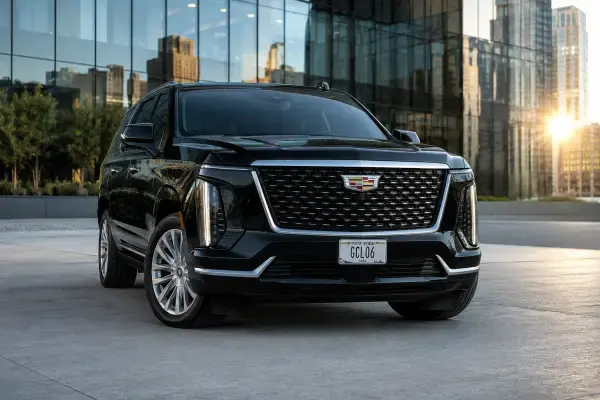
A family heading into the city, or a client collection from a house
Quoted on your addresses
Get an instant quoteSpecs and photos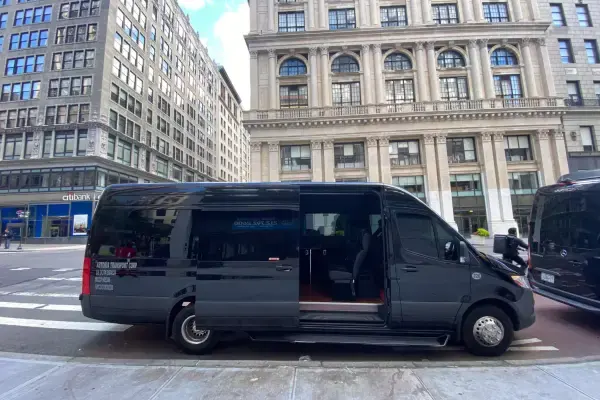
A team travelling in from a Fairfield County office for one meeting
Quoted on your addresses
Get an instant quoteSpecs and photos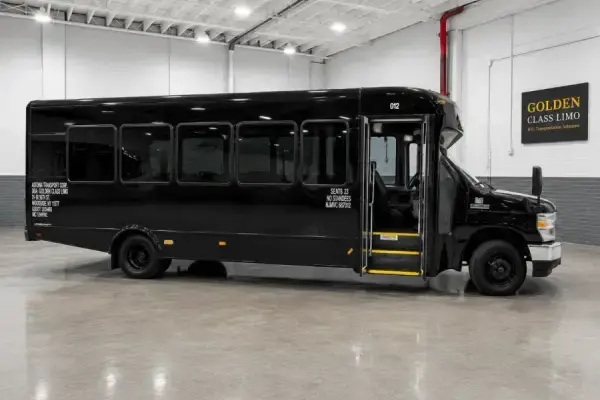
Wedding guests and school groups moving between Connecticut and the city
Quoted on your addresses
Get an instant quoteSpecs and photos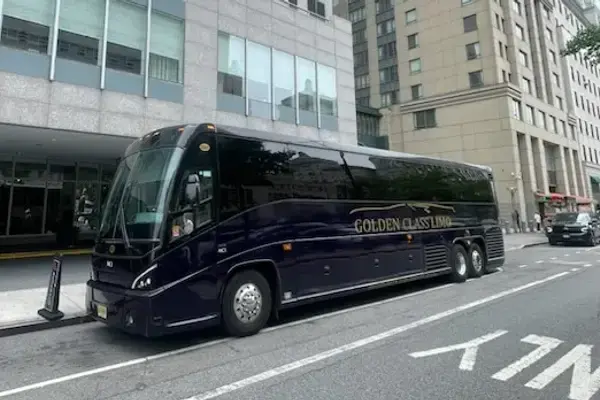
Company offsites and club outings travelling down together
Quoted on your addresses
Get an instant quoteSpecs and photosFares shown are for the Manhattan zone and are the same figures the booking form returns. A pickup or drop-off outside it prices differently, which is what the form is for.
One mini bus or coach, everyone together, a collection point agreed before the day.
Most trips here start at a private house or a suburban office, which makes the pickup simpler than a city one and the timing less forgiving.
Long driveways, gated entrances and codes are normal on this corridor. We take the details at booking and confirm them in writing so a chauffeur is not calling at five in the morning from outside a closed gate.
A sedan may take the Merritt Parkway while a coach on the same job takes I-95, because the parkway bars commercial vehicles. We quote group departures a little earlier for exactly that reason rather than discovering it on the day.
The first useful train is later than most people's first flight. For an early departure from any of the New York airports we set the pickup from the check-in time backwards, with the Bronx crossings built in.
Regular corridor travel — the same three mornings a week, or a weekly client visit — is usually set up as a standing booking on an account, which means the same vehicle, the same chauffeur and one invoice a month.
The evening return is the leg people most often book a car for, because it is the one the timetable serves worst.
Between four and seven an avenue corner with room to pull in beats a mid-block address by several minutes. We agree it beforehand rather than have a vehicle circling while you wait in a lobby.
A pickup below 60th Street sits in the relief zone and the charge is quoted with the trip. Nothing is added afterwards and nothing is settled in the vehicle.
After about ten in the evening the New Haven Line thins out and a missed connection can cost an hour on a platform. A booked return removes that, and the price does not change if a dinner runs long.
If the return is from an airport rather than the city, the inbound is tracked and the pickup follows the actual landing. The airport pages set out the meeting points terminal by terminal.
Booking both directions at once is one reservation on one account, on (718) 360-9383 or through the form above.
We watch your inbound flight and move the pickup with it, so a delay costs you nothing.
Room to clear immigration and collect bags without the clock working against you.
Your chauffeur waits in the arrivals hall with a name sign and helps with luggage.
Quoted as a flat, all-in rate. No surge, no line items added at drop-off.
Professional, uniformed and employed by us — never a broker's contractor.
A fully insured, inspected black fleet, maintained to a premium standard.
This page is about the two roads south. Those cover the towns we collect in, the county in between and how a corporate account is run.

Executive partner
A partnership we hold directly with the organization — the same standard of service we bring to every airport transfer.
Book online, or call and a dispatcher will put a chauffeur on it.
Anyone booking Connecticut to Manhattan car service regularly learns the same lesson: this corridor has two roads and they fail at different times. Interstate 95 is the direct shoreline route, three lanes of commuter and freight traffic through Stamford and Bridgeport, and when it stops it stops completely. The Merritt Parkway runs a few miles inland, is slower by design and calmer by nature, and for a car it is regularly the quicker road in a peak hour.
The catch is that the Merritt's low stone bridges bar buses and trucks, so a Sprinter van, a mini bus or a coach cannot use it at all. That is why we ask what you are booking before quoting a time: the same journey from the same driveway is a different drive depending on whether it is a sedan or a fourteen-seat van, and pretending otherwise would put a group departure half an hour behind.
Metro-North's New Haven Line is one of the busiest commuter railways in the country, and between seven and nine in the morning it will beat us into Grand Central comfortably. We say that to callers rather than pretending the road is faster, because anyone on this corridor already knows it.
What the train does not do is start at your door at half past four for a flight, carry a family's luggage, take a team of twelve to one meeting, wait while a client dinner runs long, or run usefully late at night. Nor does it help if the Connecticut end is a house in Weston rather than a station in Westport. Those are the trips in our enquiry log, and they are why this page exists alongside a timetable most of its readers have memorised.
This is the most account-driven corridor we run. Fairfield County is dense with finance, asset management and corporate headquarters, and the same journeys repeat: a house in Greenwich to a Midtown office at seven, an office in Stamford to a client meeting downtown, a team to a presentation and back the same afternoon. Standing bookings hold the vehicle and the chauffeur, so the person collecting you knows the gate code and the preferred road.
An account also removes the administration. Named travellers, cost codes where a department wants them, and a single monthly invoice rather than a pile of receipts. The corporate page sets out how that is arranged, and a company running the corridor several times a week is usually better off on one than booking trip by trip.
The other half of the work is groups: wedding guests moving between a Connecticut venue and a Manhattan hotel, school and club outings into the city, and family parties travelling to an occasion together. Those run on mini buses and coaches, which means I-95 rather than the Merritt and a departure time set accordingly.
For an evening in the city a single vehicle is also the difference between leaving together and leaving in instalments. We agree a set-down point in Manhattan and a collection point for the return before the day, and the vehicle waits there rather than circling — which matters most at eleven at night when a party of thirty needs to go home.
From lower Fairfield County, usually 50 to 90 minutes: about 50 to 60 from Greenwich outside the peaks, an hour or so from Stamford, and 95 to 150 minutes from New Haven. The weekday morning peak into the city and the late-afternoon peak out of it are the slow windows, and both can add half an hour.
Greenwich is about 30 miles from Midtown, Stamford 40, Norwalk 48, Westport 52 and New Haven roughly 75. The corridor runs along the shoreline, so the distance climbs steadily as you go north-east and the drive time climbs faster than the mileage does.
In the morning peak, Metro-North — the New Haven Line is quick, frequent and much cheaper, and it will beat a car into Grand Central. A chauffeured vehicle is better for early departures before the trains are useful, for groups, for luggage, for evening returns, and for any address that is a drive from the station at either end.
For a sedan or SUV, whichever is moving — the Merritt is often quicker in a peak hour despite being longer. Mini buses and coaches cannot use it at all, because the parkway's low bridges bar commercial vehicles, so those trips run on I-95 and the New England Thruway and are quoted with a slightly earlier departure.
Yes. Any Manhattan pickup or drop-off below 60th Street sits inside the congestion relief zone, and that charge is inside the quote you agree along with any tolls and the chauffeur's gratuity. Nothing is metered and nothing is added afterwards.
Yes, and it is routine on this corridor. We take the gate code, the entrance and any instructions at booking and confirm them in writing, so the chauffeur arrives able to reach the door rather than calling from the road at five in the morning.
Yes, and most regular travel here is booked that way. An account gives named travellers, cost codes where a department needs them, priority booking and one monthly invoice. A standing booking keeps the same vehicle and chauffeur for a recurring trip, which means they already know the address and the route you prefer.
Yes. Mini buses from 23 to 38 seats and coaches to 55 carry the whole party, which for an evening in the city means everyone arrives together and leaves together. We agree the set-down and collection points in Manhattan in advance, since a coach cannot wait wherever a car can.
Yes, and it is a large share of the early-morning work on this corridor, because the first trains are later than most first flights. Departures are timed backwards from check-in with the Bronx crossings built in, and arrivals are tracked so a delayed landing moves the car rather than costing you it.
A sedan or SUV can often be arranged the same day, and standing bookings are set up once and simply run. Sprinter vans are best with a day or two, and mini buses or coaches with a week or more, since group vehicles are a finite fleet. Dispatch is staffed 24 hours a day, 365 days a year.
4.7 stars across 300+ Google reviews — and 3,100+ riders served.
Available 24/7, 365 days a year
Get an instant quote online, or call and a dispatcher will have a chauffeur on the way.