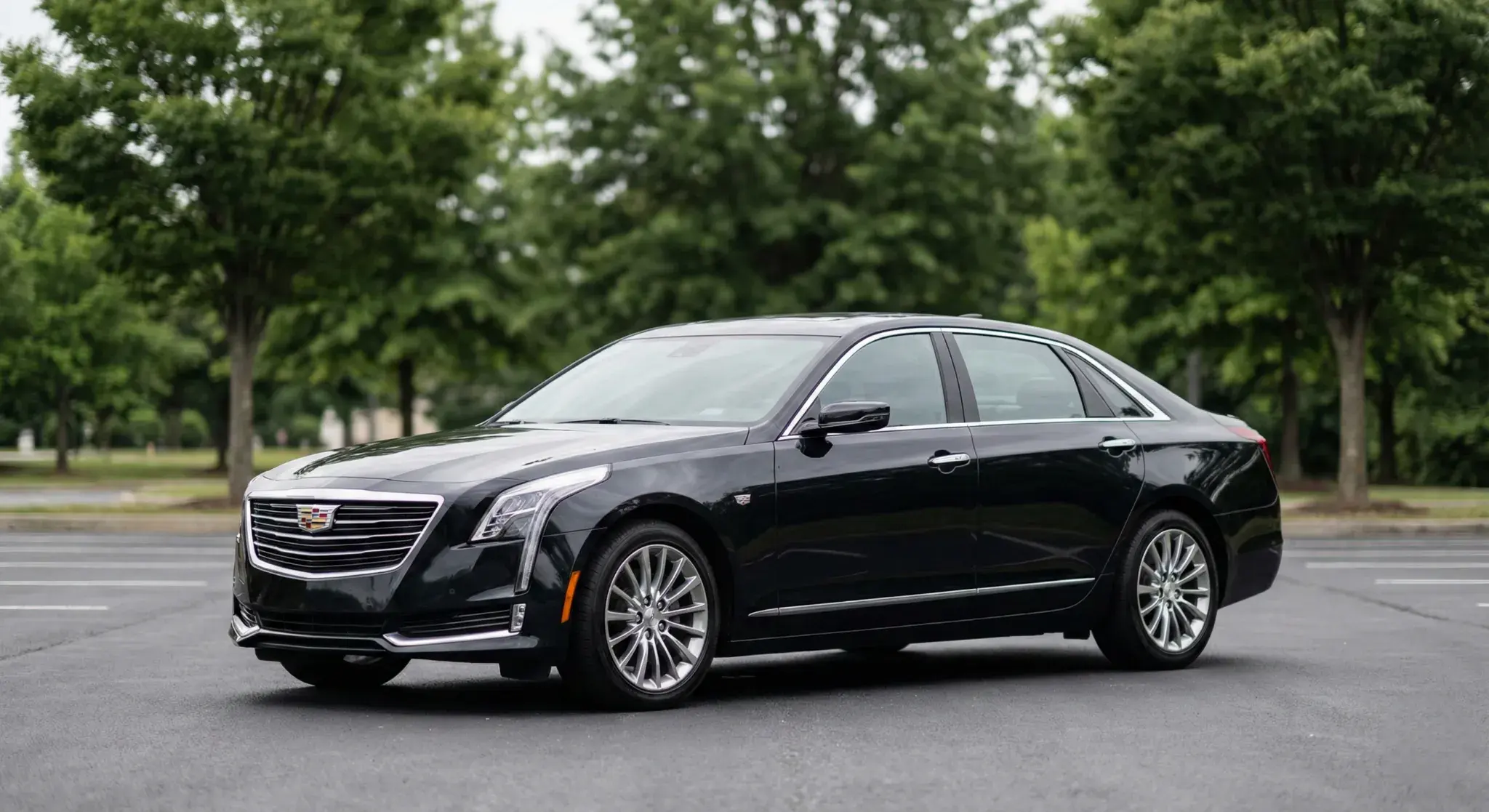
Executive Sedan
3 passengers · 3 bags

SEDANS · SPRINTER VANS · MINI BUSES · COACHES
Four crossings, one fixed price — congestion charge included. Sedans to 55-seat coaches, for one traveller or a whole team.
Chauffeured transportation between Brooklyn and Manhattan for corporate travel, client collection, hotel and venue shuttles and group moves — in executive sedans, Escalade ESVs, 14-passenger Sprinter vans, mini buses and 55-seat coaches.
4.7 ★ · 300+ Google reviews · 3,100+ clients
Trusted by teams & travelers across NYC









Downtown Brooklyn is three miles from the Financial District and about eight from Midtown, so this is a short trip with a wide range of times: 15 minutes on a clear Sunday morning, 50 in a weekday afternoon. What decides it is the approach on the Brooklyn side, not the crossing itself.
Four East River crossings serve different halves of Manhattan. The Brooklyn Bridge and the Hugh L. Carey Tunnel feed downtown, the Manhattan Bridge lands on Canal Street for SoHo and the west side, the Williamsburg Bridge reaches the Lower East Side and the avenues north of it, and the Brooklyn-Queens Expressway runs up to the Queens-Midtown Tunnel for Midtown East.
Everything below 60th Street sits inside New York's congestion relief zone, so most Manhattan destinations on this route carry that charge. It is inside the quote you agree, with the bridge or tunnel toll where one applies and the chauffeur's gratuity, and nothing is metered.
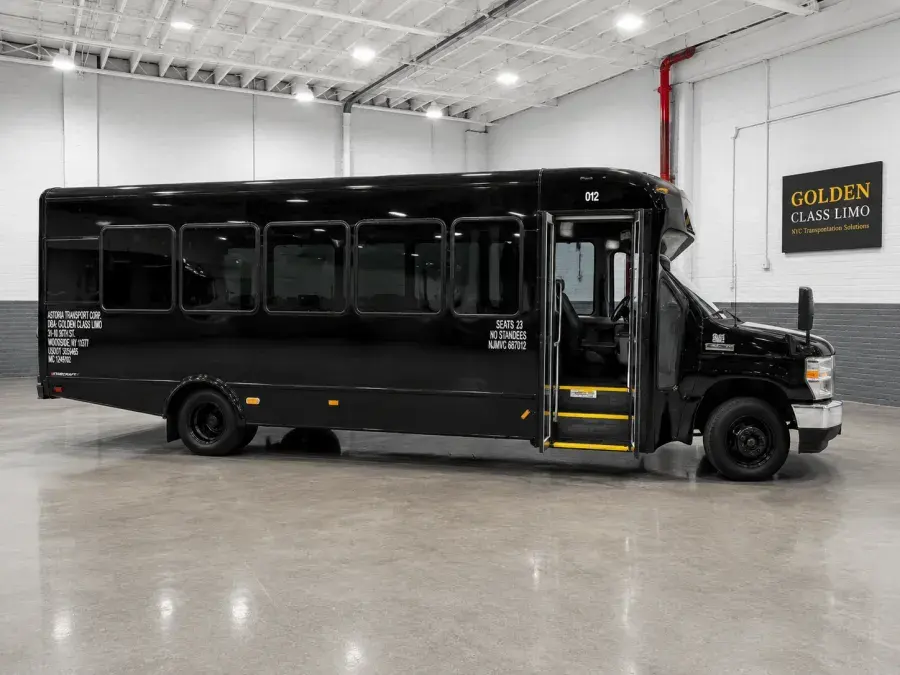
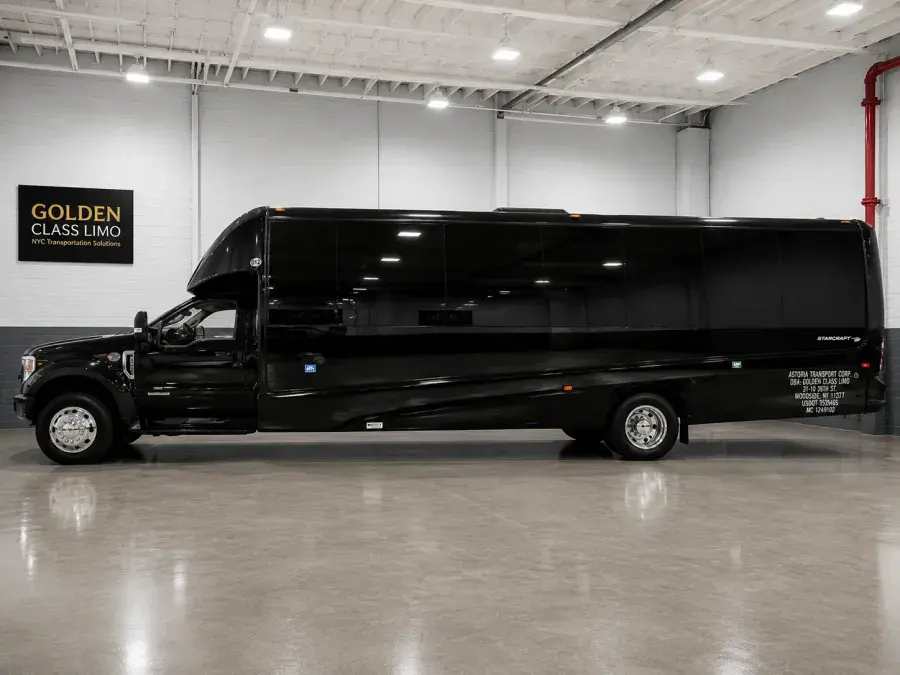
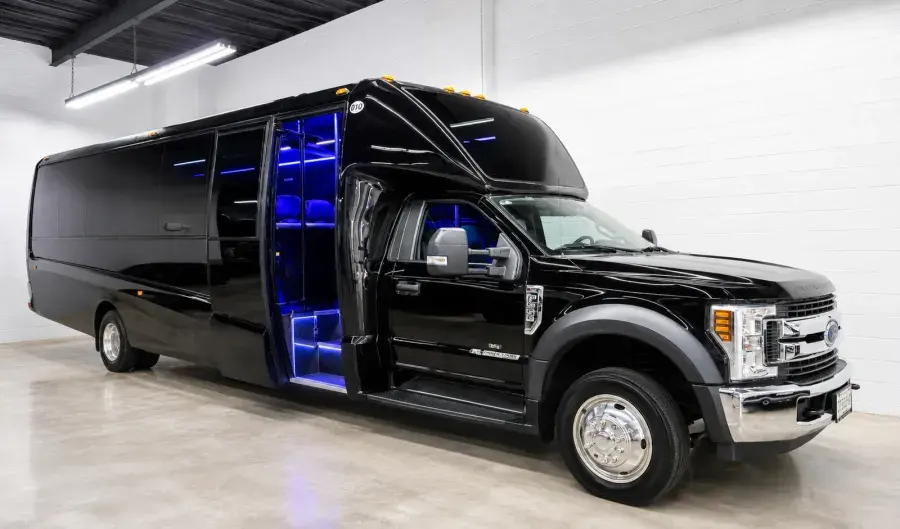
Golden Class Limo runs it in every class — executive sedans and Escalade ESVs for one to six, 14-passenger Sprinter vans for a team, and mini buses and 55-seat coaches for conference and wedding shuttles between the boroughs.
Bookings and changes are handled 24/7, 365 days a year on (718) 360-9383, which is what a corporate schedule needs when a meeting overruns and the return has to move.
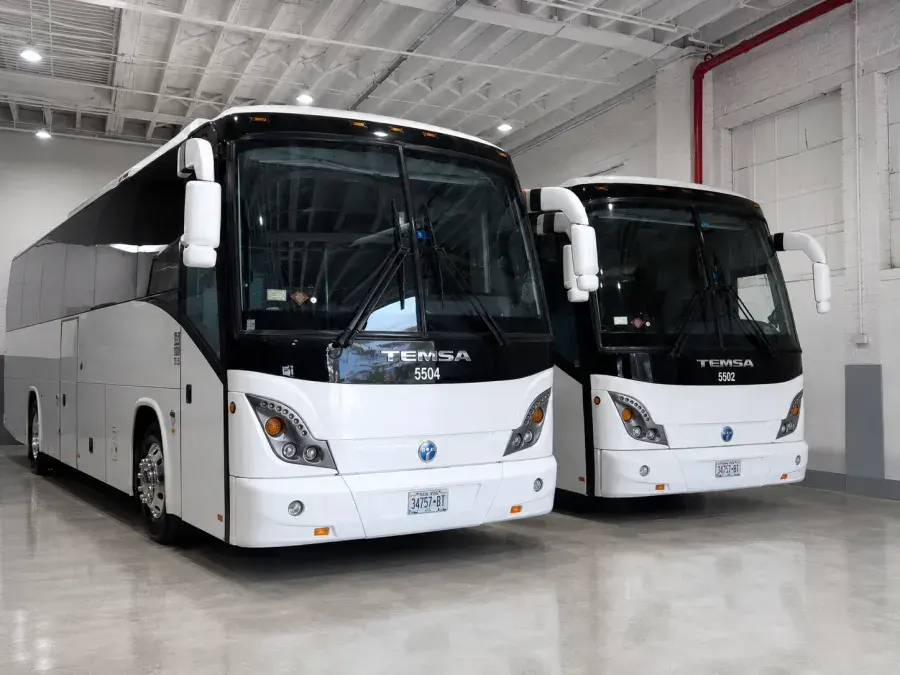
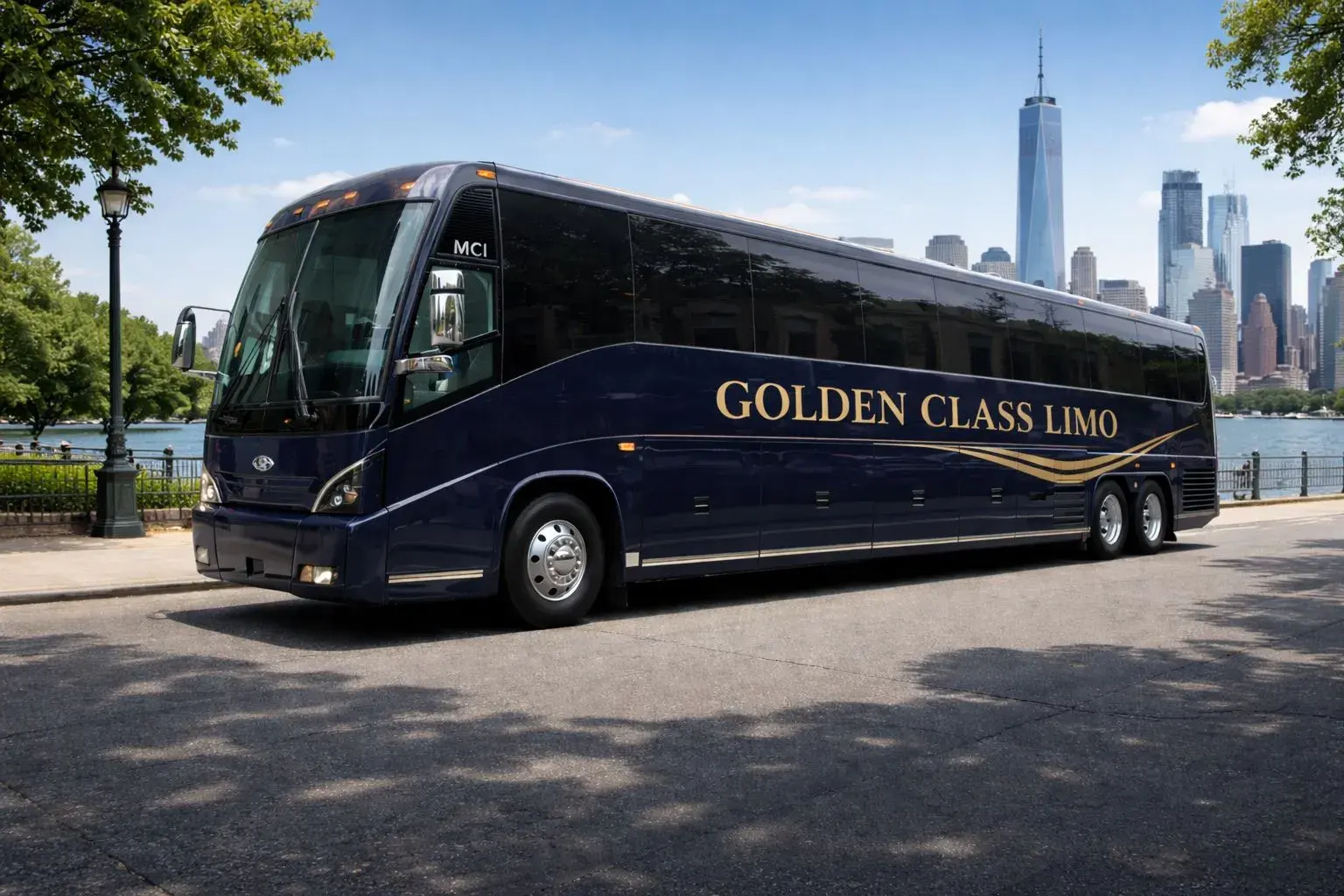
Sedans and SUVs for one to six, Sprinter vans for fourteen, mini buses and motor coaches to fifty-five. Switch tabs to see each class, or quote one straight from its card.
Showing 13 of 13 vehicles.
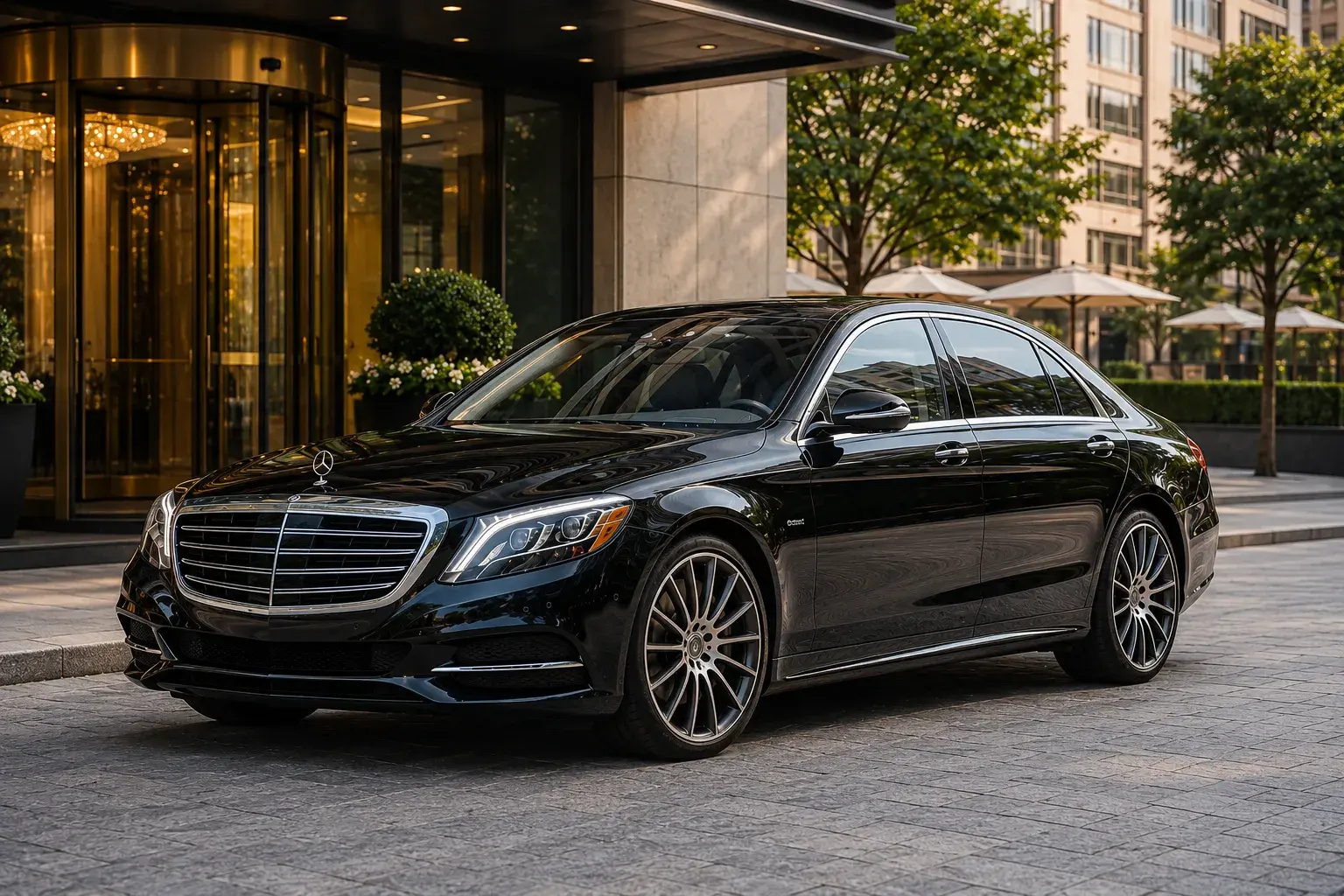
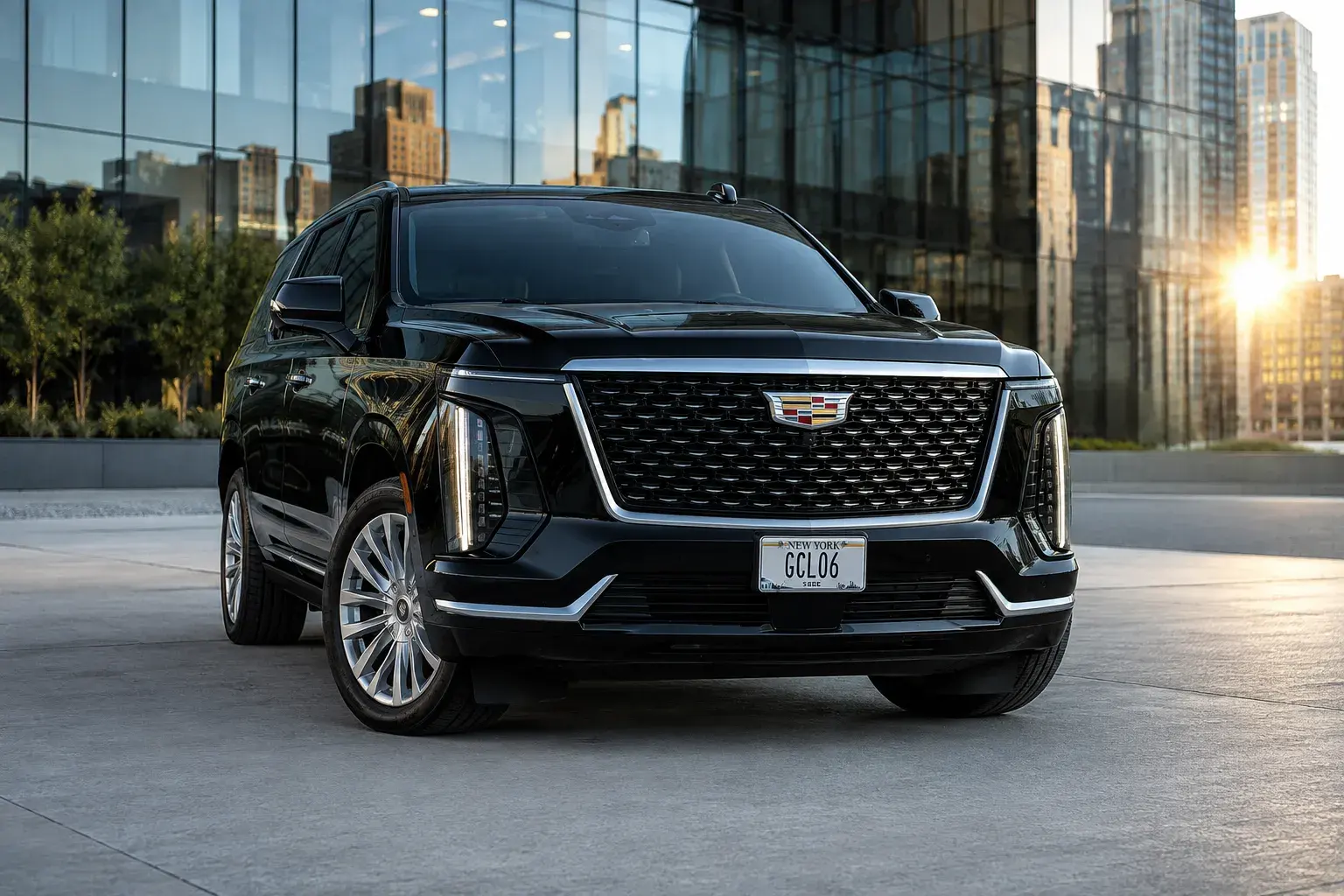
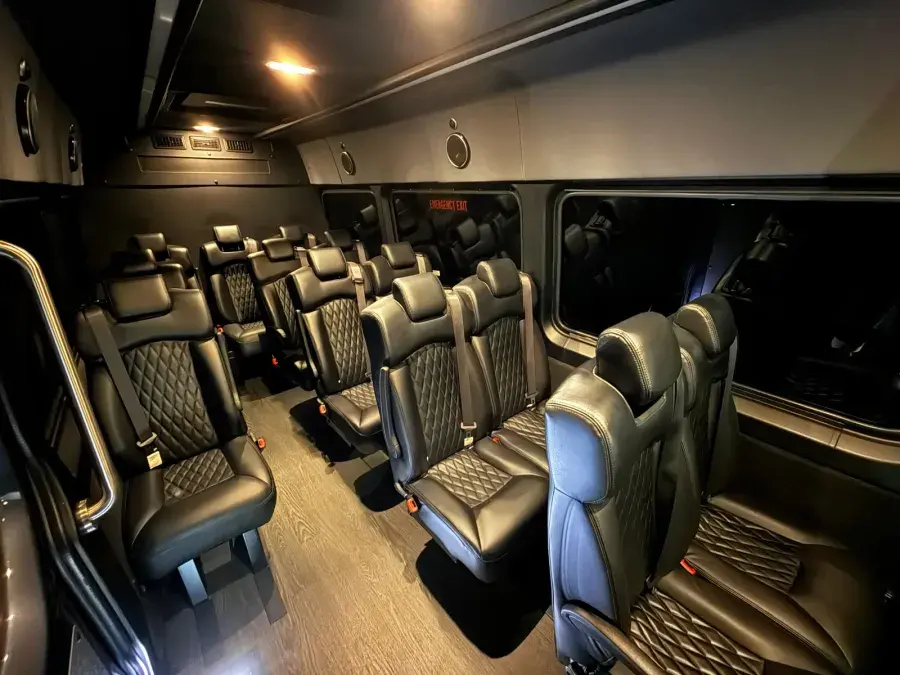
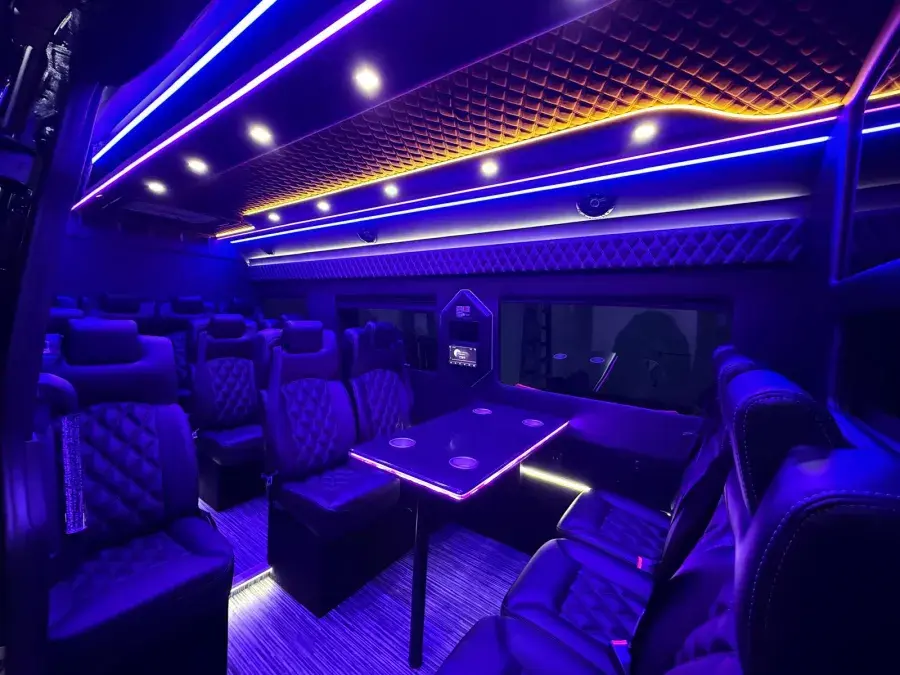
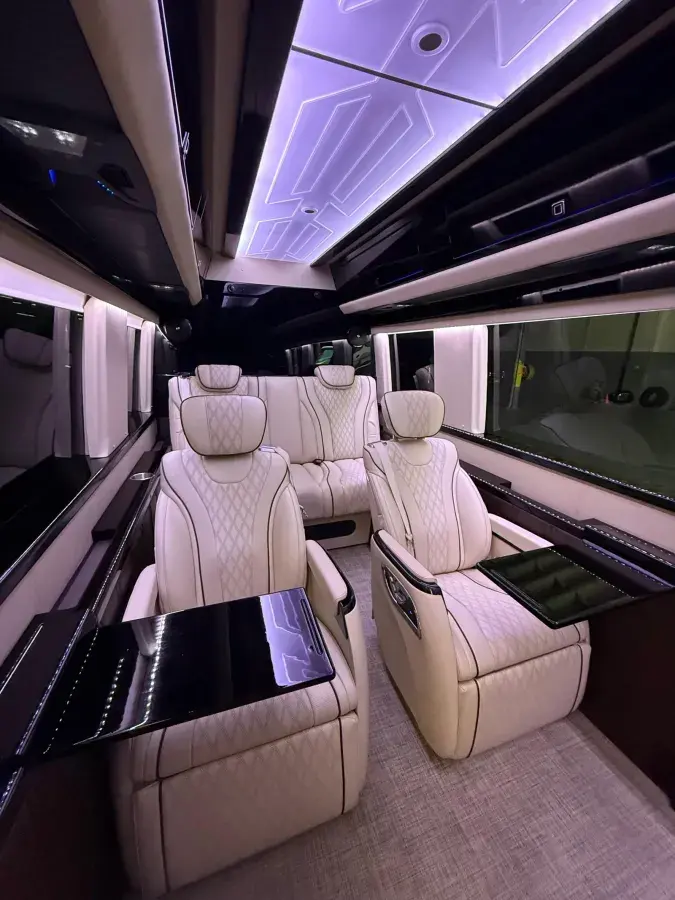
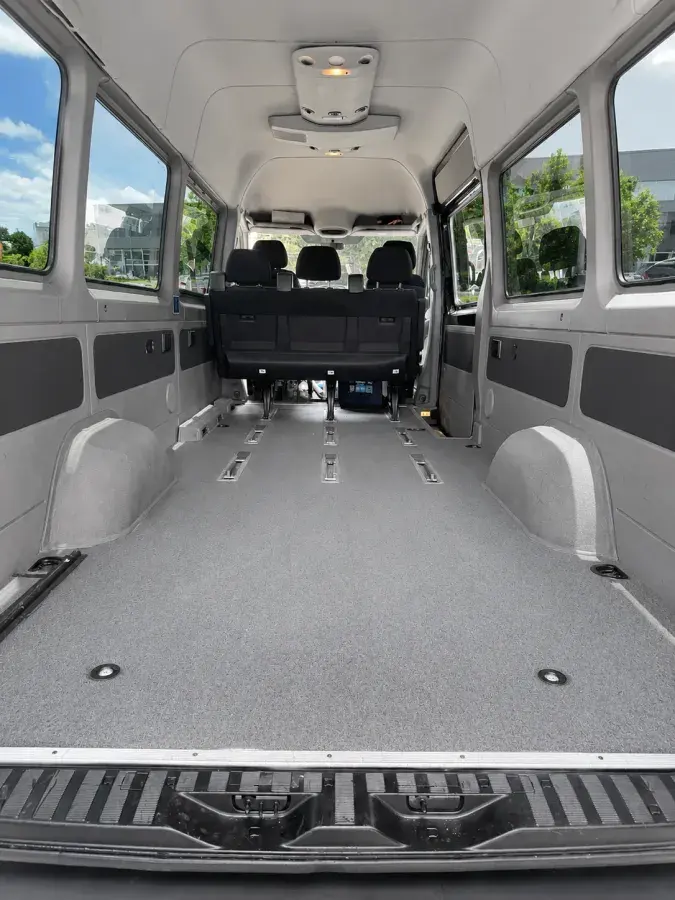
We sell one of these. The other three are real, and on the right day with the right luggage one of them is the better trip.
Best for. Client collection, meetings that cannot slip, teams travelling together, luggage or equipment, and any evening when a car has to be outside at a known time.
The catch. On a weekday morning the subway will often reach Midtown faster than any vehicle, and it costs a fraction. This is worth booking when arriving together, arriving presentable, or arriving at a precise minute is the point of the journey.
Best for. Solo commuters between two points near stations, particularly on the express lines into Midtown and downtown.
The catch. It is unbeatable for one person and hopeless for a team of twelve with a pitch deck and a deadline. Weekend service changes are frequent, lifts are scarce at older stations, and a summer platform at six in the evening is not where you want a client to be before a meeting.
Best for. Waterfront-to-waterfront trips — DUMBO, Greenpoint or Williamsburg to Wall Street or Midtown East — in good weather, with time to enjoy it.
The catch. It only works if both ends are near a landing, departures are every twenty to thirty minutes rather than continuous, and service can be suspended in bad weather or high winds. With luggage or a group on a schedule it is a pleasant idea rather than a plan.
Best for. An unplanned single trip at a quiet hour when nothing depends on the exact timing.
The catch. Prices climb sharply during the morning peak and when an event lets out, cancellations are common on short trips across the bridges, and the vehicle that arrives is whatever is nearest rather than what you booked. Nothing above an SUV exists, so a group arrives in pieces.
Give us both addresses and the time you need to arrive; the price and the pickup come back together.
5 corridors, each right for somewhere different. Your chauffeur has your address before the day and chooses with live conditions rather than at the time you booked.
ServesCity Hall, the Financial District, the Seaport and Tribeca
Untolled
The shortest hop into Lower Manhattan and the one most affected by what is happening at its feet: the Manhattan side lands in a knot of streets around City Hall that stops long before the bridge does. For an early morning it is the quickest crossing in the city; by four in the afternoon it rarely is.
ServesCanal Street, SoHo, Chinatown and the west side below 14th Street
Untolled
Six lanes and a straight run down Flatbush to reach it, which makes it the reliable choice from Park Slope, Prospect Heights and Fort Greene. Canal Street on the far side is the price you pay, so a chauffeur heading for the west side will often cross here and turn north early rather than fight it.
ServesBattery Park City, the western Financial District and the West Side Highway north
Tolled by MTA Bridges and Tunnels
The paid option and frequently the fastest into downtown, because it bypasses the City Hall streets entirely and puts a vehicle onto the West Side Highway. Worth the toll when a meeting time is tight, and we say so on the quote rather than adding it quietly afterwards.
ServesThe Lower East Side, the East Village, Union Square and the avenues north
Untolled
The crossing for north Brooklyn, with a wide approach on the Brooklyn side that handles volume better than the Manhattan or Brooklyn bridges do. Delancey Street beyond it is slow at almost any hour, so this is a crossing chosen for where it lands rather than for speed.
ServesMidtown East, Murray Hill, Grand Central and the United Nations
Tolled tunnel under the East River
The route for anything in Midtown, and the one where the expressway rather than the tunnel decides the journey. The BQE's Brooklyn Heights section carries the whole borough's through traffic on a structure with no alternative beside it, which is why a Midtown meeting gets a larger buffer than the mileage suggests.
Typical door-to-door ranges under ordinary conditions. Weather, incidents and holiday weekends all sit outside this table.
4am – 7am
Empty bridges and an empty BQE. The band that makes an early client collection or an airport connection straightforward, and the reason many corporate bookings on this route start before seven.
7am – 10am
Every approach fills at once and the bridges back up into Brooklyn rather than across the river. A pickup fifteen minutes earlier is worth more than any crossing choice available afterwards.
10am – 3pm
The most predictable window, and where we place most conference shuttles and multi-stop corporate days.
3pm – 7pm
The Manhattan cross-streets do the damage now rather than the crossings. Where you get in matters: an avenue pickup can save ten minutes over a mid-block one at this hour.
7pm – 11pm
Clears quickly, with event nights at the arenas the local exception. Dinner and theatre trips usually run close to the midday figure.
11pm – 4am
The fastest hours of the day. Overnight lane closures on the bridges and the BQE are the one variable, and they are checked before a late pickup rather than met on the ramp.
Fifteen minutes earlier beats any crossing choice available afterwards — we will tell you which time to take.
The address decides the crossing, and the crossing decides the time. These are typical figures outside a peak window.
| Destination | Distance | Typical drive | Usual crossing | Congestion zone |
|---|---|---|---|---|
| FiDi and the Seaport | about 3 miles | 15–35 minutes | Brooklyn Bridge from Cadman Plaza | Inside |
| Battery Park City and the ferry terminals | about 4 miles | 15–40 minutes | Hugh L. Carey Tunnel from the Brooklyn-Queens Expressway | Inside |
| Tribeca and Canal Street | about 4 miles | 20–40 minutes | Manhattan Bridge from Flatbush Avenue | Inside |
| SoHo and Nolita | about 5 miles | 20–45 minutes | Manhattan Bridge from Flatbush Avenue | Inside |
| Alphabet City and the East Village | about 5 miles | 20–45 minutes | Williamsburg Bridge to Delancey Street | Inside |
| Flatiron and NoMad | about 6 miles | 25–45 minutes | Williamsburg Bridge to Delancey Street | Inside |
| Murray Hill and Kips Bay | about 7 miles | 25–50 minutes | Brooklyn-Queens Expressway to the Queens-Midtown Tunnel | Inside |
| Midtown West and the theatre blocks | about 8 miles | 30–55 minutes | Brooklyn-Queens Expressway to the Queens-Midtown Tunnel | Inside |
| Hudson Yards and the High Line | about 9 miles | 30–55 minutes | Hugh L. Carey Tunnel from the Brooklyn-Queens Expressway | Inside |
New York’s congestion relief zone covers Manhattan south of 60th Street. A drop-off inside it costs more than one above the line; we confirm the amount that applies to your date at booking rather than publishing a figure that changes.
Twelve people in one Sprinter beats twelve congestion charges, and the team arrives together. The widget above prices your two addresses with the zone charge, any toll and gratuity inside the figure.
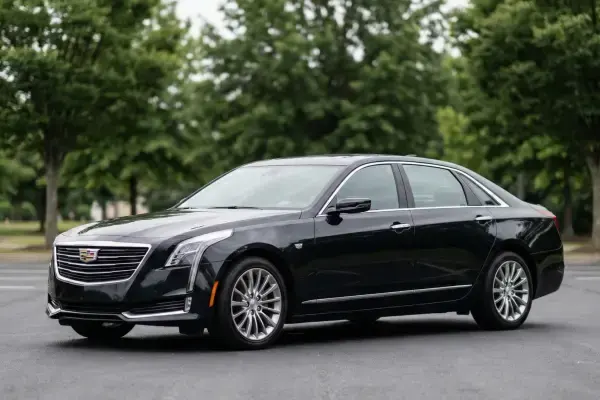
An executive with a morning meeting across the river and a return that evening
Quoted on your addresses
Get an instant quoteSpecs and photos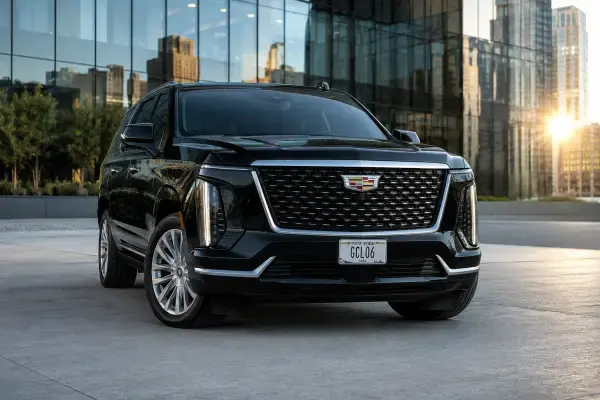
Client collection, or a family heading to a show with room for everyone
Quoted on your addresses
Get an instant quoteSpecs and photos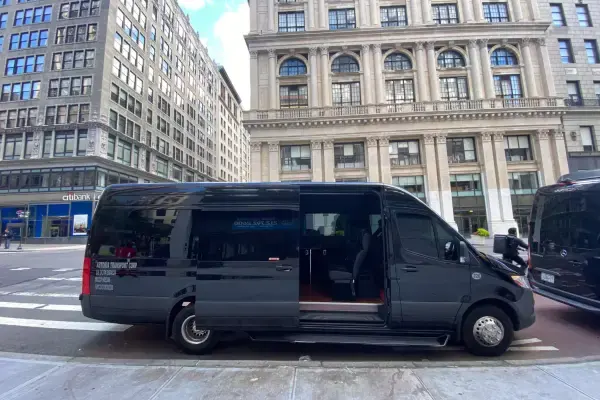
A team moving between offices, with space to keep working on the way
Quoted on your addresses
Get an instant quoteSpecs and photos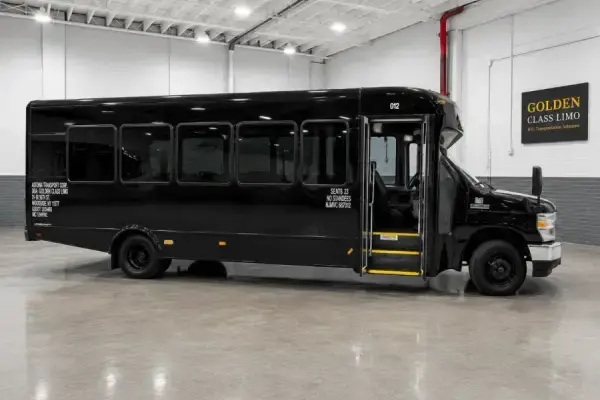
Conference and wedding-guest shuttles between Brooklyn and Manhattan hotels
Quoted on your addresses
Get an instant quoteSpecs and photos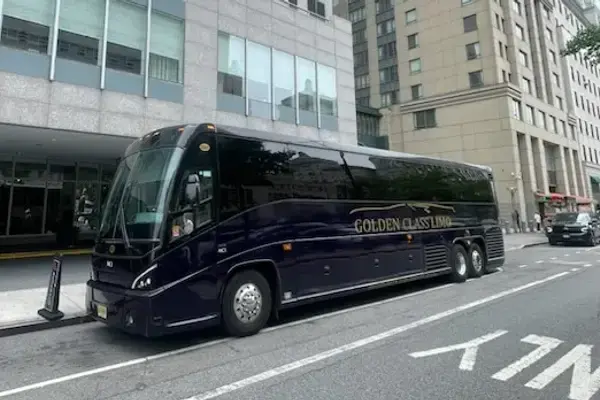
Whole-company offsites and delegations moving on one schedule
Quoted on your addresses
Get an instant quoteSpecs and photosFares shown are for the Manhattan zone and are the same figures the booking form returns. A pickup or drop-off outside it prices differently, which is what the form is for.
Same vehicle, same loading point, a schedule agreed in advance. Quoted on your dates in about a minute.
Almost everything on this route runs to someone else's clock — a meeting, a ceremony, a curtain. The pickup is arranged so the first ten minutes do not eat the buffer.
Downtown Brooklyn and MetroTech addresses usually have a quieter entrance on a side street where a vehicle can stand without blocking a bus lane. We agree which one at booking and the chauffeur is there before your start time rather than looking for a gap outside the main doors.
The cobbled blocks between the bridges are frequently closed for production, and a closure is announced late. We keep a fallback corner on the plan for those addresses so a vehicle is never stuck on the wrong side of a barrier with a client waiting.
Conference and wedding shuttles load where a coach is allowed to stand — the hotel's own bay or an agreed corner on a through road — and every passenger is given the same spot and time. Repeat runs keep the same point all day so nobody has to be told twice.
Regular Brooklyn-to-Manhattan work is usually booked on an account: named travellers, cost codes where a department needs them, and a single monthly invoice rather than a receipt per ride. The corporate page covers how accounts are set up.
The return is where the congestion zone and the evening cross-streets meet, and where being in the right lane at the right corner is worth more than the crossing you choose.
Between four and seven, a pickup on an avenue with room to pull in saves several minutes over one on a cross-street. We confirm the corner beforehand rather than have a vehicle circling while you wait in a lobby.
Any pickup below 60th Street is inside the relief zone, and the charge is inside the quote you agreed. There is nothing to settle in the vehicle and no surcharge added later.
When an arena or a theatre block lets out, the approach to one bridge can seize while another runs clear. A chauffeur on this corridor watches which and adjusts, rather than committing to the crossing that was right at five o'clock.
For a day of meetings we hold the same vehicle and chauffeur on an as-directed basis, so the car that dropped you is the one waiting afterwards. It costs less than two one-way bookings and removes the search for a ride at the end of a long day.
Booking both directions at once is one reservation on one account, on (718) 360-9383 or through the form above.
We watch your inbound flight and move the pickup with it, so a delay costs you nothing.
Room to clear immigration and collect bags without the clock working against you.
Your chauffeur waits in the arrivals hall with a name sign and helps with luggage.
Quoted as a flat, all-in rate. No surge, no line items added at drop-off.
Professional, uniformed and employed by us — never a broker's contractor.
A fully insured, inspected black fleet, maintained to a premium standard.
This page is about the East River crossings. Those cover the boroughs at either end, the arena work, and how a corporate account is run.
Executive partner
A partnership we hold directly with the organization — the same standard of service we bring to every airport transfer.
Book online, or call and a dispatcher will put a chauffeur on it.
People booking Brooklyn to Manhattan car service usually ask which bridge is fastest, and the honest answer is that the bridges are seldom what holds you up. The Brooklyn Bridge lands in the streets around City Hall, which stop long before the span does. The Manhattan Bridge delivers you to Canal Street. The Williamsburg puts you on Delancey. The Queens-Midtown Tunnel is reached along the BQE through Brooklyn Heights, a structure with no alternative running beside it.
So the choice is about approaches and landings, and it changes through the day. The tolled Hugh L. Carey Tunnel is frequently the quickest way downtown precisely because it skips the City Hall knot; we will recommend it, and put the toll in the quote, when the clock matters. That judgement is what a chauffeur who crosses several times a day brings, and it is the part a navigation app is worst at.
The enquiry pattern here is distinctly business: weekday mornings, office-to-office runs, client collections from Brooklyn hotels, and teams travelling to a Manhattan meeting together. For those trips the value is not the ride but the certainty — a vehicle outside at the time agreed, one price fixed in advance, and a chauffeur who knows which entrance the building actually uses.
Where a company runs this corridor regularly, an account is simpler than booking trip by trip: named travellers, cost codes where a department wants them, and one invoice a month instead of a pile of receipts. A team of twelve in a Sprinter van also arrives as a unit, which is worth more before a pitch than the modest saving over separate cars.
Almost every Manhattan destination on this route sits below 60th Street and therefore inside the congestion relief zone. That is a real cost on a short trip and we treat it plainly: it is quoted inside the price before you travel, alongside any tunnel toll and the chauffeur's gratuity, so the number you agree is the number you pay.
It also changes the arithmetic against driving yourself. A car into the zone now carries the charge and then needs parking at Manhattan rates, which for a morning meeting can exceed the cost of being driven and collected. For a single passenger the subway remains cheaper than both; for a group, or for anyone who needs to arrive presentable and on time, the chauffeured trip is usually the sensible one.
The group half of this corridor is hotel and venue work: conference delegates shuttling between Brooklyn and Manhattan hotels, wedding guests moving between a ceremony on one side of the river and a reception on the other, and parties heading to games and shows. Those run on repeat trips through an evening rather than as a single transfer, and they work best with the same vehicle and the same loading point all night.
For arena and theatre nights the return is the part that needs planning. Everyone leaves within a few minutes of each other, street hails vanish and app prices climb, so we hold the vehicle at an agreed spot away from the crush and leave when the last passenger is aboard — at the price fixed before the day.
Between 15 and 50 minutes for most trips. Downtown Brooklyn to the Financial District is 15 to 35 minutes, to Midtown 25 to 55. The morning and late-afternoon peaks are the slow windows, and after eight in the evening the run is close to its overnight time. The approach streets on the Brooklyn side usually decide the figure rather than the crossing itself.
Barely any distance at the near end: DUMBO to the Financial District is about three miles, Downtown Brooklyn to SoHo about five, and Park Slope to Midtown around eight. Because the trips are so short, the fixed costs — the congestion relief charge, a tunnel toll, the time of day — matter more to the journey than the mileage does.
For one person near an express subway line in the morning peak, the subway, and we will say so. A chauffeured vehicle is the better answer for teams travelling together, client collection, anything with equipment or luggage, arena and theatre nights when everyone leaves at once, and any meeting where arriving at a precise time matters more than the fare.
It depends on the destination and the hour. The Brooklyn Bridge and the Hugh L. Carey Tunnel serve downtown, the Manhattan Bridge lands at Canal Street for SoHo and the west side, the Williamsburg Bridge reaches the Lower East Side and the avenues north, and the BQE and Queens-Midtown Tunnel serve Midtown East. The tolled tunnel is often the fastest downtown because it avoids the City Hall streets entirely.
Yes. Everything below 60th Street is inside New York's congestion relief zone, so most destinations on this route carry it. Whatever applies to your vehicle class and time of day is inside the quote you agree, along with any tunnel toll and the chauffeur's gratuity, and nothing is metered or added afterwards.
Yes, and this corridor is where most of them start. An account gives you named travellers, cost codes where a department needs them, priority booking and a single monthly invoice rather than a receipt for every ride. Our corporate page sets out how an account is opened and what it covers.
Yes — that is a 14-passenger Sprinter van, and it is usually cheaper than the cars it replaces once the congestion charge is counted on each of them. More importantly the team arrives together and can keep working on the way, rather than reassembling in a lobby as separate vehicles turn up.
Yes. Conference and wedding shuttles run as repeat trips through the day or evening with the same vehicle and chauffeur, an agreed loading point at each hotel, and a schedule set in advance. Mini buses take 23 to 38 passengers and coaches up to 55, with luggage in the hold on the larger vehicles.
That is the part of the evening worth booking. When an arena or theatre lets out, everyone needs a vehicle in the same ten minutes: street hails disappear and app prices climb. We hold your vehicle at an agreed spot clear of the crowd, keep the chauffeur's number with you, and leave when your party is aboard at the price fixed beforehand.
A sedan or SUV can often be arranged within the hour outside peak periods, and same-day is routine. A Sprinter van is best booked a day or two ahead, and a mini bus or coach a week or more, since group vehicles are a finite fleet. Dispatch is staffed 24 hours a day, 365 days a year, so a late change on a meeting day reaches a person immediately.
4.7 stars across 300+ Google reviews — and 3,100+ riders served.
Available 24/7, 365 days a year
Get an instant quote online, or call and a dispatcher will have a chauffeur on the way.